

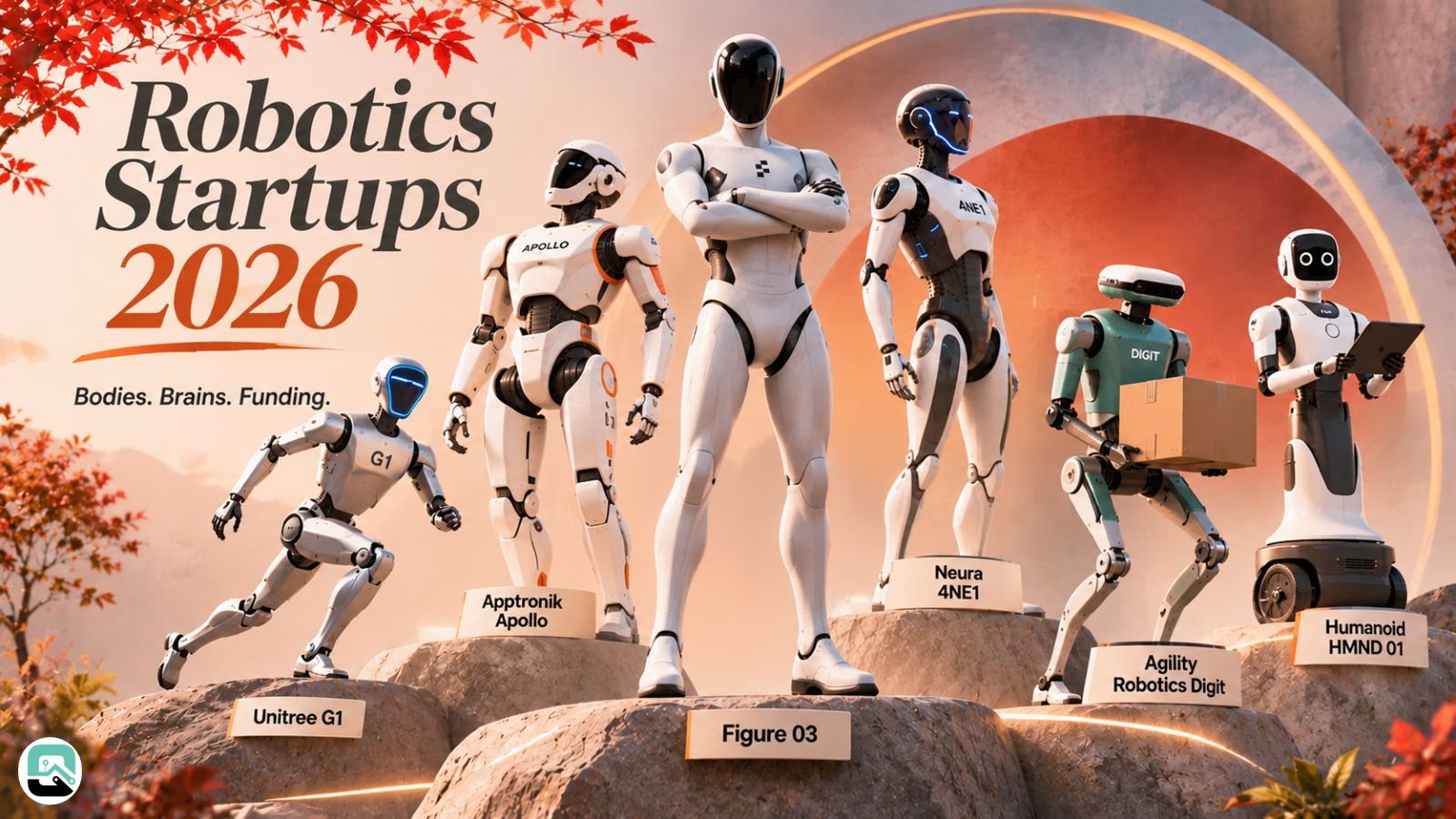
Robotics startup companies in 2026 split into three camps: those building robot bodies, those building the software brains, and a few attempting both. Money pours into all three. Proof of real, paid work lags far behind.
Dealroom counts $11 billion of venture investment in humanoid startups through October 6, 2026, more than double 2025’s full-year record of $4.8 billion. That figure covers humanoid-tagged companies only. Broader robotics counts run higher, for reasons the funding section explains.
This guide groups the best-funded companies by what they build. It doesn’t rank them. Each one earned a place through disclosed 2026 financing, a distinct technical role or public commercial evidence. We rely on announcements, filings, and reporting, not hands-on testing.
Quick comparison
| Company | HQ | What it builds | Latest financing | Public commercial evidence |
|---|---|---|---|---|
| Neura Robotics | Metzingen, Germany | Full stack | Series C of up to $1.4B (June 2026) | Company-stated $1B+ order book and pipeline, no breakdown |
| Agile Robots | Munich, Germany | Full stack | $500M Series F at $8.5B (Nov 2026) | 20,000+ industrial robot solutions deployed; humanoid shipments not disclosed |
| Figure AI | San Jose, US | Humanoid hardware | $39B valuation (2025 Series C) | Figure 02 BMW pilot, retired Nov 2025; 200-hour company demo |
| Apptronik | Austin, US | Humanoid hardware | $520M extension; $935M+ Series A (Feb 2026) | Proof-of-concept trials at Mercedes-Benz plants |
| Agility Robotics | Salem, Oregon, US | Humanoid for logistics | Nasdaq listing via SPAC, ~$465M gross (Nov 2026) | 100,000+ totes moved at GXO; $1.78M 2025 net sales |
| Humanoid | London, UK | Wheeled humanoid | $152M Series A (July 2026) | Two-week Siemens proof of concept; Bosch manufactures |
| Skild AI | Pittsburgh, US | Robot brain | ~$1.4B Series C (Jan 2026) | Company-reported $100M+ ARR, 60+ paying customers |
| Physical Intelligence | San Francisco, US | Robot brain | Reported raise at $11.5B (2026); talks at ~$20B | Pi API in beta; no revenue, per Bloomberg |
| Unitree | Hangzhou, China | Hardware, now listed | ~$905M IPO (Aug 2026) | 5,500+ humanoids shipped in 2025 (company figure) |
| XPeng robotics | Guangzhou, China | Full stack | $900M+ share agreements (Aug 2026) | IRON mass production targeted for end of 2026 |
| Bedrock Robotics | San Francisco, US | Construction autonomy | $600M Series C (Oct 2026) | Operator-free excavators on paid sites in Texas and Nevada |
Humanoid and full-stack hardware companies
Neura Robotics
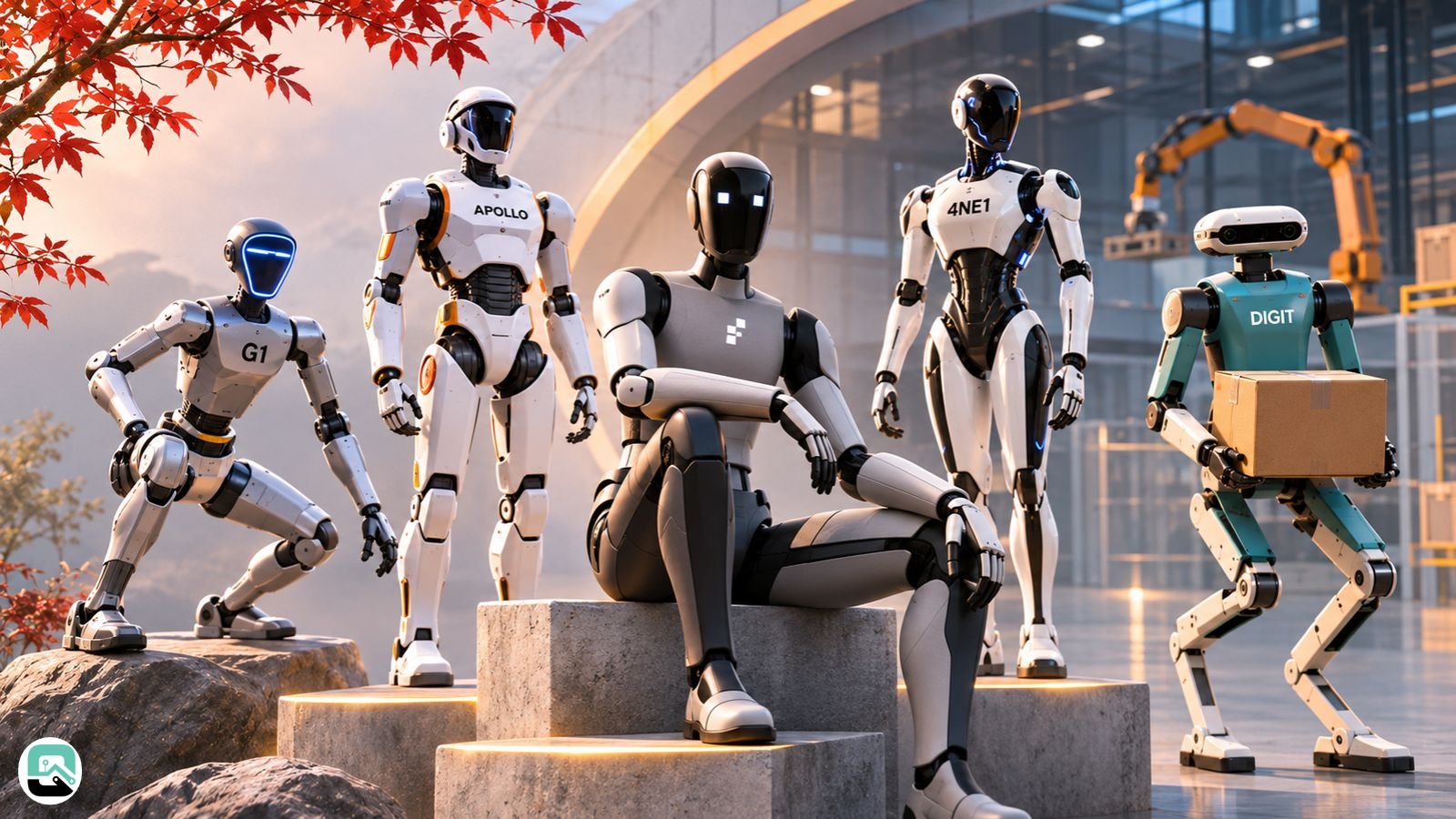
David Reger founded the Metzingen company in 2019 to build cognitive robots that combine AI, sensors, control software, and mechanical engineering. On June 10, Neura announced a Series C of up to $1.4 billion from investors including Tether, Qualcomm, Amazon, NVIDIA, imec.xpand and Bosch.
Read the headline carefully. CNBC reported that the full amount depends on Neura hitting milestones. Early coverage put the valuation near $7 billion, but neither Neura nor its named investors confirmed that figure. And Neura’s claim of a $1 billion-plus order book and deployment pipeline doesn’t publicly separate signed, binding orders from pipeline deals or letters of intent. Its full-size humanoid gives a sense of pricing: the 4NE1 Gen 3.5 costs €98,000 for small orders.
Agile Robots
The Munich company closed a $500 million Series F on November 12, led by SoftBank with Nvidia, Hitachi and T.Capital, at an $8.5 billion valuation. Total funding now stands at about $2 billion, and the round lands among Europe’s largest physical-AI deals this year.
Agile brings more industrial history than most rivals. It has deployed more than 20,000 robotic solutions, mostly arms, and last disclosed revenue of about €200 million in June 2025. Its humanoid story remains thin, though. A new factory near Munich can build up to 10,000 humanoids a year, but Agile hasn’t published a single shipment figure. Capacity isn’t output.
Figure AI
Figure carries the highest private valuation in the field: $39 billion, set in its 2025 Series C. Dealroom counts Figure and Neura as the only humanoid companies with more than $1.5 billion raised since 2020. That valuation prices in expectations, not deployment results.
The deployment record exists but stays narrow. Figure 02 spent 11 months at BMW’s Spartanburg plant before Figure retired the fleet in November 2025 after more than 1,250 runtime hours. Its successor, the Figure 03 humanoid, ran a 200-hour livestreamed sorting demo in May 2026. Figure’s own job listings add context. A posting for a robot operator and data creator at a customer site in Fontana, California, describes people who run the robots, wear teleoperation or sensor gear and collect training data. Those operators are a cost the valuation doesn’t show.
Apptronik
The Austin company has raised more than $935 million in its Series A alone: a $415 million initial round in 2025, then a $520 million extension in February 2026. Google DeepMind deploys its Gemini Robotics models through a partnership with Apptronik, and Mercedes-Benz runs proof-of-concept trials on live production lines.
Apollo’s 25 kg payload and hot-swappable batteries set it apart from most US rivals, and our Apollo humanoid robot review weighs those strengths against its enterprise pricing.
Agility Robotics
Agility has the clearest deployment record in this group. At GXO’s Georgia site, its Digit robots have moved more than 100,000 totes, and Agility reports more than 65,000 hours of real-world operation. In October, GXO agreed to expand to two more sites from early 2027, and Agility added three more manufacturing customers in paid programs. Our Digit warehouse robot review covers the hardware and those deployments.
The finances show how early this market remains. Agility’s S-4 filing reports $1.78 million in 2025 net sales against a $140.2 million operating loss. Its headline order book of more than $300 million comes from one customer: a three-year contract for 1,000 Digit 5 robots, tied to delivery milestones. The filing doesn’t name that customer, but it does describe a deal of the same size with a related party. Early access starts in the first half of 2027, and the Digit v5 payback math depends heavily on utilization.
Agility closed its merger with Churchill Capital Corp XI on November 4 and began trading on Nasdaq as AGLT the next day. The deal valued the company at $2.5 billion and raised about $465 million gross after redemptions, well short of the $620 million first projected.
Humanoid (UK)
The London company closed a $152 million Series A at a $1.35 billion post-money valuation, which made it Europe’s first pure-play humanoid unicorn. Prime Movers Lab led the round, lifting total funding to $270 million. Humanoid builds wheeled robots, and Bosch acts as its contract manufacturer. Wheels give up the reach of legs for mechanical simplicity, a fair trade on flat factory floors. Its HMND 01 Alpha logged 60 tote moves an hour during a two-week proof of concept at Siemens.
Startups building the robot brain
Some of the best-funded companies sell no robot at all. Investors price Skild AI and Physical Intelligence more like AI infrastructure platforms than hardware makers.

Skild AI
The Pittsburgh company raised close to $1.4 billion in a Series C on January 14, led by SoftBank, at a valuation above $14 billion. Skild pitches a single model that can run any robot, whatever its form. It says it earned about $30 million in 2025 and passed $100 million in annual recurring revenue by September 2026, with more than 60 paying customers. Skild reports those figures itself, and nobody has independently shown the one-model-fits-all claim across many robot bodies.
Physical Intelligence
Physical Intelligence builds vision-language-action models, which turn camera input and instructions into robot movements. Its last announced round brought in $600 million at a $5.6 billion valuation in November 2025. Bloomberg has since reported that the company raised money at $11.5 billion earlier this year and is now in talks at about $20 billion. The company hasn’t announced either deal, and Bloomberg’s sources say it has no revenue yet. In October, it opened its Pi API to outside developers in beta.
Other brain-layer companies
Generalist raised $400 million at a $2 billion valuation in June 2026. FieldAI raised $405 million across two rounds in August 2025.
China’s cohort
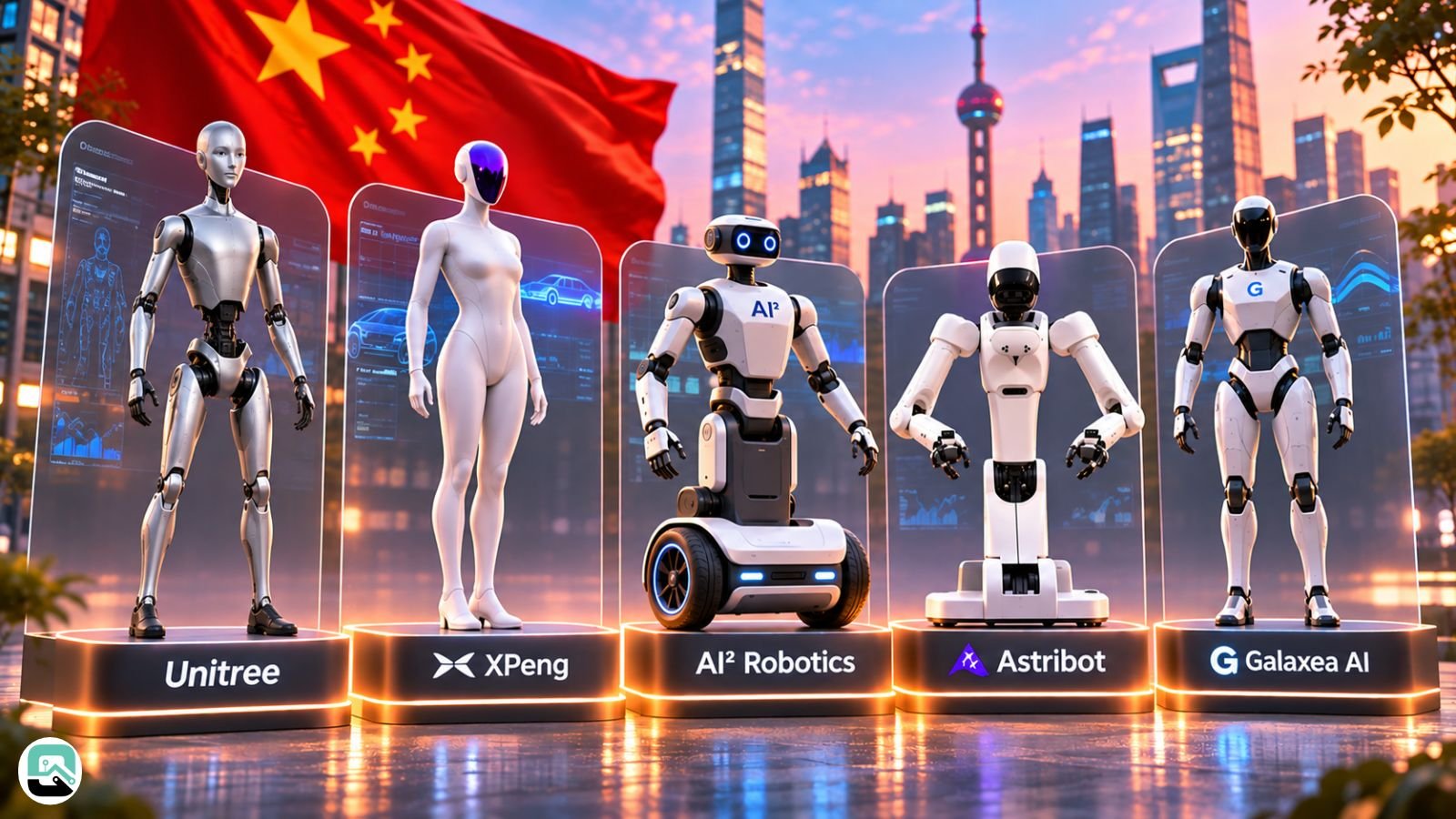
China now takes about 63% of global humanoid funding in Dealroom’s 2026 data, while the US share has fallen to 12%. Crunchbase, which counts robotics more broadly, puts China at $13.2 billion and the US at $12.1 billion through Q3.
Unitree sends the clearest commercial signal. It raised about 6.1 billion yuan ($905 million) in its August IPO at a price that valued it near $9 billion, and then its shares jumped more than 500% on day one. It became the first general-purpose humanoid maker to list on mainland China’s stock market. Unitree says it shipped more than 5,500 humanoids in 2025, and AgiBot cites Omdia data for more than 5,100. Its pricing also explains the volume: the full-size Unitree H2 starts at $29,900, without hands.
XPeng’s robotics business signed share agreements worth more than $900 million at a post-money valuation above $6.3 billion, led by IDG Capital. It remains a subsidiary of a listed carmaker, and the deals still face closing conditions. XPeng targets mass production of its IRON humanoid robot by the end of 2026, with deliveries in 2027.
AI² Robotics, based in Shenzhen, closed financings worth nearly 5 billion yuan (about $736 million) in June, lifting its valuation above 20 billion yuan. It builds wheeled humanoids, including the AlphaBot series.
Astribot closed an RMB 1 billion round in October at a reported RMB 15 billion valuation, its fourth round since March.
Galaxea AI, based in Beijing, raised 2 billion yuan ($291 million) in a Series B+ on April 2, at a valuation above 20 billion yuan.
Robotics startups beyond humanoids
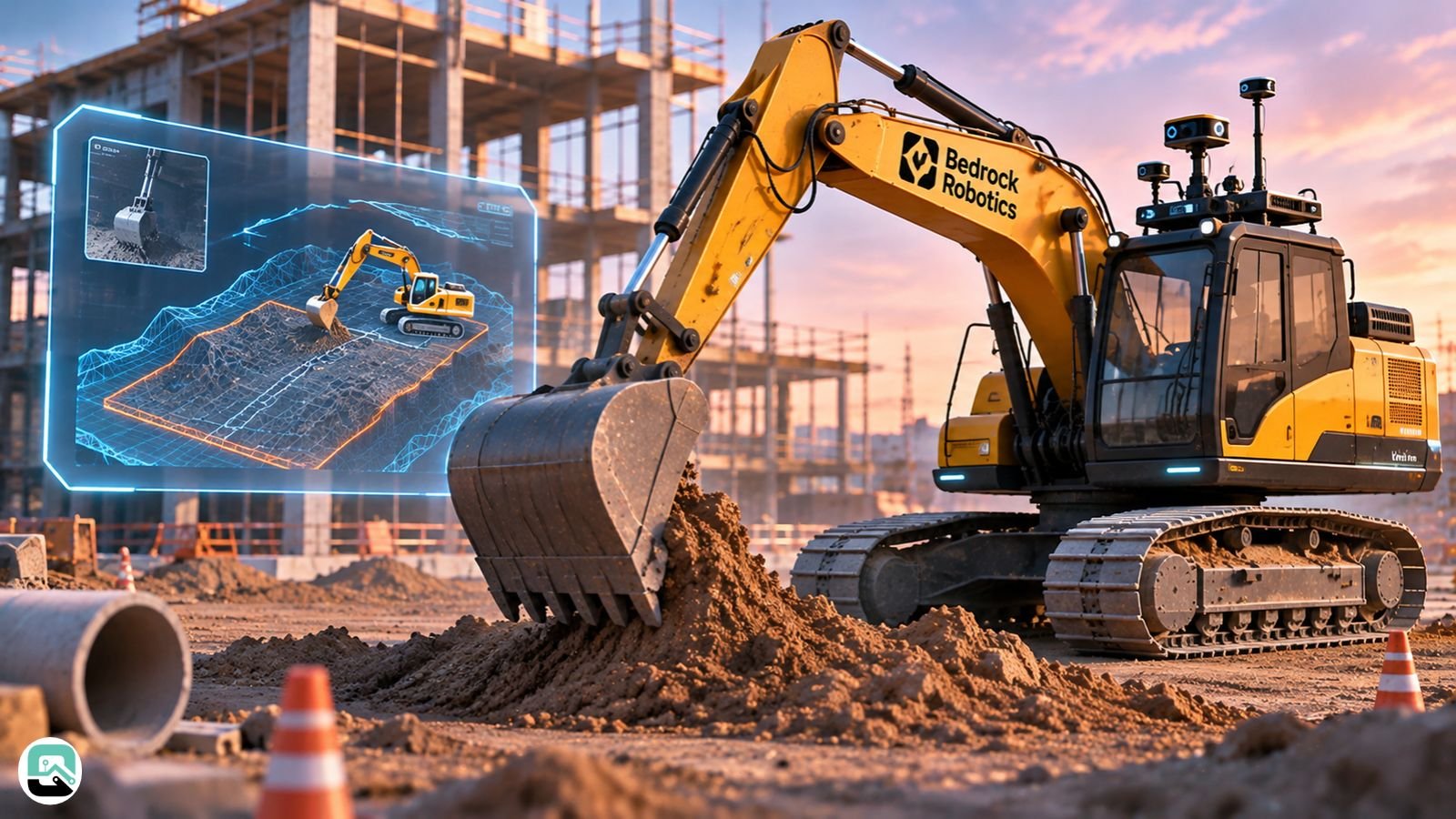
The category reaches well past humanoids, and construction robotics shows how. Bedrock Robotics raised a $600 million Series C in October at a $4.1 billion valuation, eight months after a $270 million Series B. Founded by former Waymo leaders, it retrofits existing excavators with an autonomy kit instead of selling new machines.
In August, Bedrock put operator-free excavators to work on paid commercial sites: a water treatment project in Nevada with Sundt, and earthwork sites in Texas with Champion Site Prep and Zachry. That places it further along the proof ladder below than most humanoid makers.
Warehouse, agricultural, surgical, and delivery robotics run their own startup ecosystems, which fall outside this guide.
Why funding totals don’t match
Each published total measures something different, so the headline numbers rarely agree.

- Humanoid venture funding. Dealroom counts announced rounds into VC-backed companies with its Humanoid tag: $11 billion through October 6. That tag isn’t limited to legged robots; wheeled makers such as AI² Robotics appear among its largest rounds.
- All robotics startups. Crunchbase counted $18.8 billion by mid-June, against $15 billion for all of 2025. That total includes defense, and Saronic’s $1.75 billion Series D led it. Crunchbase’s Q3 report then found $9.9 billion raised in the quarter, more than double the $4.3 billion a year earlier, with defense excluded.
- “Physical AI.” Crunchbase counted $47.4 billion in the first half, but that bucket includes Waymo plus defense, aerospace and autonomous transport companies.
Check the date, whether a figure counts announced, committed or closed rounds, and whether it covers the humanoid, robotics or broader physical-AI bucket. “Up to,” “extension” and “share purchase agreements” don’t mean cash in the bank.
Funded versus proven
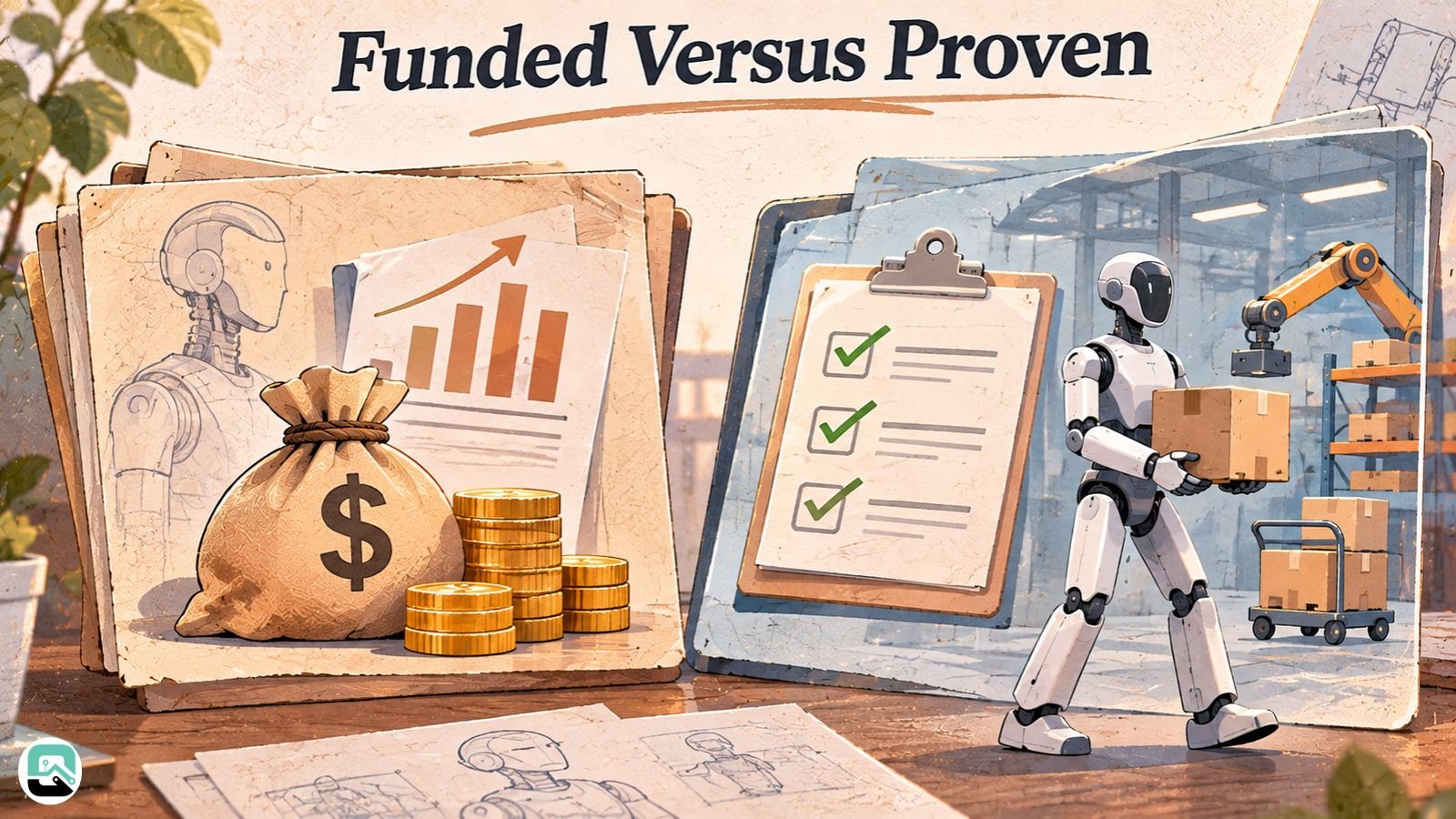
A large round says little about how far a company has actually come. A five-step ladder shows where each one stands:
- Laboratory demonstration
- Controlled pilot
- Customer-site testing
- Paid commercial deployment
- Repeat orders and scaled production
Agility and Bedrock sit on the fourth step and reach for the fifth. Most companies here haven’t publicly moved past the second or third, even with nine-figure rounds and named pilot partners.
Shipment counts make the gap plain. Unitree says it shipped more than 5,500 humanoids in 2025, while the South China Morning Post put Tesla, Figure and Agility at roughly 150 units each. Volume and valuation point in opposite directions.
Trial results need context too. Google DeepMind reported a 96% success rate for Apptronik’s Apollo 2 on Mercedes-Benz lines, without trial counts or intervention rates. Runtime claims hide similar gaps, and a closer look at humanoid robot operating hours shows why cost per productive hour matters more than battery life.
For scale, factories worldwide installed 542,000 conventional industrial robots in 2024, according to the IFR. That figure doesn’t measure humanoid adoption, but it frames how small today’s humanoid fleets remain.
Four questions help with any startup announcement:
- Does it name paying customers, or only partners and investors?
- Is the order figure a signed backlog or a pipeline?
- Has the round closed, or does it run “up to” an amount?
- Does the valuation come from the company, a lead investor, or press estimates?
FAQs
Q. Which robotics startups raised the most in 2026?
Among the rounds verified here: Neura Robotics (up to $1.4 billion, tied to milestones), Skild AI (about $1.4 billion), XPeng’s robotics business ($900 million-plus), AI² Robotics (about $736 million), Bedrock Robotics ($600 million) and Agile Robots ($500 million). Unitree’s IPO raised about $905 million, but it now trades publicly.
Q. Which European robotics companies raised the most in 2026?
Neura Robotics led with a Series C of up to $1.4 billion in June. Agile Robots followed with a $500 million Series F in November, and Humanoid raised a $152 million Series A in July.
Q. Is China ahead in humanoid robotics?
China takes about two-thirds of humanoid venture funding in Dealroom’s data and ships the most units. That lead doesn’t automatically extend to autonomy or paid deployments.
Q. What separates a humanoid maker from a robot-brain startup?
A humanoid maker builds the physical robot. A brain startup such as Skild AI or Physical Intelligence builds software meant to control many robot designs. Neura and XPeng try to do both.
Related: Best Humanoid Robot Stocks to Watch in 2026: 3 Pure-Plays + ETFs
| Disclaimer: We strive to provide accurate and up-to-date information. Funding figures, valuations, pricing, and deployment claims may change. Readers should verify details through official company announcements and reliable sources before making investment or business decisions. This article is for informational purposes only and does not constitute financial or investment advice. |