

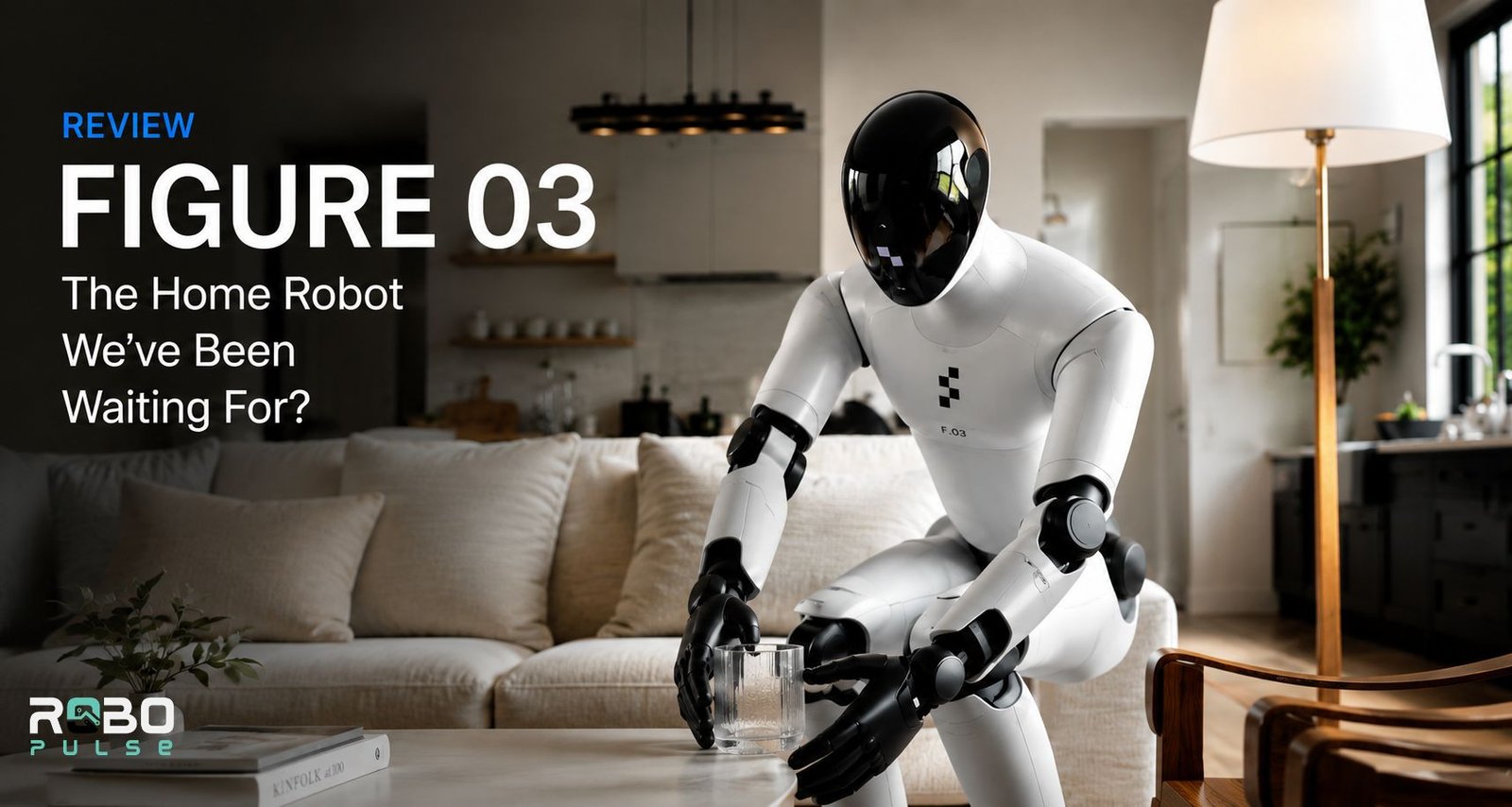
Figure 03 is Figure AI’s most advanced humanoid robot — a ground-up redesign built specifically for the home, powered by the Helix AI system, and engineered for mass-market production at BotQ.
When Figure AI introduced Figure 03 on October 9, 2025, it marked a genuine turning point in how the company thinks about its product.
Figure 02 served factories. BMW Spartanburg. Industrial validation. Controlled environments with predictable variables. Figure 03 rebuilds everything from the ground up — and points it at somewhere much harder: the home.
Figure AI’s official documentation forms the basis of this Figure 03 review, with clearly labelled industry analysis filling gaps where official data is not yet available. Every claim stands on verified ground.
The question is not whether Figure 03 impresses.
The question is whether it works in a kitchen — and whether Figure AI has built the infrastructure to prove that at scale.
Figure 03 Specifications at a Glance
| Feature | Figure 03 Details | Why It Matters |
|---|---|---|
| Height | 168–173 cm (5’6″–5’8″) | Human-scale proportions designed for home and workplace environments |
| Weight | 60–61 kg | Lighter and more compact than previous generations |
| Payload | 20 kg | Capable of carrying groceries, laundry baskets, and other everyday loads |
| Runtime | ~5 hours | Supports extended operation between charging cycles |
| Speed | 1.2 m/s | Practical walking speed for indoor environments |
| System | Fully Electric | Improved efficiency, quieter operation, and faster actuation |
| Degrees of Freedom | 30 DoF | Human-like movement and manipulation capabilities |
| Hands | 20-DoF Dexterous Hands | Enables complex grasping and fine object manipulation |
| Hand Sensors | 3 g Tactile Fingertips | Detects extremely light contact and helps prevent object slippage |
| Palm Cameras | Embedded in Each Hand | Provides close-range visual feedback when external cameras are blocked |
| Charging | 2 kW Wireless Inductive Charging | Autonomous charging without physical connectors |
| Data Offload | 10 Gbps mmWave | Enables rapid fleet learning and behavioral data synchronization |
| AI System | Helix Vision-Language-Action (VLA) | Learns from human demonstrations and performs complex tasks |
| Safety Design | Soft Textiles + Multi-Density Foam | Designed for safer operation around people |
| Manufacturing | BotQ Production System | Built for large-scale manufacturing and lower unit costs |
| Target Price | Not Officially Announced | Industry estimates suggest $20,000–$30,000, but Figure AI has not confirmed pricing |
All specifications above are verified from Figure AI’s official product page and launch documentation. Target price is an industry estimate based on multiple robotics publications — not officially confirmed by Figure AI. Browse full specs for every humanoid robot in the RoboPulse database.
What Makes Figure 03 Different?
The biggest change from Figure 02 is not a single component upgrade.
It is a complete architectural rethink.
Figure 03 was designed for Helix, the home, and the world at scale — a ground-up hardware and software redesign rather than an iterative improvement on the previous generation.
Figure 02 proved the concept in industrial environments. WhiFigure 03 takes everything learned from that work and rebuilds the platform around the variability and complexity of domestic life.
Softer surfaces. Wireless everything. A hand system rebuilt specifically to enable the Helix AI. A manufacturing approach designed to produce units at volume rather than in prototype quantities.
The philosophy shift matters as much as the hardware changes.
Figure AI’s position is that by solving for the variability and intractability of the home, the company is developing a truly general-purpose product capable of the widest possible range of tasks in both domestic and commercial settings.
A robot that can handle a real home can handle almost anything else.
That is what Figure 03 represents.
Helix: The Intelligence Behind Figure 03
Figure 03 is built around Helix — Figure AI’s proprietary vision-language-action AI system.
Every hardware decision on Figure 03 was made in the service of enabling Helix to work better. The camera system, the hand design, the tactile sensors, the palm cameras — these are not standalone engineering achievements. They are inputs Helix needs to function in unstructured real-world environments.
Figure 03 introduces a next-generation vision system engineered for high-frequency visuomotor control. Its new camera architecture delivers twice the frame rate, one-quarter the latency, and a 60% wider field of view per camera — all within a more compact form factor.
That perceptual improvement is what allows Helix to operate in cluttered, unpredictable spaces.
A home kitchen at 7 am looks nothing like it did the night before. Objects move. Layouts shift. The camera architecture gives Helix enough visual information to make reliable decisions in those conditions.
Figure 03 also includes 10 Gbps mmWave data offload capability, allowing the entire fleet to upload terabytes of data for continuous learning and improvement.
This means every unit in deployment feeds behavioural data back into the shared system — and receives model improvements in return.
The fleet learns as a collective.
RoboPulse Take: The 10 Gbps data offload during charging pauses is the feature most coverage treats as a footnote. It is not. That compounding intelligence advantage grows with every unit deployed, and it is the long-term moat that hardware specs alone cannot capture.
Hands, Palm Cameras, and the 3-Gram Fingertip Breakthrough
Manipulation is the hardest unsolved problem in consumer robotics.
Walking through a home is an engineering challenge. Reliably picking up the objects inside it — glasses, fabric, irregular containers, items left at unexpected angles — is an entirely different level of difficulty.
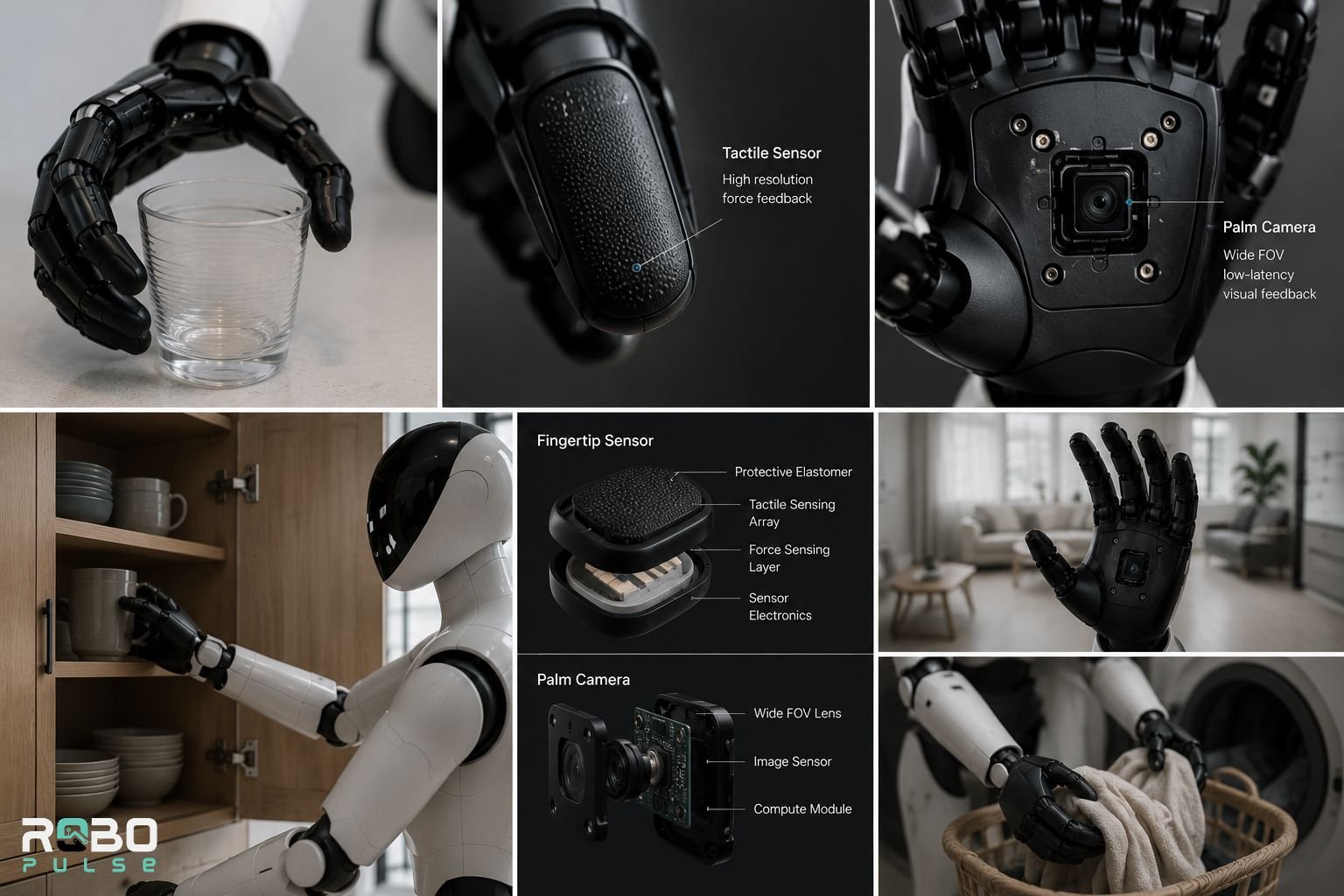
Figure 03 hands represent a major leap in compliant and tactile design. Softer, more adaptive fingertips increase surface contact area, enabling more stable grasps across objects of varied shapes and sizes.
After surveying existing market options, Figure found that current tactile sensors had inherent limitations that could not withstand real-world use. This led to the internal development of Figure’s first-generation tactile sensor, guided by three principles: extreme durability, long-term reliability, and high-fidelity sensing.
The result: each fingertip sensor can detect forces as small as three grams of pressure — sensitive enough to register the weight of a paperclip resting on your finger. This precision enables Helix to distinguish between a secure grip and an impending slip before it occurs.
The palm cameras address a separate problem entirely.
Each hand integrates an embedded palm camera with a wide field of view and low-latency sensing, offering redundant, close-range visual feedback during grasps. These cameras allow Helix to maintain visual awareness even when the main cameras are occluded — when reaching into a cabinet or working in confined spaces.
A washing machine drum. A deep kitchen cabinet. A cluttered shelf.
These are exactly the environments where overhead sensors lose line of sight and most robotic manipulation systems fail. The palm cameras are a direct engineering answer to that specific problem.
Wireless Charging and Continuous Operation
Charging coils in the robot’s feet allow it to simply step onto a wireless stand and charge at 2 kW. In a home setting, this means the robot can automatically dock and recharge itself as needed throughout the day.
Figure 03 does not run for 5 hours and stops.
It charges during natural task pauses — returning to the dock, recovering power, and continuing without any human intervention.
For commercial deployments, near-continuous operation is possible as long as the robot can step onto a charging mat for a period during the use case. The fast wireless data offload means the robot can offload seamlessly during shift breaks just by returning to the dock.
The same dock interval that restores battery charge simultaneously syncs the robot’s behavioural data with the wider fleet at 10 Gbps.
Charging and learning happen together, automatically, every time.
Designed for the Home: Safety and Usability
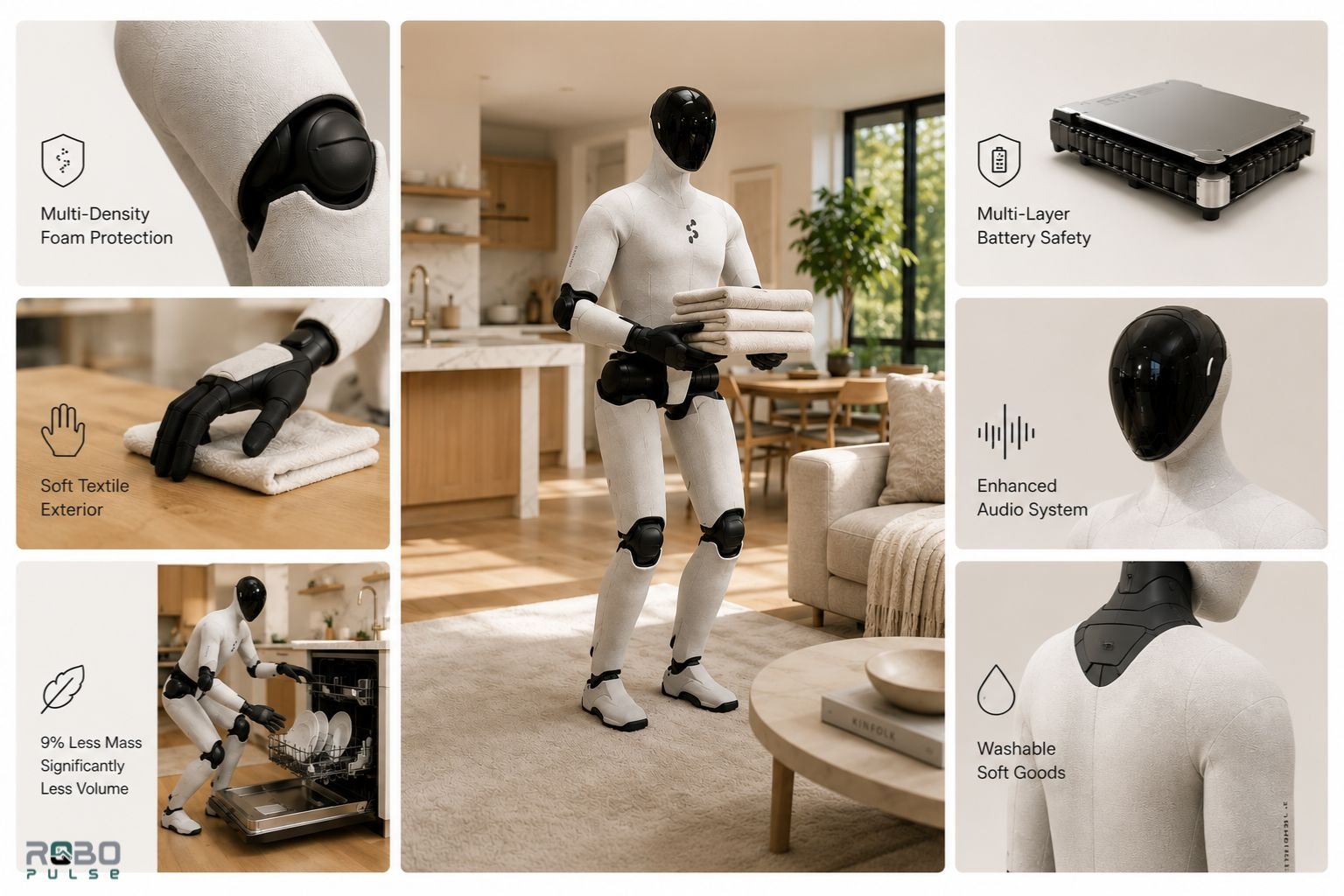
Figure 03 features strategically placed multi-density foam to protect against pinch points and is covered in soft textiles rather than hard, machined parts. It also has 9% less mass and significantly less volume than Figure 02, making it easier to manoeuvre through household spaces.
The battery safety approach is equally deliberate.
The Figure 03 battery incorporates multiple layers of protection against abuse or malfunction, including safeguards at the Battery Management System level, cell level, interconnect level, and pack level. The battery has already achieved certification to the UN38.3 standard.
Daily usability was also addressed specifically.
The soft goods are fully washable and can be removed or replaced without tools, allowing quick and easy swaps.
Figure 03 features an upgraded audio hardware system for better real-time speech-to-speech interaction. Compared with Figure 02, its speaker is twice the size and nearly four times more powerful, while the microphone has been repositioned for improved performance and clarity.
These are not headline engineering achievements.
They are the details that determine whether a robot is actually liveable with — or just impressive to watch.
BotQ: The Manufacturing Infrastructure Behind Figure 03
Capability and manufacturability are separate problems.
A robot that works does not automatically become a robot that can be built at scale, consistently, at a cost that supports a viable business.
BotQ is Figure’s dedicated manufacturing facility designed to scale robot production. BotQ’s first-generation manufacturing line will initially be capable of producing up to 12,000 humanoid robots per year, to produce a total of 100,000 robots over the next four years.
While Figure 02 was primarily designed to be manufactured with CNC machining, Figure 03 relies heavily on tooled processes such as die-casting, injection molding, and stamping. This shift demanded significant up-front investment in tooling, but the payoff is clear: each Figure 03 unit now costs dramatically less to build, with the economics improving as volumes grow.
The 12,000 units per year capacity is the number that matters most for commercial availability.
It is the infrastructure that turns Figure 03 from an impressive prototype into a scalable product — and what makes a consumer price point structurally achievable rather than aspirational.
Figure 03 for Commercial Applications
Home-first does not mean home-only.
The actuators can perform at 2x faster speeds with improved torque density. The improvements to the hands and sensory suite made for Helix are of major significance for commercial use cases — enabling intelligent navigation and precise manipulation of objects such as small pieces of sheet metal and deformable poly bags.
Commercial customers can also design distinct uniforms for their Figure 03 fleet, with the option to use more durable or cut-proof materials. New side screens on Figure 03 allow quick identification across large fleets and can be fully customised to match each customer’s branding or operational needs.
The commercial angle is the direct beneficiary of solving the home problem.
If Helix can handle the unpredictability of a real household, structured commercial environments require significantly less configuration overhead.
Figure 03 Price: What Is Confirmed and What Is Not
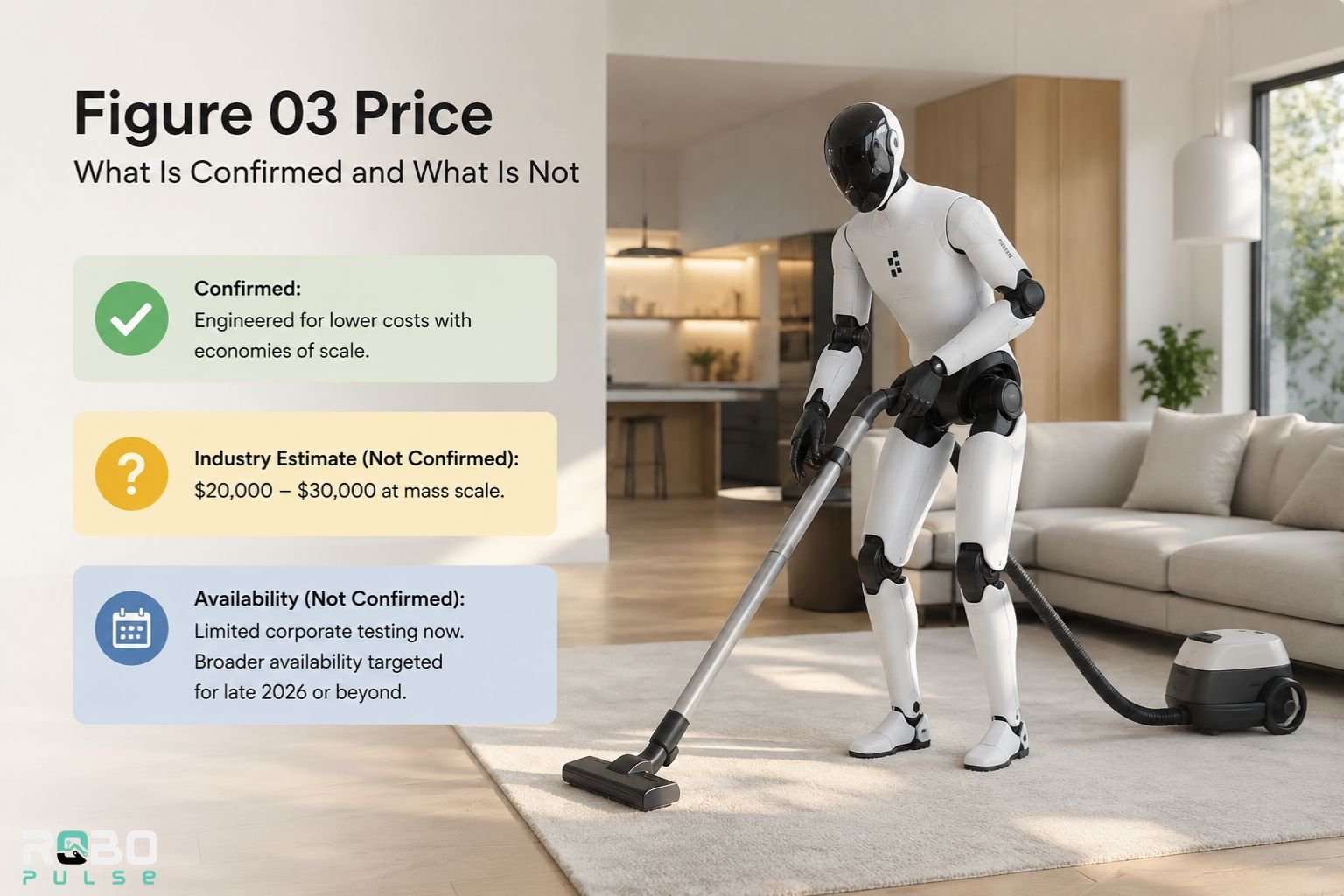
Figure AI has not published an official retail price for Figure 03.
What is confirmed: Figure 03 was engineered for dramatically lower unit costs than Figure 02, with economics improving as BotQ volumes grow. The manufacturing shift to die-casting and injection moulding exists specifically to enable lower per-unit pricing at scale.
Industry estimates — not confirmed by Figure AI:
Industry estimates have suggested that Figure AI could eventually target a consumer price range of approximately $20,000–$30,000 at scale. Figure AI has not confirmed a retail price or future pricing roadmap for Figure 03.
For context, earlier Figure 02 industrial units were reported to range from $30,000 to $150,000 depending on deployment scale, making the Figure 03 target a significant pricing repositioning if confirmed.
These figures are circulating across industry sources but have not been officially confirmed by Figure AI as of this review. Treat them as credible directional estimates, not confirmed transaction prices.
Current availability — confirmed:
Figure 03 is not publicly available for consumer purchase. The company is currently deploying limited units to select corporate partners and early testing programmes. Based on industry reporting, broader home deployments and retail availability are targeted for late 2026 or beyond — though Figure AI has not published an official timeline.
Figure 03 vs Tesla Optimus vs 1X NEO: How It Compares
| Specification | Figure 03 | Tesla Optimus | 1X NEO |
|---|---|---|---|
| Estimated Price | $20k–$30k (industry estimate) | Not publicly confirmed | Not publicly confirmed |
| Primary Focus | Home + Commercial | Industrial Automation | Home |
| AI System | Helix VLA | Tesla Neural Network | 1X Proprietary AI |
| Tactile Sensing | 3g fingertip detection | Not publicly disclosed | Not publicly disclosed |
| Palm Cameras | Yes | Not publicly disclosed | Not publicly disclosed |
| Charging | 2 kW wireless inductive | Not publicly disclosed | Not publicly disclosed |
| Runtime | ~5 hours | Not publicly confirmed | Not publicly confirmed |
| Manufacturing | BotQ facility targeting 12,000 units/year | Production scale not publicly confirmed | Not publicly confirmed |
| Availability | Limited partner deployments | Internal testing and limited deployment | Limited deployment |
Competitor data based on publicly available information as of mid-2026. Unspecified fields reflect data not yet publicly confirmed by the respective manufacturers.
Figure 03 vs Tesla Optimus
Tesla Optimus is being developed primarily for internal Tesla factory use — a controlled industrial context where variability is managed, and tasks are predefined. Figure 03 is targeting the opposite environment: the uncontrolled, unpredictable home.
The palm cameras and 3-gram tactile sensors give Figure 03 a meaningful manipulation advantage for domestic tasks. Tesla’s advantage is manufacturing scale — if Optimus ever reaches consumer markets, Tesla’s Gigafactory infrastructure is unmatched.
For home use in 2026, Figure 03 is the more relevant platform. For industrial automation at volume, Optimus may eventually win on cost alone.
Figure 03 vs 1X NEO
1X NEO is the most direct competitor — same approximate price bracket, same home-first positioning.
Figure 03’s palm cameras are a structural advantage that 1X NEO does not currently offer, particularly for confined-space tasks like loading washing machines or reaching into deep cabinets. The 3-gram fingertip sensitivity is also not publicly matched by 1X.
1X NEO’s advantage is focus. Without industrial heritage trade-offs in the design, 1X has been built purely around home use from the start. Whether that produces better real-world domestic performance than Figure 03’s more versatile architecture remains to be tested at scale.
Neither robot has proven consumer-scale domestic deployment. That is the honest answer for both.
See how Figure 03 stacks up against every major humanoid robot on our full comparison tool.
Who Should Consider Figure 03?
Figure 03 makes the most sense for:
- Enterprise and commercial operators looking for an adaptable manipulation platform with near-continuous operation capability
- Early technology adopters are willing to engage during the deployment partner phase before consumer availability
- Industrial buyers who need precision object handling with tactile feedback in semi-structured environments
- Organisations evaluating humanoid robotics for logistics, light manufacturing, or service environments
Figure 03 is not yet the right choice for:
- Consumers expecting immediate retail availability — broader access is reportedly targeted for late 2026 or beyond
- Budget-constrained buyers — even at the industry-estimated $20,000–$30,000, it is a significant investment without confirmed pricing
- Anyone needing a fully proven domestic track record — large-scale home deployment validation is still ahead
Is Figure 03 worth waiting for?
If the $20,000–$30,000 industry estimate proves accurate at retail, Figure 03 becomes one of the most compelling consumer technology purchases of the decade — assuming Helix delivers on domestic generalisation at scale.
That is a meaningful if.
The architecture is genuinely built for the problem. The manufacturing infrastructure exists to support the price. The missing piece is large-scale real-world proof in actual homes.
If you can engage as an early deployment partner, the platform is worth serious evaluation now. If you are a general consumer, late 2026 or 2027 is the more realistic window to watch.
Can Figure 03 Work Inside a Home?
This is the core question — and the honest answer in 2026 is: it is architecturally built for it, but large-scale domestic proof is still ahead.
What Figure 03 is designed to handle:
- laundry — loading, sorting, folding
- cleaning tasks
- doing dishes
- carrying and organising household items
- navigating stairs, tight corners, and shifting layouts
- voice-directed task delegation in natural language
Figure takes care of household tasks like laundry, cleaning, and doing dishes, all autonomously.That is the stated capability. The architecture supports it seriously.
The challenge that remains honest to state: homes change constantly.
A kitchen mid-cooking looks nothing like a kitchen after cleaning. Furniture moves. Objects end up in unexpected places. Helix needs to generalise across that variability reliably, across millions of different household configurations — not just controlled test environments.
Figure 03 has the hardware to attempt that problem seriously.
Whether Helix solves it at the consumer scale is what the coming deployment phase will determine.
Biggest Limitations of Figure 03
Domestic Generalisation at Scale Is Unproven
Figure 03 is architecturally designed for homes. That is different from being proven in homes at a meaningful consumer scale. Helix needs to demonstrate reliable task generalisation across the genuine diversity of real household environments. That proof accumulates through deployment, and deployment is still in early stages.
Consumer Pricing and Timeline Are Not Yet Confirmed
Industry estimates point to a $20,000–$30,000 target price range. Figure AI has not officially confirmed this. Broader consumer availability is reportedly targeted for late 2026 or beyond, but no official retail timeline has been published.
61 kg is a Substantial Physical Presence
At 61 kg, Figure 03 is lighter and less voluminous than Figure 02, but it is still a significant physical object in a domestic environment. The soft textile exterior and foam padding address safety around people. The weight itself means any operational incident carries real physical consequences — an honest trade-off of maintaining the structural mass required for a 20 kg payload capability.
Performance Scores
| Category | Score /10 | What It Means |
|---|---|---|
| Dexterity | 9.4 | 3g tactile sensing and palm cameras set the manipulation benchmark for home humanoids |
| AI / Intelligence | 9.0 | Helix onboard VLA with fleet-wide learning is the most capable home AI architecture in 2026 |
| Value for Money | 8.0 | Industry-estimated $20k–$30k pricing changes accessibility — pending official confirmation |
| Hype Ratio | 8.5 | High visibility backed by genuine engineering substance, not demo theatre |
| Real-world Usefulness | 8.2 | Architecturally proven for domestic tasks — large-scale home deployment is still incoming |
| Build Quality | 9.1 | BotQ’s die-casting manufacturing at 12,000 units/year is serious production engineering |
| Overall | 9.0 / 10 |
Final Verdict: Is Figure 03 Worth It?
RoboPulse score: 9.0 / 10
Figure 03 is among the most ambitious consumer-focused humanoid robot projects in 2026. The 3-gram fingertip sensitivity, embedded palm cameras, onboard Helix AI, wireless inductive charging, and BotQ manufacturing infrastructure at 12,000 units per year represent a combination no home-focused competitor has matched.
It is not a finished consumer product yet.
Large-scale home deployment is still being built. Consumer pricing in the $20,000–$30,000 range is what industry analysts expect — but it has not been officially confirmed. The architecture is genuinely purpose-built for the problem.
What Figure AI has built with Figure 03 is not a demo. It is a manufacturing-ready, home-safe, AI-native platform designed from the ground up to live alongside people.
Whether it delivers on that in real homes, reliably, at consumer scale — that is the question 2026 and 2027 will answer.
Frequently Asked Questions
Q. Is Figure 03 a real robot?
Yes. Figure AI officially introduced Figure 03 on October 9, 2025 — a production humanoid robot built at BotQ, their dedicated facility producing up to 12,000 units per year.
Q. How much does Figure 03 cost?
Figure AI has not officially confirmed a retail price. Industry analysts estimate a consumer target of $20,000 to $30,000 at mass-market scale — driven by Figure 03’s die-casting and injection moulding manufacturing approach. These are industry estimates, not confirmed figures.
Q. Is Figure 03 available to buy?
Not currently. Figure AI is deploying Figure 03 to select corporate partners and early testing programmes. The company targets broader consumer availability for late 2026 or beyond.
Q. What is Figure 03 designed to do?
Figure 03 handles household tasks — laundry, cleaning, dishes — fully autonomously. It also performs commercial work, from logistics to precision manipulation.
Q. How does Figure 03 charge?
Wireless inductive charging coils sit inside the soles of its feet. Stepping onto a charging mat delivers 2 kW automatically. The same interval pushes 10 Gbps mmWave data offload for continuous fleet-wide model updates.
Q. What AI system does Figure 03 use?
Figure 03 runs Helix — Figure AI’s proprietary vision-language-action AI system that operates onboard with no cloud dependency.
Q. How sensitive are Figure 03’s hands?
The custom tactile fingertip sensors detect forces as small as 3 grams — roughly the weight of a paperclip. This precision lets Helix predict and prevent object slippage before it happens.
Q. How does Figure 03 compare to Tesla Optimus?
Tesla primarily designs Optimus for internal factory use in controlled industrial environments. Figure 03 targets home and general commercial use, with palm cameras and 3-gram tactile sensing giving it a clear manipulation advantage for domestic tasks. Tesla’s long-term manufacturing scale could shift the equation if Optimus ever reaches consumer markets.
Q. How does Figure 03 compare to 1X NEO?
Both robots target similar price brackets and home environments. Figure 03 leads on tactile sensitivity and palm camera capability for confined-space manipulation. 1X NEO takes a narrower home-only focus without industrial heritage trade-offs. Neither robot has proven consumer-scale domestic deployment as of mid-2026.
Q. What are the palm cameras for?
Each hand carries an embedded palm camera that delivers close-range visual feedback when the main cameras lose line of sight — inside washing machine drums, deep cabinets, or any confined space.
Disclaimer: RoboPulse is independent and unaffiliated with Figure AI or any company mentioned in this review. No party commissioned or funded this article. All specifications draw from Figure AI’s official documentation. Pricing figures reflect industry analyst estimates as of mid-2026 — not confirmed by Figure AI.