

Three listed companies sell humanoid robots as their core business. UBTech trades in Hong Kong and Unitree trades on Shanghai’s STAR Market. Agility Robotics is due to start trading on Nasdaq as AGLT on November 5, 2026.
Every other route into humanoid robots runs through a bigger company, such as Tesla or Hyundai, or through an ETF.
Pure-play does not mean safe. UBTech and Agility lose money. Unitree is profitable, but its profit fell in its first quarter as a listed company even as revenue grew.
This guide covers each pure-play’s latest numbers, the main proxy stocks, three humanoid ETFs, and how to buy each from outside China. It ends with a checklist for judging any name. It is research, not investment advice.
Which humanoid robot stocks can you buy today?
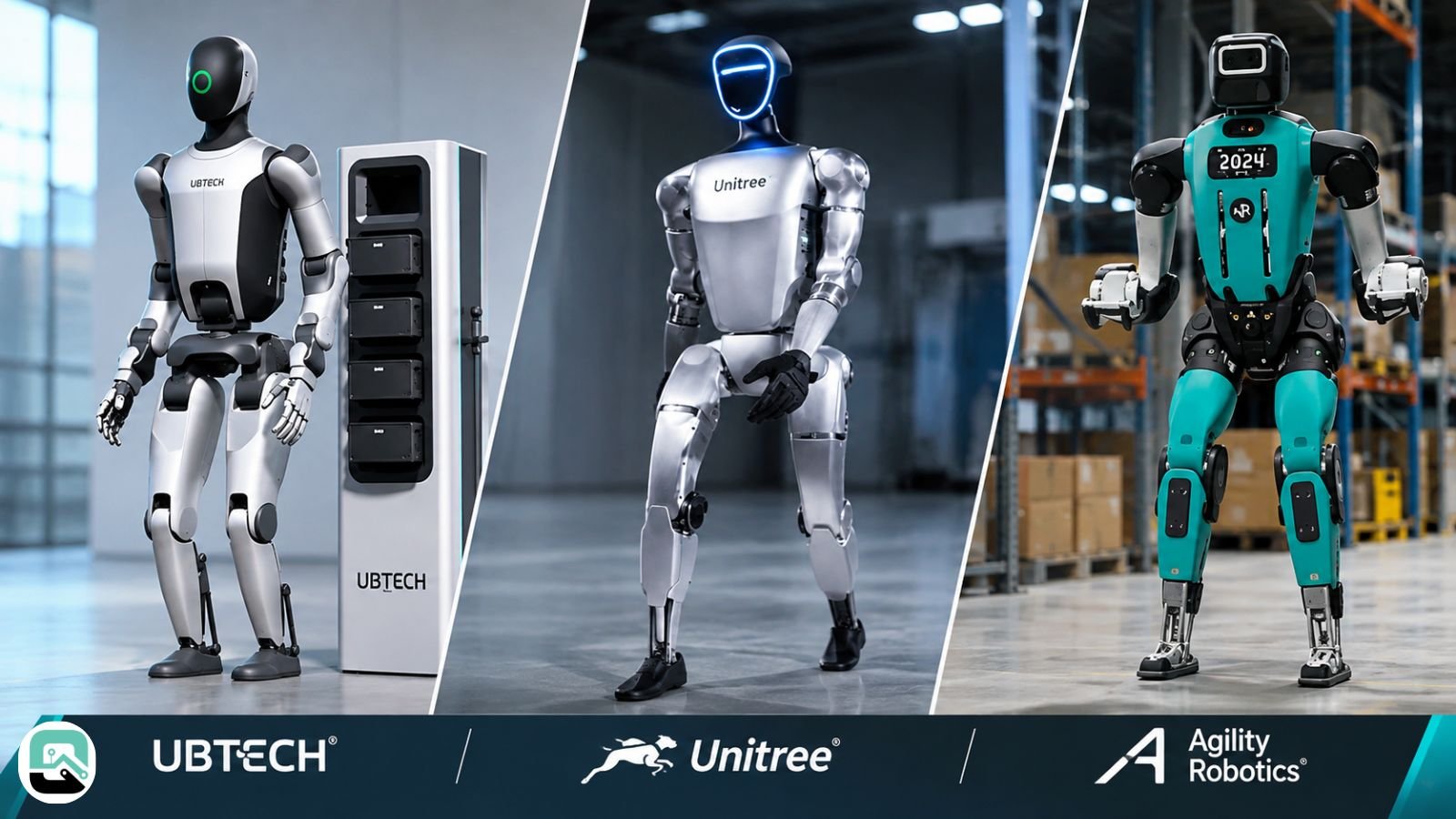
The three humanoid pure-plays at a glance, as of November 3, 2026:
| Company | Ticker and exchange | Trading status | Profitable? |
|---|---|---|---|
| UBTech Robotics | 9880.HK, Hong Kong | Listed since December 2023 | No |
| Unitree Robotics | 688836.SH, Shanghai STAR Market | Listed August 19, 2026 | Yes |
| Agility Robotics | AGLT, Nasdaq | Trading expected November 5, 2026 | No |
Is UBTech a good way to own humanoid robots?
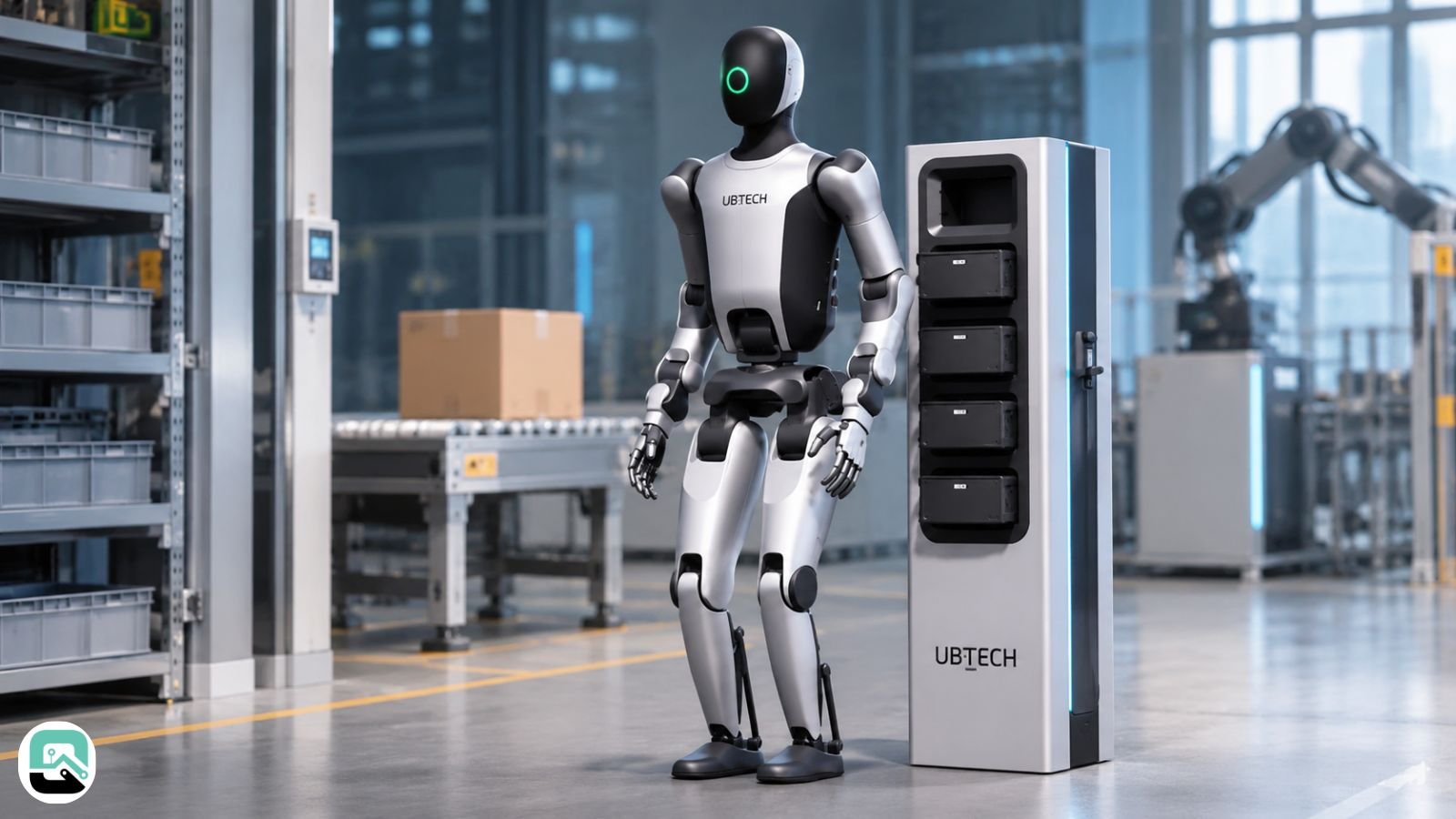
UBTech (9880.HK) offers the most direct listed exposure backed by real humanoid sales. The company is growing fast and still loses money, so buyers get commercial traction along with losses and China-market risk.
UBTech’s first-half 2026 results show both sides:
- Revenue rose to RMB 1.269 billion, from RMB 621 million a year earlier.
- Full-size humanoid revenue jumped 1,445% to RMB 590.3 million, or 46.5% of the total.
- UBTech sold 921 full-size humanoids in the half.
- The net loss narrowed 23% to RMB 339 million.
The quality of that growth is improving. UBTech’s gross margin widened to 44.7% in the first half, and its adjusted EBITDA loss nearly halved.
Scale still needs context. UBTech sold 1,079 full-size humanoids in 2025, its first year of four-digit sales. That category is led by the Walker S2 industrial robot but includes other models. UBTech’s production plan calls for annual capacity of 5,000 industrial humanoids in 2026 and 10,000 in 2027.
Two numbers matter most in UBTech’s next filings: gross margin on humanoid units, and how much of the Walker order book turns into delivered robots.
What did Unitree’s IPO and first earnings report show?
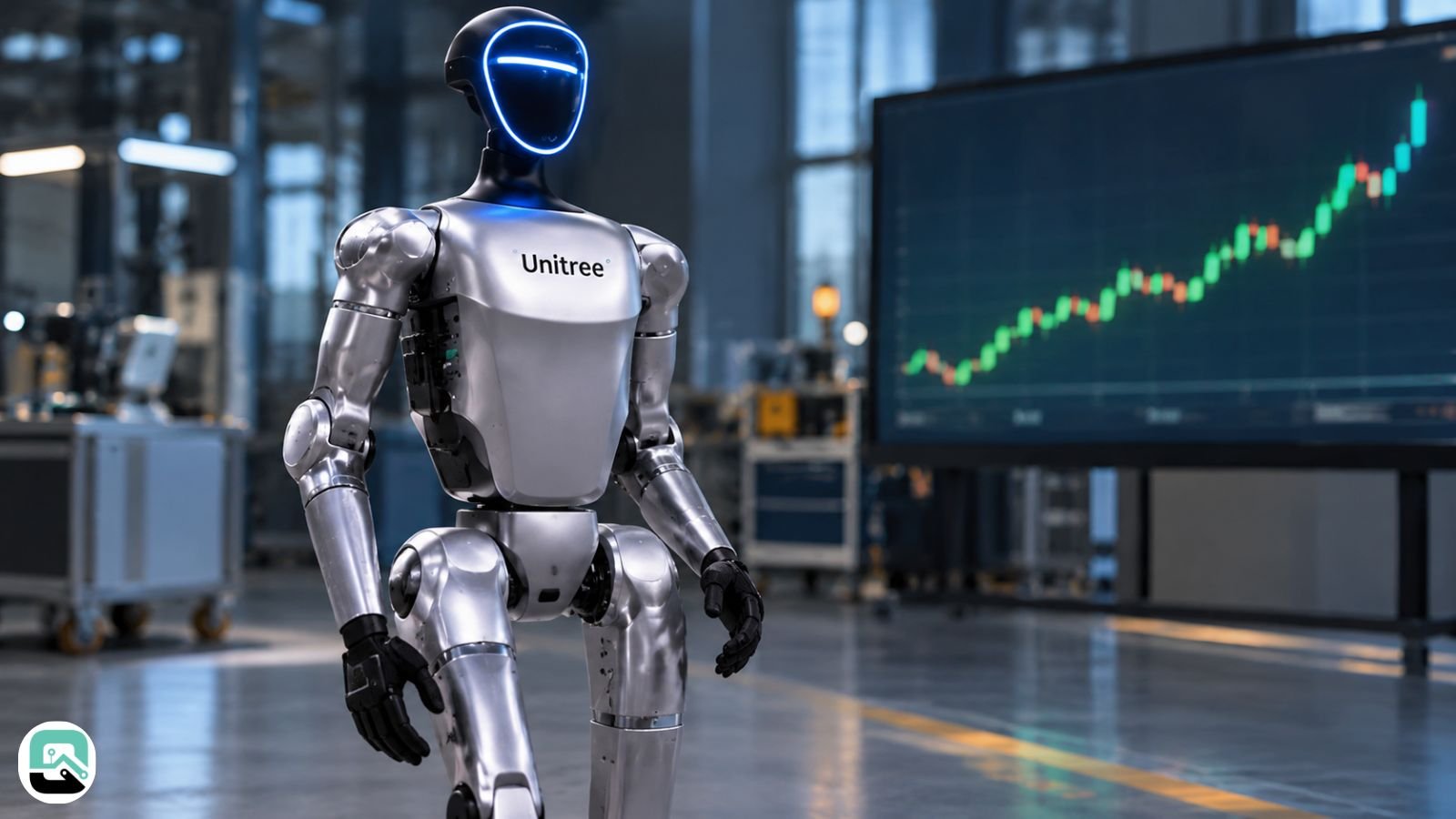
Unitree (688836.SH) became the first humanoid maker listed in mainland China, and its IPO set a demanding valuation reference for the sector.
How the Unitree IPO priced and traded
Unitree sold about 40.45 million new shares at RMB 150.80 and raised roughly RMB 6.1 billion. The offer price equaled 219.23 times 2025 earnings, against a 38.56x average for China’s general equipment manufacturers.
The stock opened 629% above the offer price on August 19 and closed its first day up 460%. STAR Market rules remove daily price limits for a new stock’s first five trading days, so early swings ran hard in both directions. Unitree lost more than RMB 170 billion of market value within three sessions of its debut.
A first-day pop measures demand for the shares, not the quality of the business. Revenue, margins and the price you pay matter more.
How Unitree’s business is performing
Reuters describes Unitree as the world’s largest humanoid robot maker by sales. Unitree delivered more than 5,500 humanoids in 2025 and earned net profit of about RMB 278 million on revenue near RMB 1.7 billion.
Unitree’s first report as a listed company, covering Q3 2026, was mixed:
- Revenue rose 69.9% to RMB 665 million.
- Net profit fell 17.4% to RMB 112.7 million, about half the RMB 224 million analysts expected.
- R&D spending rose 249.6% to RMB 127 million, mostly for AI models and computing.
- Nine-month revenue reached RMB 1.82 billion, up 55.7%.
Unitree’s customer base is another thing to watch. In the first three quarters of 2025, research and education buyers produced about 73.6% of Unitree’s humanoid revenue, and industrial customers about 9%. The Unitree G1 research humanoid shows why: its price and open software suit labs far more than factories.
Can you buy Agility Robotics stock yet?
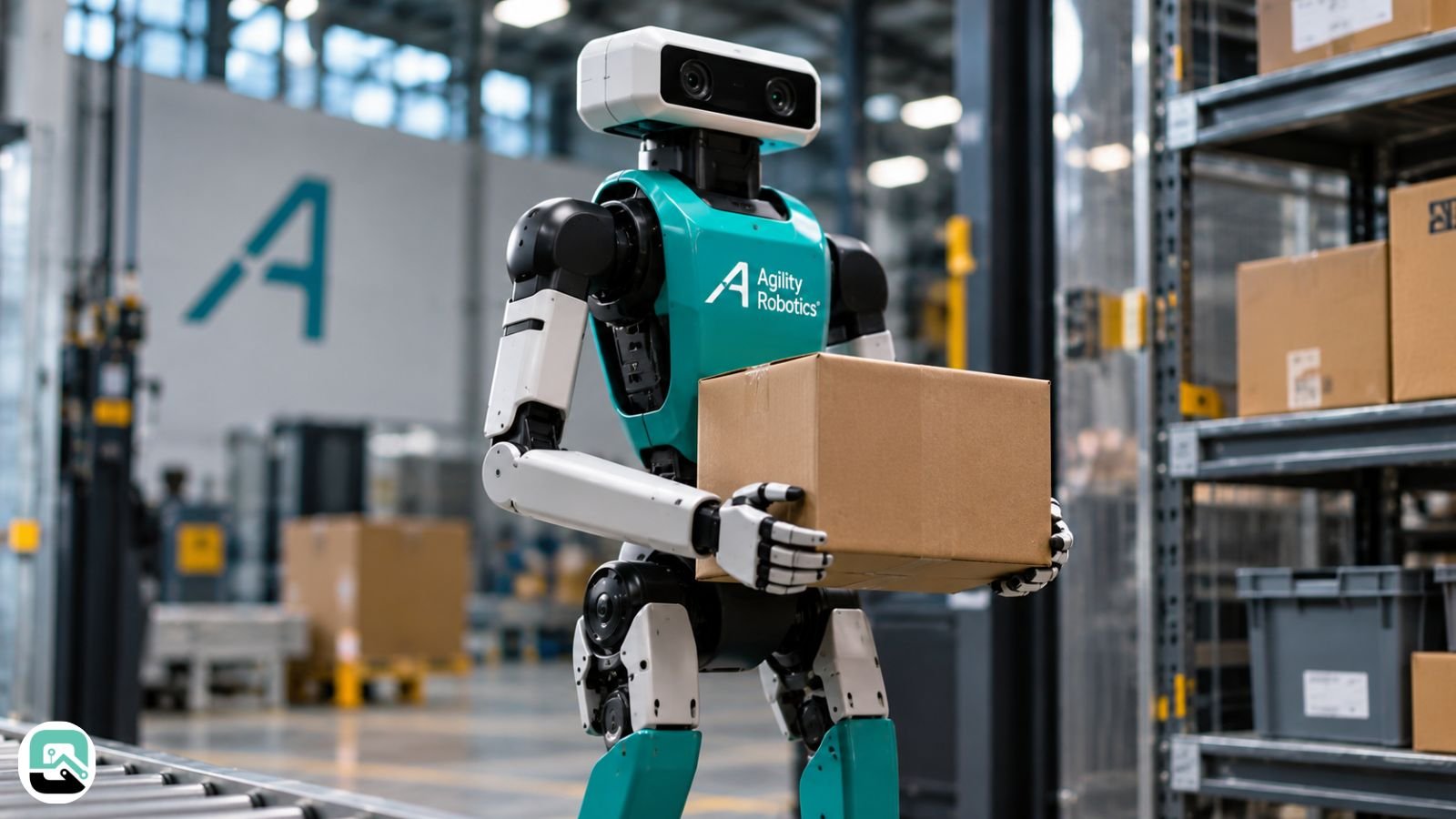
Not as of November 3, 2026. Agility Robotics is going public by merging with Churchill Capital Corp XI (Nasdaq: CCXI), a special purpose acquisition company (SPAC). Churchill XI shareholders voted on the deal on November 2.
According to Agility’s October 30 SEC filing, the deal is expected to close November 4. The combined company is expected to start trading on Nasdaq as AGLT on November 5. Both steps depend on shareholder approval and customary closing conditions.
How much cash Agility is raising
Agility expects about $465 million in gross proceeds:
- about $164 million left in Churchill XI’s trust account
- about $201 million from a Foxconn-led private placement at $10 per share
- $100 million of equity funding already received
When the deal was first announced, Churchill XI’s trust held about $424 million, assuming no redemptions. Most of that trust cash was redeemed, which tells you how many SPAC holders preferred their money back over AGLT shares.
Existing Agility shareholders roll their stakes into the new company and accept a 180-day lock-up.
What Agility’s financials show
Agility’s valuation rests on orders, not revenue. The S-4 filing shows 2025 net sales of $1.78 million against a $140 million operating loss. Coverage of the filing found that about 64% of 2025 revenue came from related parties.
The amended S-4 shows first-half 2026 net sales of $174,000 and a net loss of $361.9 million. Most of that loss jump came from stock-based compensation, a non-cash charge.
Agility also cites more than $300 million in committed orders for its Digit warehouse humanoid, now in its fifth version. Those orders depend on contractual milestones and product specifications, so they are not current revenue. Early-access deliveries of Digit 5 are planned for early 2027.
Newly merged SPAC stocks often trade unpredictably. Some investors wait out the first weeks of AGLT trading before deciding.
How do UBTech, Unitree and Agility compare?
Unitree is the only profitable pure-play, UBTech has the largest humanoid revenue, and Agility is priced almost entirely on future orders.
| Measure | UBTech (9880.HK) | Unitree (688836.SH) | Agility (AGLT) |
|---|---|---|---|
| Latest period | H1 2026 | Q3 2026 | H1 2026 |
| Revenue in that period | RMB 1.27 billion | RMB 665 million | $174,000 |
| Profit or loss in that period | Loss of RMB 339 million | Profit of RMB 113 million | Loss of $361.9 million |
| Humanoid units sold | 921 full-size units in H1 2026 | More than 5,500 in 2025 | Not disclosed as a sales figure |
| Valuation reference | No IPO benchmark; priced daily by the Hong Kong market | IPO at 219x 2025 earnings | $2.5 billion pre-money value vs $1.78 million 2025 sales |
| Main thing to watch | Gross margin and order delivery | Profit trend as R&D climbs | Conversion of $300 million+ orders into revenue |
The periods differ because each company reports on its own schedule. Compare growth direction and profitability, not raw totals.
Is Tesla a humanoid robot stock?
Partly. Tesla (TSLA) offers the largest, most liquid US-listed exposure to a humanoid program. Cars, energy and autonomy still drive the business, and Optimus does not appear as a separate revenue line.
On the Q3 2026 earnings call, Elon Musk said Tesla had started early Optimus production on a high-volume line in Fremont. Most of the equipment for a line sized at about 1 million robots a year is already in place.
Musk also set expectations low for speed:
- Reaching a rate of 20,000 robots a week will take at least a year, possibly longer.
- Deliveries to outside companies should start around the end of 2027.
- He expects the ramp to be bumpy because the product is so new.
Those are management targets, and Tesla has moved Optimus dates before. The hands remain the hardest hardware problem, which our look at Optimus Gen 3 hardware covers in detail.
Buying Tesla for Optimus means paying for robotics optimism inside one of the world’s largest companies.
Which other stocks give humanoid robot exposure?
Several large companies own part of the humanoid story, but none is a clean play.
Hyundai and Boston Dynamics
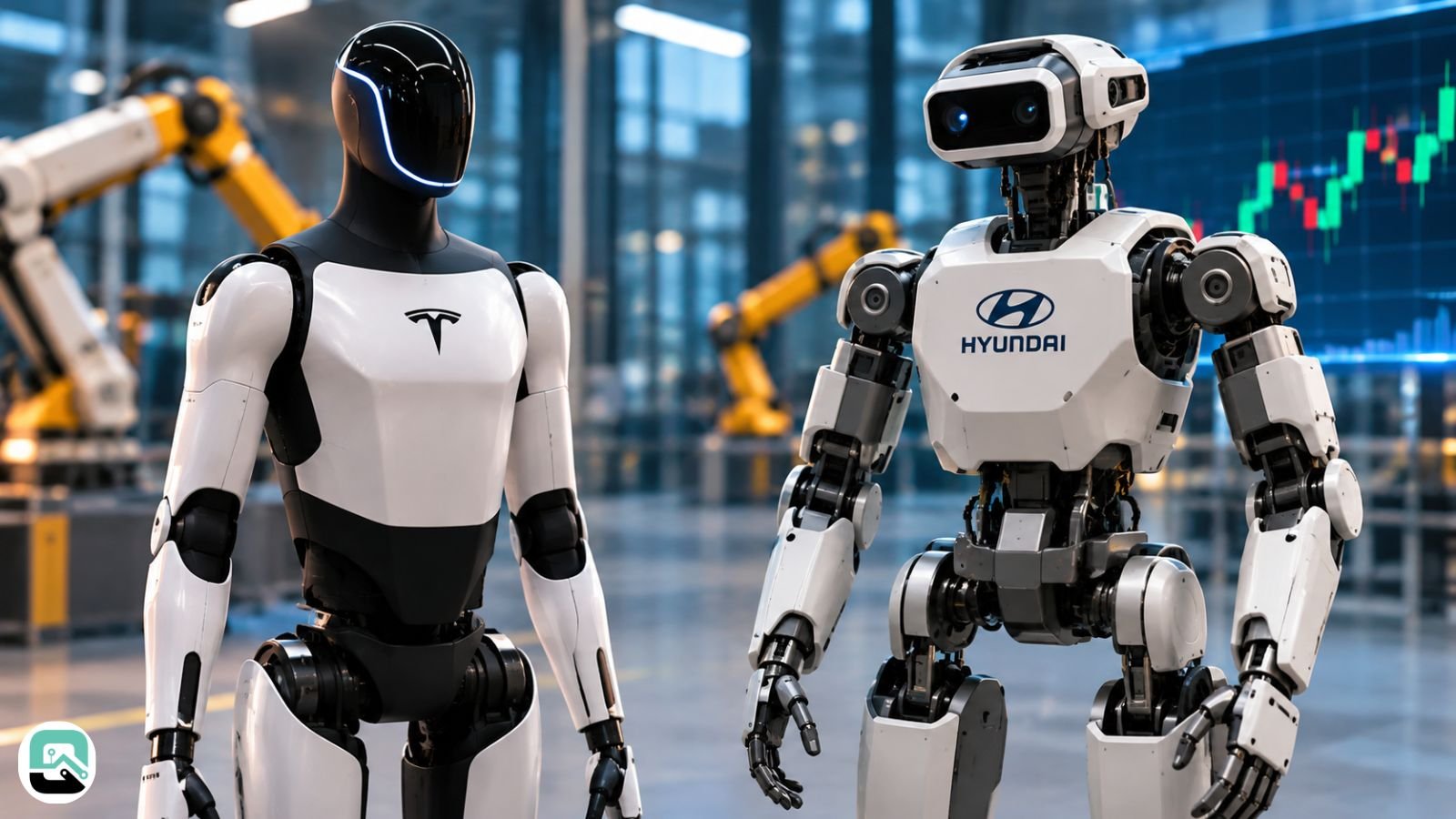
Boston Dynamics is not publicly traded. It now sits entirely inside Hyundai Motor Group after Hyundai affiliates bought SoftBank’s last 9.65% stake for about $325 million in 2026.
Ownership is spread across the group, not held by one listed company. Before the SoftBank buyout, HMG Global held 56.3% and Executive Chair Chung Euisun held 22.5%. HMG Global is a joint vehicle of Hyundai Motor, Kia and Hyundai Mobis.
Hyundai Motor shares (005380.KS) therefore give partial, indirect exposure to the electric Atlas humanoid. They also trade mainly in Seoul, which limits access for many US investors.
Chips, software and other proxies
- Nvidia (NVDA) sells compute modules and AI model tools used across many humanoid programs, including its Jetson Thor hardware and Isaac GR00T models.
- Mobileye (MBLY) agreed in January 2026 to buy humanoid developer Mentee Robotics for about $900 million in cash and stock.
- XPeng (XPEV) develops the IRON humanoid alongside its car business.
- Xiaomi (1810.HK) runs a humanoid program inside a consumer electronics group.
- Dobot (2432.HK) makes collaborative robots and humanoids and ranks among the top holdings of the HUMN ETF.
Backdoor listings in China
Two Chinese humanoid makers have bought control of listed companies:
- AgiBot, a private company, holds 58.6% of STAR-listed Swancor Advanced Materials (688585) and controls 63.6% of its votes. Swancor shares rose about 1,416% after the takeover news.
- UBTech agreed in December 2025 to buy control of Shenzhen-listed Zhejiang Fenglong Electric.
These stocks trade on humanoid hopes, yet their own businesses are composites and auto parts. That gap makes them highly speculative.
The trade-off across all proxies is simple. They are easier to buy and often more stable, but a humanoid breakthrough would barely register in their results.
Which humanoid robot ETF should you choose?

A humanoid ETF suits investors who believe in the theme but cannot pick the winner. The three US-listed funds differ sharply in method, fees, and concentration, so the right choice depends on the exposure you want.
| ETF | Method | Expense ratio | What it holds |
|---|---|---|---|
| KOID (KraneShares) | Passive; tracks the MerQube Global Humanoid Robotics and Physical AI Index | 0.69% after a fee waiver; 0.79% management fee | About 50 stocks spread across chips, components and robot makers; top positions near 2% each |
| HUMN (Roundhill) | Actively managed | 0.75% | Concentrated in robot makers; Tesla and UBTech lead, followed by Nvidia, XPeng and Dobot |
| BOTT (Themes) | Passive; tracks the Solactive Global Humanoid Robotics Index | 0.35% | About 30 companies chosen by humanoid revenue exposure; heavy China weighting |
KOID: the broad supply-chain fund
With its investments spread across many companies, KOID avoids relying heavily on any single robot maker. By late October 2026, the fund managed about $340 million, making it the largest of the three. The fund changed its name and index in 2026, as its annual shareholder report explains.
HUMN: the concentrated active fund
HUMN’s managers pick stocks themselves and lean toward integrators that build whole robots. Its fund factsheet listed Tesla at 8.93% and UBTech at 6.42% as its two largest holdings.
BOTT: the cheapest, most China-heavy fund
BOTT charges the lowest fee. One fund-data snapshot put its country mix at about 47% China, 25% US, and 18% South Korea.
One detail matters for anyone reading BOTT’s long-term chart. Before August 18, 2025, BOTT tracked an industrial robotics and automation index, so its earlier performance does not reflect humanoid stocks.
Holdings and fund sizes change often. Check each issuer’s page for current data before you buy.
How can you buy humanoid robot stocks from outside China?
US-listed names are simple, Hong Kong shares need the right broker, and mainland STAR Market shares are mostly closed to foreign retail investors.
| Stock or fund | Where it trades | Route for most US investors |
|---|---|---|
| Agility Robotics (AGLT) | Nasdaq | Any US broker once trading starts; CCXI trades until the merger closes |
| KOID, HUMN, BOTT | US exchanges | Any US broker |
| Tesla (TSLA), Nvidia (NVDA), Mobileye (MBLY), XPeng (XPEV) | US exchanges | Any US broker |
| UBTech (9880.HK), Xiaomi (1810.HK), Dobot (2432.HK) | Hong Kong | A broker with Hong Kong market access; prices in Hong Kong dollars |
| Hyundai Motor (005380.KS) | Seoul | A broker with Korean market access |
| Unitree (688836.SH) | Shanghai STAR Market | Usually no direct route; indirect exposure only through funds that hold it |
Unitree needs extra care. The STAR Market sits behind China’s capital controls, and most international retail investors cannot buy Unitree shares through a standard brokerage account.
Some crypto platforms listed Unitree-linked perpetual contracts before and after the IPO. Those contracts are derivatives. They do not make you a Unitree shareholder.
Which humanoid robot makers are still private?
Many of the best-known humanoid makers cannot be bought on any exchange:
- Figure AI is private. It builds the Figure 03 humanoid and was valued at $39 billion in its September 2025 funding round.
- Apptronik, 1X and AgiBot are private. Reuters has reported AgiBot’s plans for a Hong Kong IPO.
Be wary of anyone selling pre-IPO shares in these companies. In July 2026, Figure declared void any transfer of its stock that its board had not approved. Buyers on secondary marketplaces risk owning nothing.
What risks do humanoid robot stocks carry?
Valuation, unproven demand, and slipping timelines carry the most risk. Humanoid robots are early in commercial life, so share prices run ahead of delivered units.

- Valuation: Unitree’s IPO was priced at about 5.7 times its industry’s average earnings multiple, and Agility is valued at roughly 1,400 times its 2025 sales.
- Orders versus revenue: order books and production targets are not sales.
- Losses and shrinking profit: UBTech and Agility lose money, and Unitree’s profit is falling as R&D spending climbs.
- Timelines: outside Optimus deliveries and Digit 5 early access both sit in 2027 and could slip.
- Lock-ups and dilution: selling pressure can follow when Agility’s 180-day insider lock-up ends.
- Access and regulation: Hong Kong and mainland shares add currency risk, broker limits, and geopolitical exposure.
Position size matters more than stock-picking here. Investors who cannot absorb a large drop in a single name are better served by a diversified fund or a smaller stake.
How can you judge any humanoid robot stock?
Judge each company on delivered units and earnings, not demos. Five questions separate commercial progress from marketing:
- What share of revenue comes from humanoids? UBTech reports it directly. Tesla does not.
- How many units shipped, compared with targets? Set UBTech’s 1,079 units in 2025 against its 5,000-unit capacity plan for 2026.
- What margin do those units earn? Fast growth with thin margins can still destroy value.
- How long will the cash last? Check whether the company can fund its ramp without raising more money.
- What multiple are you paying? Compare the valuation with the growth you can realistically expect.
The same test exposes proxies. If a company does not break out humanoid revenue, you are betting on its main business.
Humanoid robot stocks FAQs
Q. Is there a US-listed pure-play humanoid robot stock?
Agility Robotics is set to become one when AGLT starts trading on Nasdaq, expected November 5, 2026. Before that, US investors could reach the deal only through the Churchill Capital Corp XI (CCXI) SPAC shares.
Q. Which company is leading in humanoid robotics?
The answer depends on the measure. Unitree leads on units sold, with more than 5,500 humanoids delivered in 2025. UBTech leads on revenue from full-size industrial humanoids. Tesla has started early Optimus production but does not sell Optimus commercially yet.
Which humanoid robot investment fits which investor?
The humanoid robot stock market is real but thin.
- Investors who want direct exposure and can stomach volatility can look at UBTech, Unitree or AGLT, sized small.
- Investors who want liquidity and lower volatility can use Tesla or Nvidia, accepting that humanoids barely move those stocks.
- Investors who believe in the theme but not in any single company can use an ETF, choosing between KOID’s breadth, HUMN’s concentration and BOTT’s low fee.
Whichever route you take, watch delivered units, margins and cash. Those numbers will show which humanoid makers are building businesses and which are still selling stories.
Related: 3 Humanoid Robot Stocks Betting on a $5 Trillion Future
| Disclaimer: This article is for informational and educational purposes only and does not constitute financial or investment advice. Stock prices, valuations, ETF holdings, and company performance may change. Investing in humanoid robotics involves significant risks, including market volatility and potential financial losses. Always conduct your own research and consult a qualified financial advisor before making investment decisions. |