

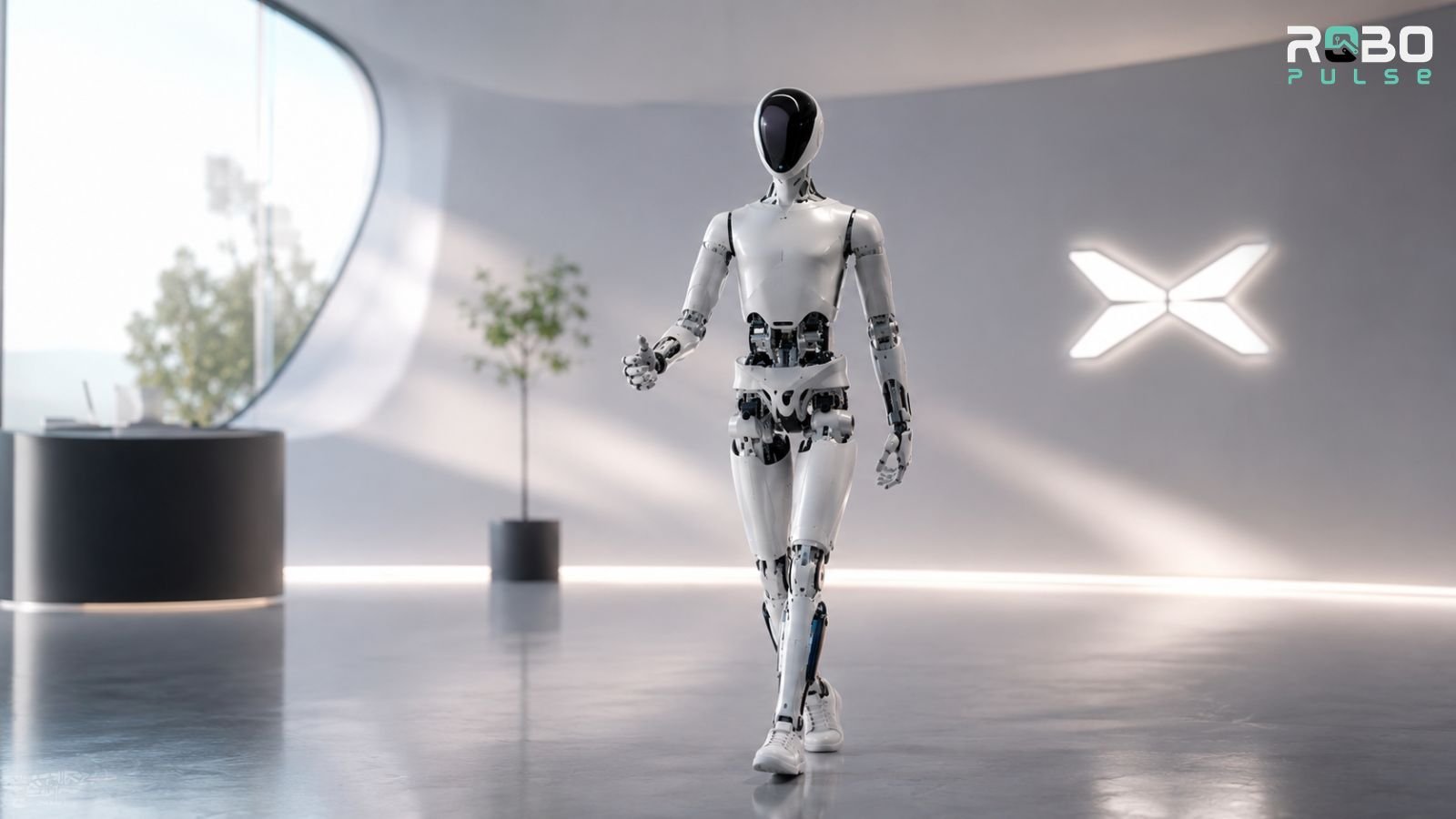
XPeng’s Next-Gen IRON is real, but it isn’t a consumer product yet. Unveiled November 5, 2025, the second-generation humanoid combines 82 degrees of freedom, three Turing AI chips, and 3,000 TOPS of onboard compute, per XPeng’s own announcement. XPeng has set a mass-production target of end of 2026, with no public price or confirmed consumer release date.
The robot went viral less for its specs than for a single stage moment: CEO He Xiaopeng partially removed the robot’s synthetic exterior on stage to prove no person was inside it, after viewers questioned whether its walk was human-performed. That demo is the direct source of the “IRON robot real or fake” search cluster.
This guide covers what’s actually confirmed — specs, capabilities, timeline, price — and separates it clearly from what’s still speculation or third-party estimates.
What Is the XPeng Next-Gen IRON?
It replaces the first IRON model shown a year earlier and is built around a bionic spine, artificial muscles, and full-body synthetic skin, rather than an exposed mechanical frame.
XPeng — better known as a Chinese electric vehicle maker listed on the NYSE and Hong Kong exchange — is positioning IRON as part of a broader “Physical AI” push. That push also includes a Robotaxi and a flying car line, both sharing the same in-house chip and AI-model stack developed for its cars.
Is the XPeng IRON Robot Real, or Is It a Person in a Suit?
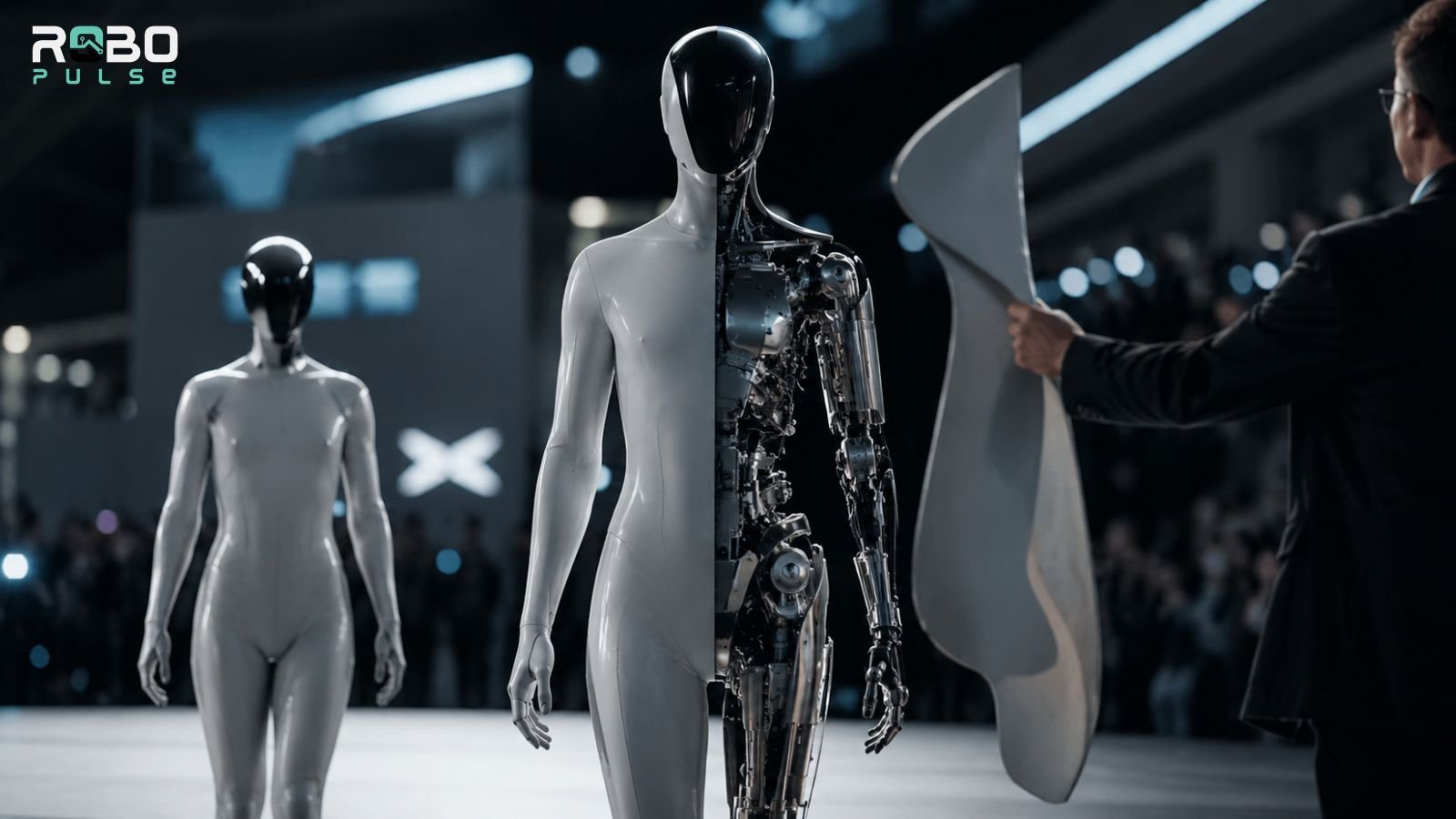
It’s a real robot, not a costumed performer. XPeng addressed this directly on stage by exposing the internal mechanical structure during the November 2025 demo.
The confusion is understandable. The combination of flexible synthetic skin, a bionic spine, and a fluid, catwalk-style bipedal gait produced motion that read as human to a lot of viewers watching the reveal — exactly the reaction XPeng was aiming for with its “extreme anthropomorphism” design approach.
XPeng Next-Gen IRON being a real robot does not mean it is market-ready. IRON is a manufacturer demo and an enterprise/developer platform right now, not a shipping consumer product. Worth keeping that distinction separate from the authenticity question.
What Are the Next-Gen IRON’s Specs?
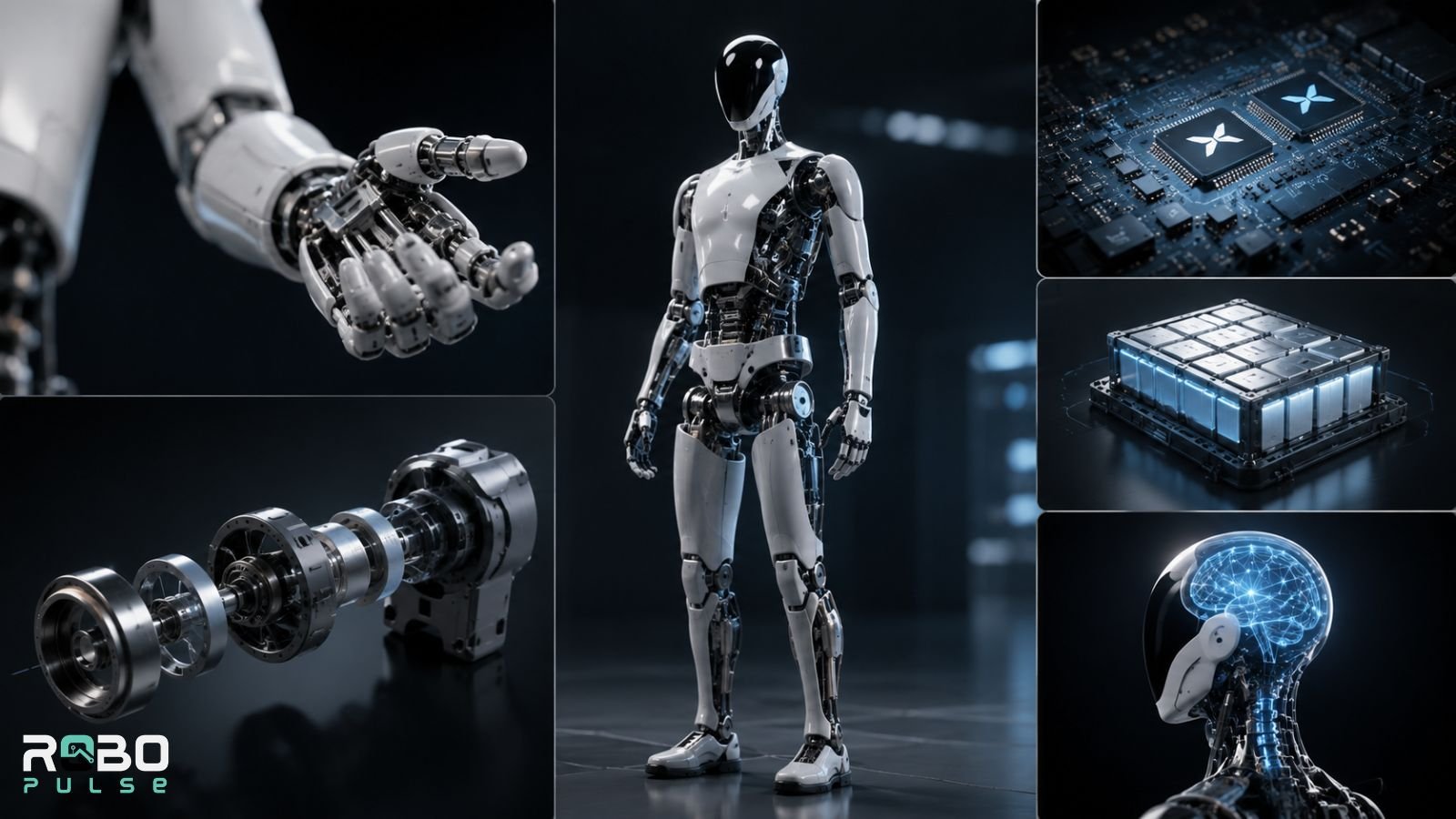
The XPeng Next-Gen IRON has 82 degrees of freedom across its body, including 22 DOF in each hand. XPeng says that’s enough dexterity for delicate manipulation tasks. The company also says it used the smallest harmonic joint in the industry to keep the hands at true human 1:1 scale, rather than oversizing them to fit the actuators.
| Spec | Next-Gen IRON | Status |
|---|---|---|
| Degrees of freedom | 82 total, 22 per hand | XPeng-reported |
| Onboard chips | 3x XPeng Turing AI chips | XPeng-reported |
| Compute power | 3,000 TOPS effective | XPeng-reported (see note below) |
| Battery | All-solid-state | XPeng-reported |
| AI model stack | VLT + VLA + VLM (XPeng’s own physical-world model) | XPeng-reported |
| Height (mass-production target) | Under 170 cm | XPeng-reported — down from the 178 cm demo unit shown at reveal |
| Weight | ~70 kg (demo unit) | XPeng-reported for the demo unit; no separate figure published for the shorter mass-production variant |
| Price | — | Not publicly confirmed — third-party estimates cluster around $120,000–$150,000 |
XPeng’s 3,000 TOPS compute figure for Next-Gen IRON has been reported inconsistently elsewhere. Several secondary sources cite 2,250 TOPS for IRON instead.
XPeng’s own November 2025 release attributes 2,250 TOPS specifically to the vehicle-side Ultra chip configuration for its VLA 2.0 model. Separately, in the section covering the robot itself, it states that Next-Gen IRON’s three Turing chips deliver 3,000 TOPS. Multiple outlets have since repeated 2,250 TOPS as IRON’s own figure anyway, so the discrepancy may reflect updated or context-dependent numbers rather than a simple copy error. Worth double-checking against XPeng’s most current materials before citing either figure elsewhere.
What Can It Actually Do?
IRON is built for three abilities XPeng groups under “conversation, walking, and interaction,” driven by a layered model stack rather than a single AI system. XPeng’s VLA (vision-language-action) model handles physical movement, and a VLM handles perception and dialogue. A newer VLT model, described by XPeng as built specifically for robots rather than adapted from its car software, is positioned as the decision-making layer that lets IRON act with more autonomy instead of pure teleoperation.
XPeng has said it’s prioritizing commercial service work first: guided tours, shopping assistance, and crowd or traffic direction, rather than home use. On the industrial side, Chinese steel producer Baoshan Iron & Steel (Baosteel) is an early ecosystem partner, with IRON slated to work on inspection tasks inside Baosteel’s facilities.
XPeng has also opened an SDK so outside developers can build applications for the platform, similar to how it’s approached its Robotaxi ecosystem. That commercial-first strategy fits a broader pattern across China’s humanoid market, where service and rental deployments are outpacing factory-floor autonomy.
How Does IRON Handle Privacy and Safety?
This is a detail most coverage of IRON skips. XPeng says the robot follows the “Three Laws of Robotics” plus a company-added fourth rule: robot-collected privacy data stays on the device rather than being transmitted elsewhere.
XPeng frames this as necessary given how close-quarters humanoid robots’ cameras and sensors operate around people in commercial settings. It’s a policy commitment rather than a certified technical standard, so treat it as XPeng’s stated design principle, not an independently audited guarantee.
When Can You Actually Get One?
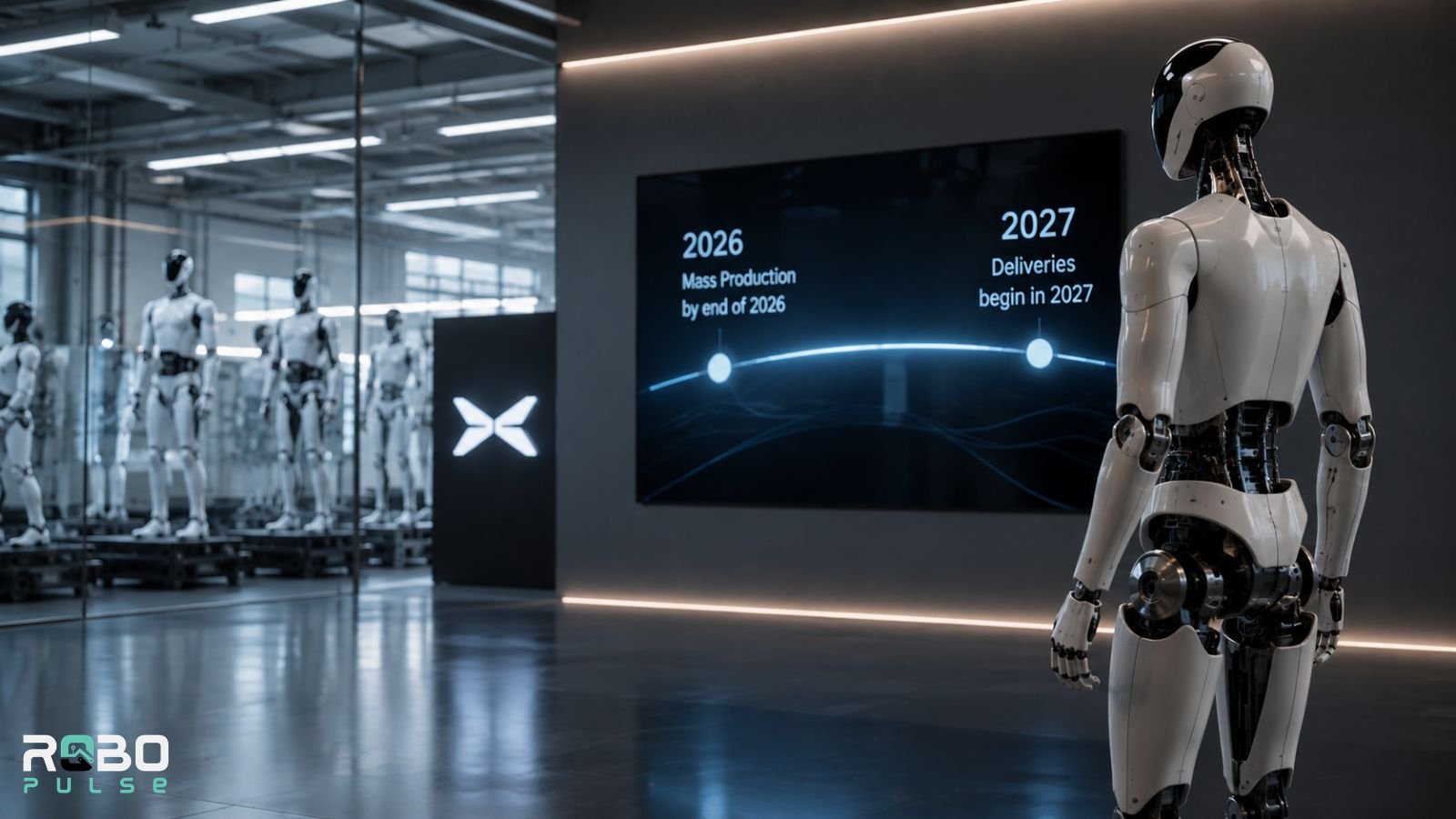
Not yet, and XPeng hasn’t published a consumer sales date. XPeng’s confirmed target is mass production by the end of 2026, with deliveries following in 2027. That’s a company-stated goal, not a guaranteed ship date, and it covers XPeng’s humanoid robotics line broadly rather than a specific IRON release.
The company has since signaled how seriously it’s taking that deadline. On June 10, 2026, CEO He Xiaopeng announced he was personally taking direct charge of the robotics unit — an unusual move for a public-company CEO. He told employees the robotics business had reached a stage comparable to XPeng’s run-up to its first production car. The announcement followed the departure of the robotics unit’s senior product-planning director.
There’s also been a real course correction on where IRON goes first. XPeng originally talked up factory and heavy-manufacturing roles. But at least one independent review cites a CEO admission that hands were wearing out after roughly a month of factory-floor work, pushing XPeng to prioritize commercial and showroom deployment — in-store greeting, sales assistance — over industrial use for the initial rollout. Baosteel’s industrial inspection pilot remains active alongside that shift.
Beyond “end of 2026 mass production, deliveries in 2027,” don’t trust more specific quarter-by-quarter timelines or unit-volume figures circulating online. Reporting on exact rollout dates and production capacity isn’t consistent enough across sources to state as fact yet. There’s no confirmed US availability or pricing, either — treat any dollar figure you see quoted as a third-party estimate, not an XPeng number.
XPeng IRON vs. Tesla Optimus: What’s the Real Difference?
The two aren’t optimizing for the same thing, which matters more than a spec-for-spec comparison. XPeng’s approach leans hard into human likeness: synthetic skin, customizable body proportions, and even a female-presenting demo unit. The bet is that a more human form generalizes better and produces training data closer to how humans actually move.
Optimus and most Western humanoids, including Figure’s 03 and 1X’s Neo, have stuck with a visibly robotic, gender-neutral shell instead. A lower-cost Chinese platform like Unitree’s G1 takes a third path entirely, trading anthropomorphism for affordability and open developer access.
That anthropomorphism cuts both ways. It’s arguably why IRON generated more viral attention than most humanoid reveals, but it also raises questions — around cost, and around the ethics of hyper-realistic, customizable-gender robots — that companies pursuing a more utilitarian design haven’t had to answer.
There is no defensible overall winner yet. IRON leads in anthropomorphic design and published hand DOF, while Optimus has stronger visibility around Tesla’s manufacturing ecosystem. Neither has demonstrated enough independent commercial deployment to establish a clear overall lead. A comparison tool covering specs across the humanoid market is a better way to track that than any single snapshot.
Can You Invest in XPeng Because of IRON?
IRON isn’t a separately listed investment — there’s no standalone “IRON stock.” XPeng Inc. trades under XPEV on the NYSE and 9868 on the Hong Kong Exchange, so anyone buying exposure to IRON is buying the broader company. XPeng is still primarily an EV maker, with robotics, Robotaxi, and flying-car programs layered on top.
He Xiaopeng has said robotics hardware and related AI models are expected to become a meaningful revenue source over time. But XPeng doesn’t break out robotics as a separately reported business segment, so there’s currently no way to invest in IRON specifically rather than XPeng as a whole.
FAQs
Q. Is the XPeng IRON robot real or a person in a costume?
Yes. XPeng IRON is a real humanoid robot, not a person in a costume. During its November 2025 reveal, XPeng partially removed the robot’s synthetic exterior on stage to show the mechanical structure underneath. The demonstration was intended to address questions about whether the robot’s human-like movement was being controlled by a person.
Q. How many degrees of freedom does the XPeng IRON have?
XPeng IRON has 82 degrees of freedom (DoF), including 22 DoF in each hand. XPeng says the high degree of freedom is designed to give IRON human-scale dexterity for delicate manipulation tasks.
Q. How much does the XPeng IRON robot cost?
XPeng has not announced an official price for the IRON robot. Third-party estimates place its potential price at roughly $120,000 to $150,000, but these figures are not confirmed by XPeng and should not be treated as an official MSRP.
Q. When will the XPeng IRON robot be released?
XPeng has not announced a confirmed consumer release date for IRON. The company has targeted mass production of its humanoid robots by the end of 2026, with deliveries expected to follow in 2027. XPeng has not confirmed a specific IRON shipping date, production volume, or consumer launch window.
Q. Is XPeng IRON coming to the US?
There is no confirmed US release date or US availability for XPeng IRON. The robot’s initial deployment is focused on enterprise and developer applications in China, including commercial service work and industrial inspection.
Q. What is the difference between XPeng IRON and Tesla Optimus?
XPeng IRON focuses more heavily on human-like design, while Tesla Optimus uses a conventional robotic appearance. IRON features synthetic skin, a bionic structure, and customizable body proportions. XPeng is targeting commercial service applications, while Optimus is more closely associated with Tesla’s manufacturing ecosystem. Neither robot has established mass consumer availability.
Q. Does XPeng IRON use the same technology as XPeng’s cars?
XPeng IRON shares some technology with XPeng’s vehicles, but it also uses robot-specific AI. The robot uses three XPeng Turing AI chips and parts of the company’s broader AI stack. XPeng also developed a robot-specific VLT model, alongside VLA and VLM systems, for physical-world decision-making and interaction.
Q. Can you buy XPeng stock because of the IRON robot?
There is no separate XPeng IRON stock. XPeng’s robotics business is part of XPeng Inc., which trades as XPEV on the NYSE and 9868 on the Hong Kong Stock Exchange. XPeng does not currently report IRON as a separately listed or independently investable business.
Q. Is XPeng’s CEO personally running the robotics division?
Yes. XPeng CEO He Xiaopeng announced on June 10, 2026, that he was taking direct control of the company’s robotics unit. He said the move was intended to help push the robotics business toward its end-of-2026 mass-production target.
Related: AgiBot A2 Price: What This Humanoid Robot Really Costs in 2026