
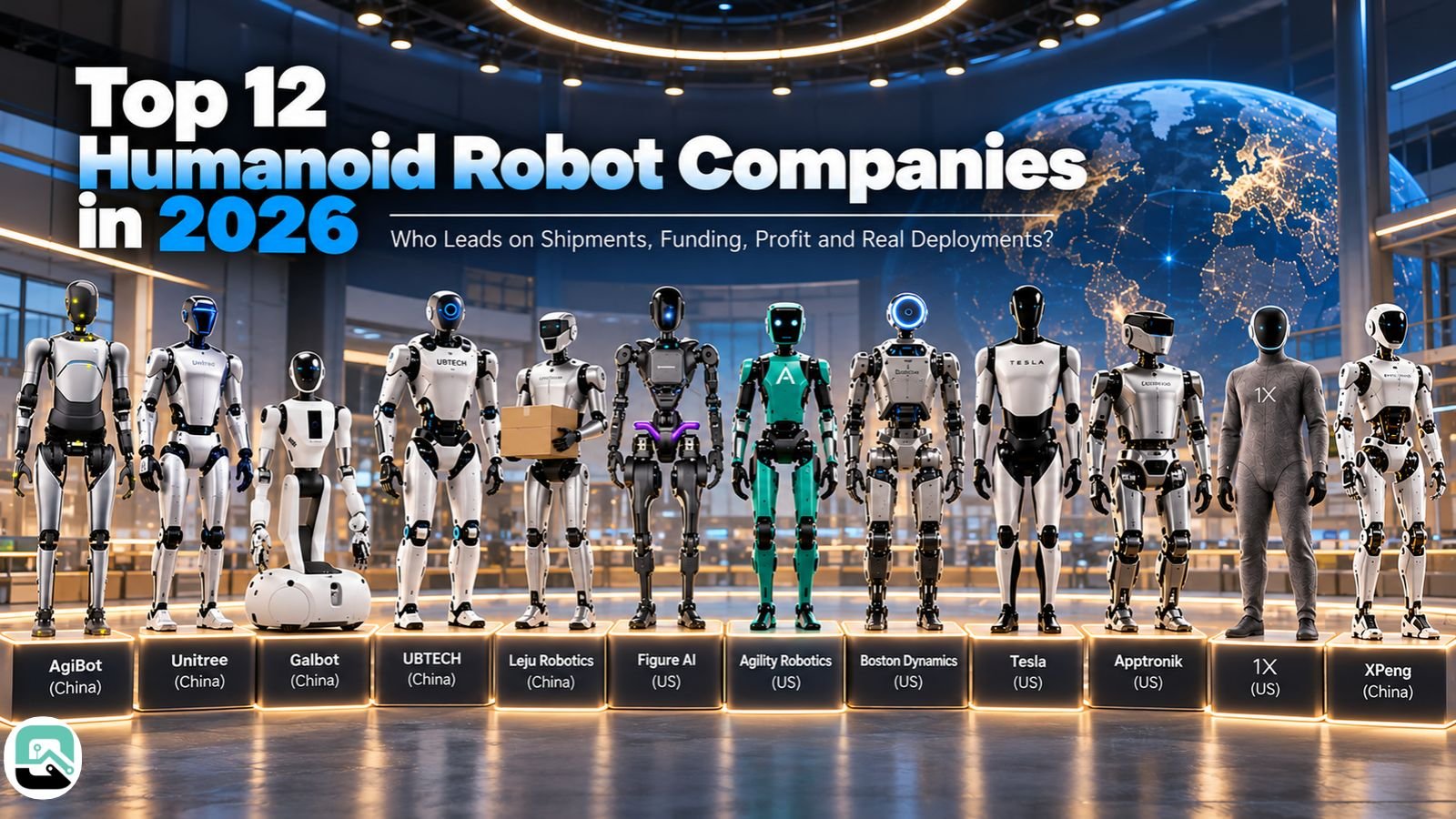
AgiBot shipped the most humanoid robots in the first half of 2026, with Unitree second. Unitree is also the rare maker posting a profit. Figure AI carries the highest private valuation.
Agility Robotics has one of the best-documented records of paid customer work, and its Nasdaq listing goes to a shareholder vote on November 2. Boston Dynamics holds the largest deployment plan with a named buyer, Hyundai, though most of it starts in 2028. Tesla has begun early Optimus production at Fremont but has disclosed no price, rate or customer.
Most “top 10” lists blend hype, funding and shipments into a single ranking. That hides the trade-offs. Below, each metric gets its own leader, and every figure is labeled as a filing, a company claim or a third-party estimate.
This article describes the industry. It is not investment advice.
Quick list: 12 humanoid robot makers worth knowing
- AgiBot (China) – largest shipper in H1 2026
- Unitree (China) – second-largest shipper, profitable, listed in Shanghai
- Galbot (China) – third-largest shipper in H1 2026
- UBTECH (China) – listed in Hong Kong, the most detailed public humanoid revenue
- Leju Robotics (China) – fifth-largest shipper in H1 2026
- Figure AI (US) – highest private valuation, working at BMW
- Agility Robotics (US) – Digit in paid warehouse and factory work
- Boston Dynamics (US) – Atlas, backed by Hyundai’s 25,000-unit plan
- Tesla (US) – Optimus in early production
- Apptronik (US) – Apollo, more than $935 million raised
- 1X (US, founded in Norway) – NEO home robot on pre-order
- XPeng (China) – an automaker that opened IRON humanoid production lines in September 2026
Which company leads in humanoid robotics?
No single company leads on every measure. Pick the metric first, then the leader.
| Metric | Leader | Evidence type |
|---|---|---|
| H1 2026 shipments | AgiBot, about 9,700 units; Unitree second with over 7,000 | Counterpoint Research estimate |
| Profit | Unitree, 274 million yuan net profit in H1 2026 | Company financial report, via 36Kr |
| Private valuation | Figure AI, $39 billion post-money (September 2025) | Figure’s Series C announcement |
| Lowest listed price | Unitree R1, from $5,900 | Unitree store listing, August 2026 |
| Largest plan with a named buyer | Boston Dynamics: Hyundai targets 25,000+ Atlas units, from 2028 | Hyundai investor materials |
| Public listing | Unitree (Shanghai) and UBTECH (Hong Kong, 9880) | Exchange records and SEC filings |
| Home robot on pre-order | 1X NEO | 1X order page and factory release |
These metrics do not translate into one another. A shipment counts a robot sold, not a robot doing paid work.
Humanoid robot companies compared: robot, status and listing
Each status label describes the strongest public evidence for that company. It is not a ranking.
| Company | HQ | Flagship robot | Status (evidence) | Listing |
|---|---|---|---|---|
| AgiBot | China | A-series, X-series, G-series | Largest shipper in H1 2026 (Counterpoint estimate) | Private; began a Hong Kong IPO process in July 2026; controls Shanghai-listed Swancor |
| Unitree | China | R1, G1, H2 | Second-largest shipper; G1 sells mainly to research and education (Counterpoint) | Shanghai STAR Market (688836) |
| Galbot | China | – | Third-largest shipper in H1 2026 (Counterpoint ranking) | Private |
| UBTECH | China | Walker S2 | Walker S2 sold to industrial and enterprise customers (interim results) | Hong Kong (9880) |
| Agility Robotics | US | Digit | Paid deployments with named customers (SEC filing) | Private; shareholder vote November 2 |
| Figure AI | US | Figure 03 | 350+ robots delivered; working at BMW Spartanburg (company and BMW statements) | Private |
| Boston Dynamics | US | Atlas | All 2026 units committed to Hyundai and Google DeepMind; large rollout from 2028 | Hyundai Motor Group subsidiary |
| Tesla | US | Optimus | Early production at Fremont; no rate, price, or outside customer disclosed | Public (TSLA) |
| Apptronik | US | Apollo | Funded: Series A above $935 million; Mercedes-Benz pilot | Private |
| 1X | US | NEO | Pre-orders open; factory producing since April 30, 2026; no customer delivery announced | Private |
| XPeng | China | IRON | Production line commissioned September 2026; deliveries planned for 2027 | Public (XPEV, 9868) |
Galbot and Leju Robotics rank third and fifth on shipments, but neither discloses much beyond unit volume.
Who ships the most humanoid robots?
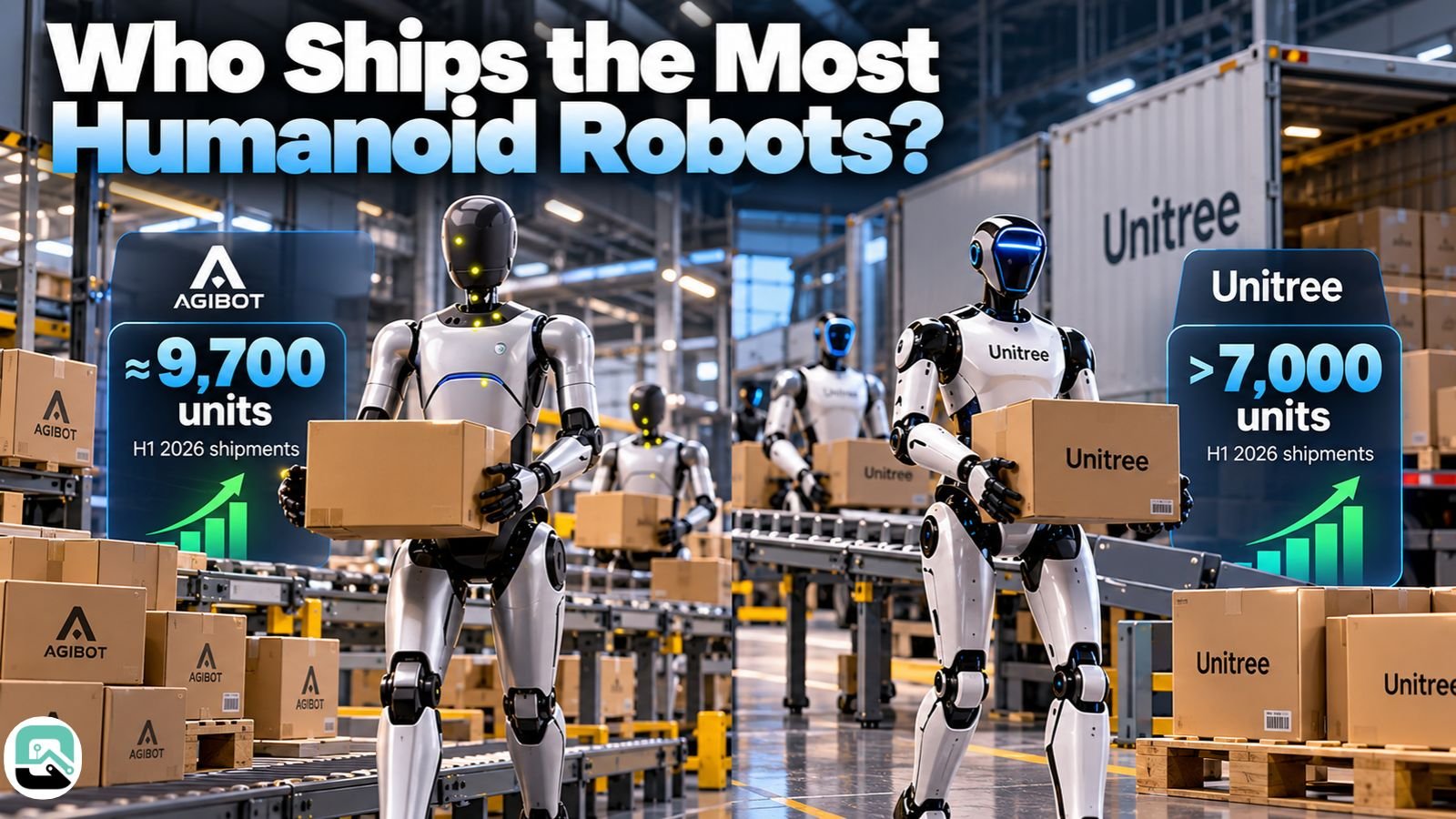
Chinese manufacturers ship the most humanoid robots by a wide margin. Counterpoint Research estimates that global shipments passed 22,000 units in the first half of 2026, up nearly 300% year on year.
AgiBot led with about 9,700 units, a share above 43%. Unitree followed with more than 7,000. Galbot, UBTECH and Leju Robotics took third through fifth, and those five Chinese firms together held 86% of the market.
Why shipment estimates disagree
Research firms count differently. Smart Analytics Global put H1 2026 shipments at about 19,100 units, with AgiBot near 8,400 and Unitree near 5,900. By that count, Chinese vendors supplied more than 97% of all units.
The 2025 figures split even further. Omdia ranked AgiBot first with 5,168 units and Unitree second with about 4,200. China’s CCID ranked them the other way: Unitree above 5,500, AgiBot above 4,000. Part of the gap comes from definitions, such as whether a wheeled dual-arm robot counts as a humanoid.
The direction holds across every firm: AgiBot and Unitree lead, and China dominates volume. Counterpoint expects full-year 2026 shipments above 50,000, which is a forecast, not a company disclosure.
Shipments are not the same as productive work
A unit count shows robots sold, not hours of useful labor. Counterpoint notes that Unitree’s G1 sells mainly into research and education. Of the 5,500+ humanoids Unitree shipped in 2025, about 70% were exported to universities and research institutions.
That makes Unitree a volume leader in research platforms more than in factory labor. AgiBot’s broader mix of bipedal, compact, and wheeled models spreads its units across more use cases.
Which humanoid robot company has raised the most money?
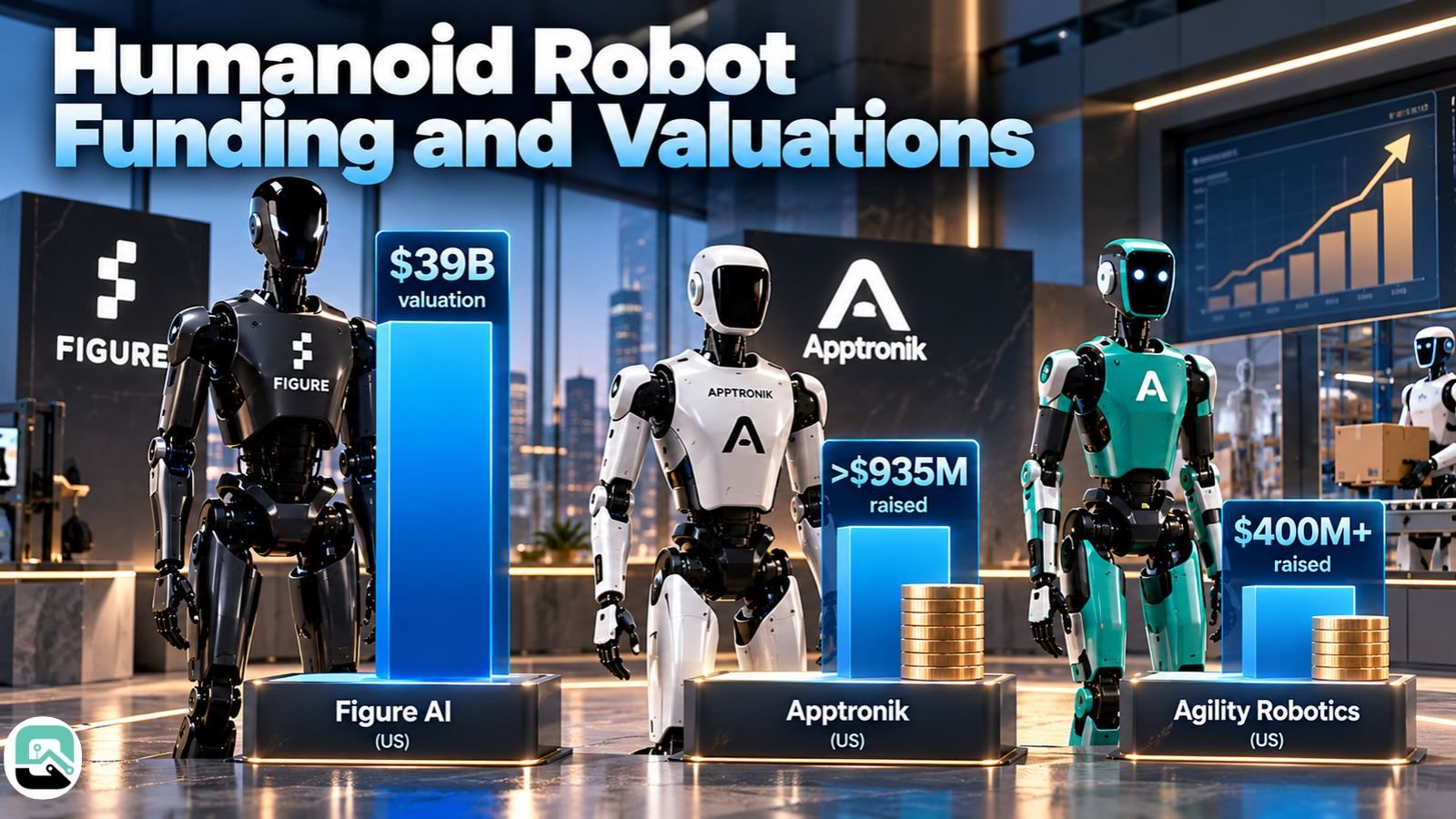
Figure AI has raised the most private capital and holds the highest valuation. Its September 2025 Series C brought in more than $1 billion at a $39 billion post-money valuation, and reports put its total funding near $2 billion.
Three numbers often get mixed up here. Capital committed in a round, the valuation that round set, and total money raised are separate facts. A valuation reflects investor expectations, not revenue, and Figure has not published an audited revenue figure.
Apptronik and Agility
Apptronik extended its Series A in February 2026 with $520 million, taking the round past $935 million. The company kept its valuation private. TechCrunch put the post-money figure at about $5.3 billion, while other outlets reported above $5.5 billion. Google, Mercedes-Benz and B Capital are among its backers.
Agility Robotics carries a $2.5 billion pre-money equity value in its merger with Churchill Capital Corp XI. The deal would add more than $620 million in gross proceeds, but only if no SPAC shareholders redeem their shares.
Public money: Unitree’s IPO
Unitree raised about 6.1 billion yuan (roughly $905 million) in its August 2026 Shanghai listing, above its original 4.2 billion yuan target. That puts it in the same funding tier as Apptronik, through public markets rather than venture rounds.
Which humanoid robot companies make money?
Unitree is the clearest profitable humanoid maker with public numbers. Its first-half 2026 revenue reached 1.152 billion yuan, with a net profit of 274 million yuan. For full-year 2025, Unitree reported revenue of about 1.7 billion yuan.
UBTECH shows the other path: fast revenue growth while still losing money. In its interim results for the six months to June 30, 2026, group revenue doubled to RMB 1,269.1 million. Full-size humanoid products and services grew 1,445% to RMB 590.3 million, or 46.5% of the total. The company still recorded a net loss of RMB 338.8 million.
The UBTECH mix matters for anyone asking who gets paid for industrial work. It sold 921 full-size humanoids in the half, and about 96% of that segment’s revenue came from industrial and enterprise contracts rather than education. The full-size segment also ran a 66.8% gross margin.
None of the US leaders publish comparable figures. Figure, Apptronik and 1X are private and disclose no revenue. Agility’s numbers sit in its SEC filings. Tesla does not break out Optimus results.
Which humanoid robot companies have real commercial deployments?
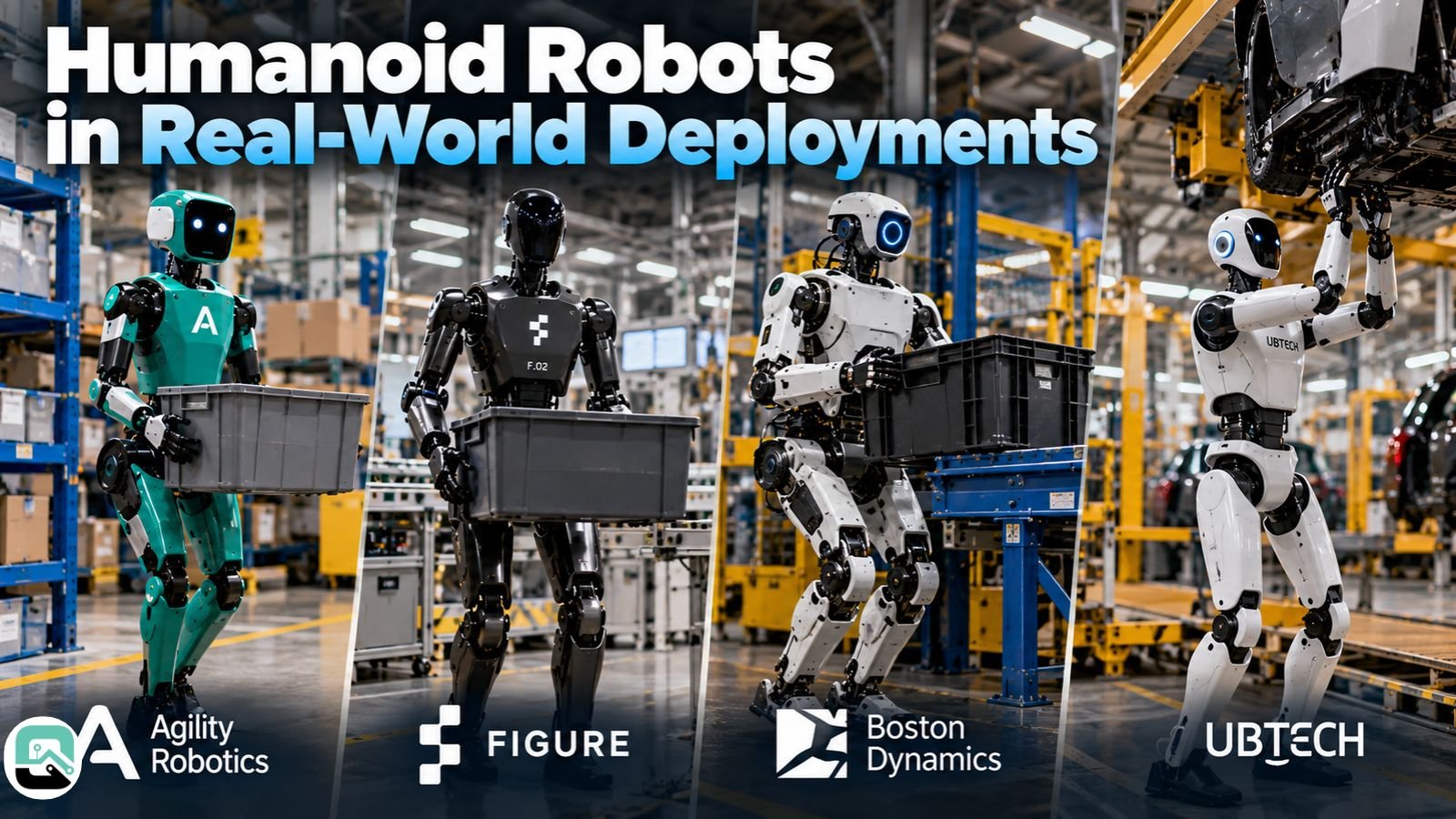
Agility Robotics and Figure AI have the strongest public evidence of humanoids doing paid work for named customers. UBTECH reports the most humanoid revenue from industrial contracts. Boston Dynamics has committed to every 2026 Atlas, but Hyundai’s large rollout starts in 2028. No public dataset ranks companies by paying-customer count.
A deployment is not one thing. A demo, internal use, a customer pilot, a paid contract, and scaled operation sit at different levels of proof.
Agility Robotics: Digit
Agility’s October 13 merger release names Schaeffler, GXO, and Toyota Motor Manufacturing Canada as commercial customers. Earlier Digit generations have logged more than 65,000 hours of real-world operation. GXO pays for Digit through a robots-as-a-service agreement signed in June 2024.
Amazon backs Agility as an investor and tested Digit in a 2023 warehouse pilot. One analysis of the filings notes that most of the order backlog rests on a single customer. Digit itself is built for one job: moving totes and bins in warehouse and logistics work, not general-purpose tasks.
Figure AI: Figure 03 at BMW
The figure says it had delivered more than 350 Figure 03 humanoid robots by April 2026 and raised factory output from one robot per day to one per hour.
BMW gives the most independent evidence. BMW’s June 2026 announcement moved Figure 03 into logistics sequencing at its Spartanburg plant. That followed an 11-month Figure 02 deployment that supported production of more than 30,000 BMW X3s.
CEO Brett Adcock said in mid-2026 that Figure had about 740 robots against roughly 660 employees. That figure counts robots Figure owns or operates, not robots placed with customers.
Boston Dynamics: Atlas
Boston Dynamics unveiled the production Atlas at CES in January 2026. Every 2026 unit is committed to Hyundai’s Robotics Metaplant Application Center and Google DeepMind, with more customers planned for 2027.
That center opened at Hyundai’s Georgia Metaplant on September 21, 2026, after pilot work began in June. A building about ten times larger is planned for 2027.
UBTECH: Walker S2
UBTECH has set a 2026 production target of 10,000 full-size humanoids. It signed a service agreement with Airbus in early 2026, which the company calls the first humanoid deployment in aviation manufacturing.
Apptronik: Apollo
Apptronik has signed a pilot agreement with Mercedes-Benz, an investor, to test the Apollo industrial humanoid robot in its plants. GXO has also tested Apollo.
Is Tesla Optimus in production?
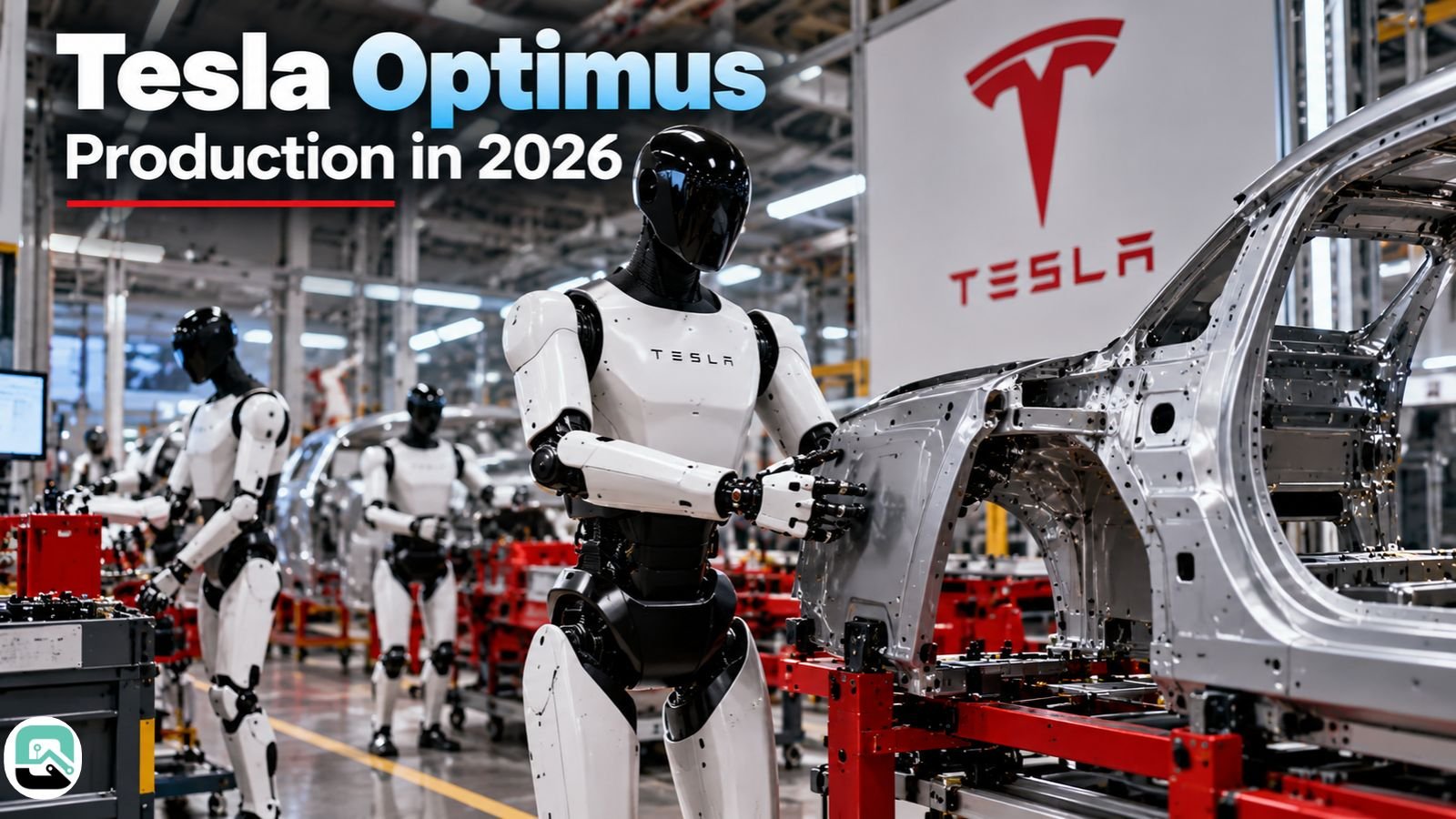
Yes, in early form. Tesla’s Q3 2026 update, released October 21, says Optimus production has begun on a high-volume line at Fremont, California. Tesla describes the units as its first production-quality Optimus robots.
The update lists Fremont as “Early Ramp” and the Texas site as under construction. Neither row carries a capacity number, and the deck gives no production rate, unit count, price, or outside sale date.
On the earnings call, Elon Musk called the stage early production and warned the ramp would be bumpy. He said most of a line built for a million units a year is already installed. He also said deliveries to companies outside Tesla should begin around the end of 2027.
The gap between a started line and robots shipping at volume is wide. Installed equipment shows what a line can build, not what it builds today. Until Tesla discloses units, a price, or a named buyer, Optimus remains a credible program with unverified output.
Which humanoid robot companies are publicly traded?
Two humanoid-focused companies trade today: Unitree on Shanghai’s STAR Market and UBTECH in Hong Kong. Tesla (TSLA) and XPeng (XPEV, 9868) are listed, but humanoids are a small part of each business. Agility Robotics remains private and expects to list on Nasdaq as AGLT.
| Company | Status as of October 28, 2026 |
|---|---|
| Unitree | Listed on the STAR Market (688836) on August 19, 2026. Shares opened 629% above the 150.8 yuan IPO price. |
| UBTECH | Listed in Hong Kong (9880) since late 2023. Still loss-making. |
| Agility Robotics | Private. The SEC declared its S-4 effective on October 13. Churchill Capital Corp XI shareholders vote November 2, with closing expected in November. |
| AgiBot | Private. Began a Hong Kong IPO process in July 2026 and controls Shanghai-listed Swancor Advanced Materials. |
| Boston Dynamics | No standalone listing. Hyundai Motor Group owns it. |
| Figure AI, Apptronik, 1X | Private. No IPO dates announced. |
Can you buy Agility Robotics stock?
Not yet. Agility trades only after the merger closes, and the deal still needs shareholder approval and customary closing conditions. Public SPAC holders can redeem for cash before the vote, so the final cash raised stays unknown until then.
SPAC listings also carry less underwriter-driven price discovery than a traditional IPO. The S-4 and proxy filings set out the risks.
Indirect ways in
Exposure to Boston Dynamics runs through Hyundai Motor Group. AgiBot’s controlling stake in Swancor gives Shanghai investors a partial link to AgiBot before its own listing.
Which company makes a humanoid robot for the home?
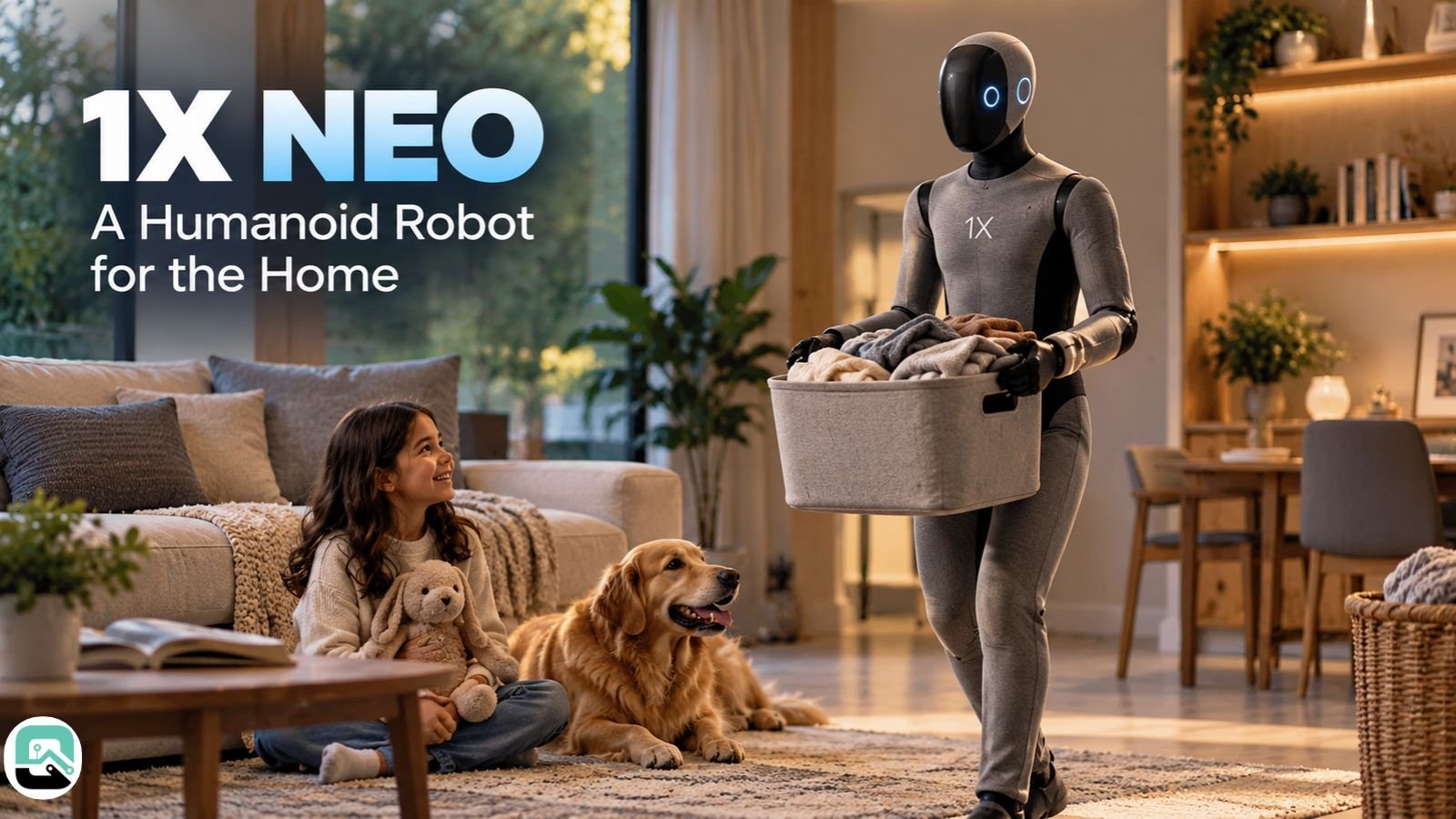
1X is closest to a consumer product. NEO costs $20,000 to buy or $499 a month, reserved with a $200 refundable deposit. US deliveries are promised for 2026, buyers first and subscribers after.
1X says its Hayward, California factory began full-scale production on April 30, 2026. Capacity sits at up to 10,000 robots a year, with a target above 100,000 by the end of 2027. First-year capacity sold out within five days of pre-orders opening in October 2025.
As of mid-October 2026, 1X had announced no first customer delivery, and early factory units went to internal testing and home trials. Treat NEO as an early-access product, not a finished appliance.
The trade-off is privacy. For tasks NEO has not learned, a 1X operator can take remote control through the robot’s cameras, a feature 1X calls Expert Mode remote operation.
Figure also pitches Figure 03 for home use, but its paid work today is industrial. Tesla puts consumer Optimus sales in a later phase, after factory use is proven.
How to choose between humanoid robot companies
Choose by the question you need answered. The same company ranks differently for a warehouse buyer, an investor, and a researcher.
- Warehouse buyers: ask for named paying sites and repeat orders. Then ask for task throughput, autonomous operating hours, intervention frequency, safety certification, and total operating cost. A successful pilot does not prove profitable scale.
- Factory buyers: weigh the automaker behind each robot. Hyundai backs Atlas and says unit cost starts near $140,000, falling to about $30,000 once production passes 50,000 units.
- Investors: read the filings before the headlines. Agility’s S-4 and Tesla’s quarterly update both state what each company has and has not disclosed.
- Researchers and labs: start with Unitree or AgiBot. In August 2026, maker stores listed the Unitree G1 at $13,500 and the AgiBot X2 at $24,240.
Two cautions apply to every company. Fleet counts rarely say how much work happens without human help. And announced plans, Hyundai’s included, describe the late 2020s, not today.
How this comparison was built
This comparison uses reported shipments, disclosed funding, profit and loss, named deployments, manufacturing status, and listing status. Companies appear because they hold the strongest public evidence on at least one measure.
Frequently asked questions
Q. Which humanoid robot company is the most advanced?
No public benchmark settles this. Companies measure different things, and most report their own results. Judge advancement by independently confirmed deployments, tasks completed without human help, and published safety work, not demo videos.
Q. Who owns Boston Dynamics?
Hyundai Motor Group. Hyundai bought control from SoftBank in 2021 and moved in July 2026 to buy SoftBank’s remaining stake, making Boston Dynamics wholly Hyundai-owned. Atlas deployment starts at Hyundai’s Georgia Metaplant in 2028, then Kia’s Georgia plant in 2029.
Related: Free Humanoid Robot CAD Files: 6 Best Downloads Compared
| Disclaimer: This article is for informational and educational purposes only and does not constitute financial or investment advice. Company rankings, shipment figures, valuations, and deployment claims are based on publicly available information as of October 28, 2026. Some figures are estimates or company-reported and may change. Readers should independently verify information before making business or investment decisions. |