

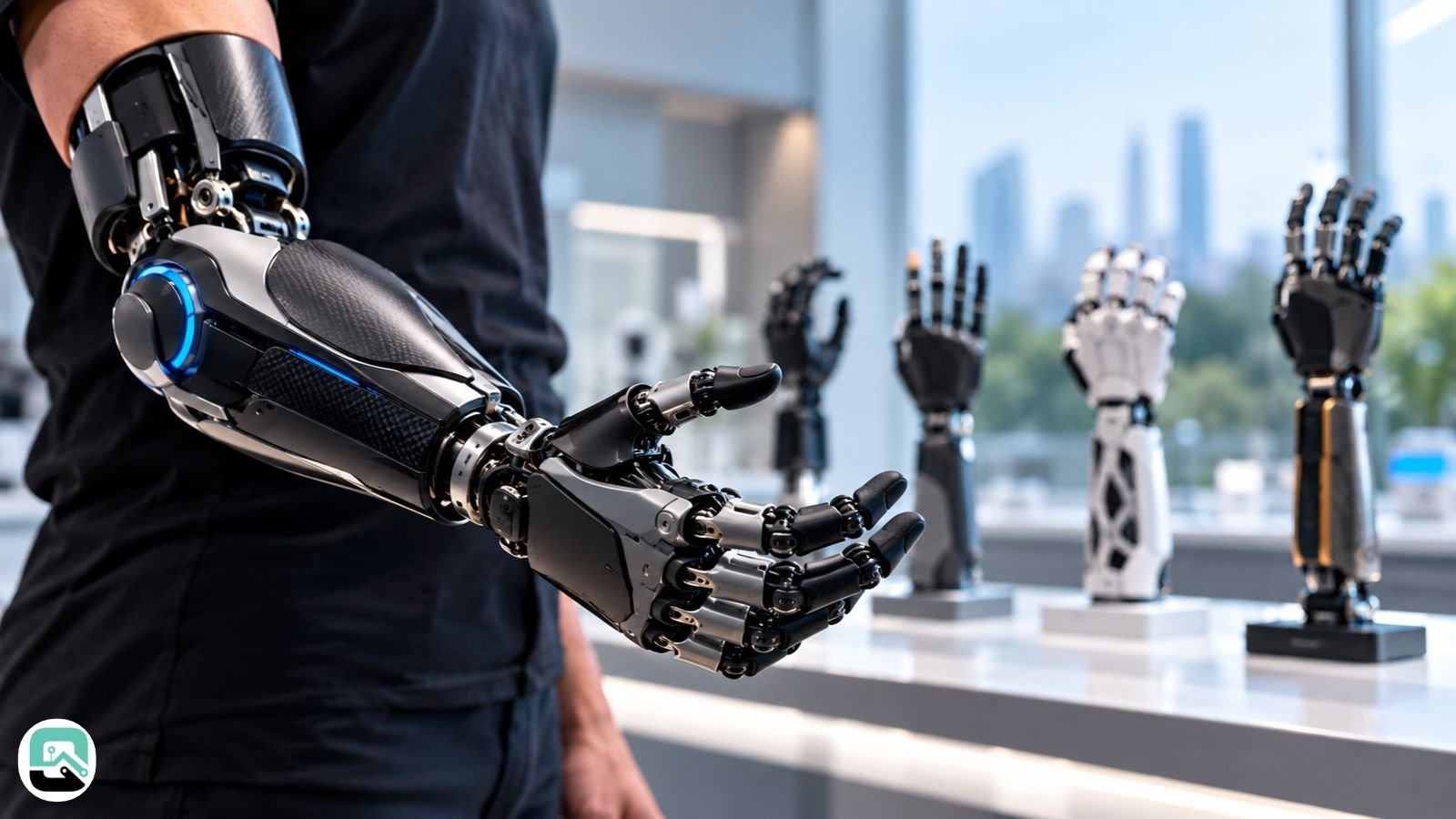
Yes, cybernetic hands are real, and thousands of people already wear one to work every day. Prosthetists call them myoelectric hands. Everyone else tends to say “bionic.” The idea behind them is simple: sensors pick up tiny electrical signals from the muscles in your residual limb, and motors turn those signals into finger movement.
Before a slick demo video wins you over, know a few things. The hand’s price tag hides most of the real bill, since the socket, wrist, and fitting cost money too. Insurers disagree wildly about whether these devices deserve funding. And plenty of users quietly stop wearing theirs, mostly because the hand feels clumsy, uncomfortable, or simply numb.
We dug through Medicare’s 2026 fee data, published insurer policies, and spec sheets from the main makers. Whenever we couldn’t confirm a number, you’ll find a note saying so.
Are Cybernetic Hands Real?
Yes. You can buy a hand today whose fingers move one by one when you flex your forearm. “Cybernetic” is the word people type into Google; your clinic and your insurer will say “myoelectric” or “multi-articulating” instead.
Oddly, the billing code ends up mattering more than any label. Suppliers bill Medicare for a five-finger articulating hand under HCPCS code L6880. Powered partial-hand devices start from a different base code, L6026, with the fingers billed on top.
Roughly speaking, today’s market has two camps:
- Established makers: Ottobock (bebionic, Michelangelo), Össur (i-Limb), TASKA, and Covvi.
- Newer challengers: PSYONIC, whose Ability Hand brought fingertip touch feedback to market, and Open Bionics, maker of the 3D-printed Hero family (Hero ARM, Hero PRO, Hero RGD, the Hero FLEX socket, and the body-powered Hero GAUNTLET).
How Does a Bionic Hand Work?
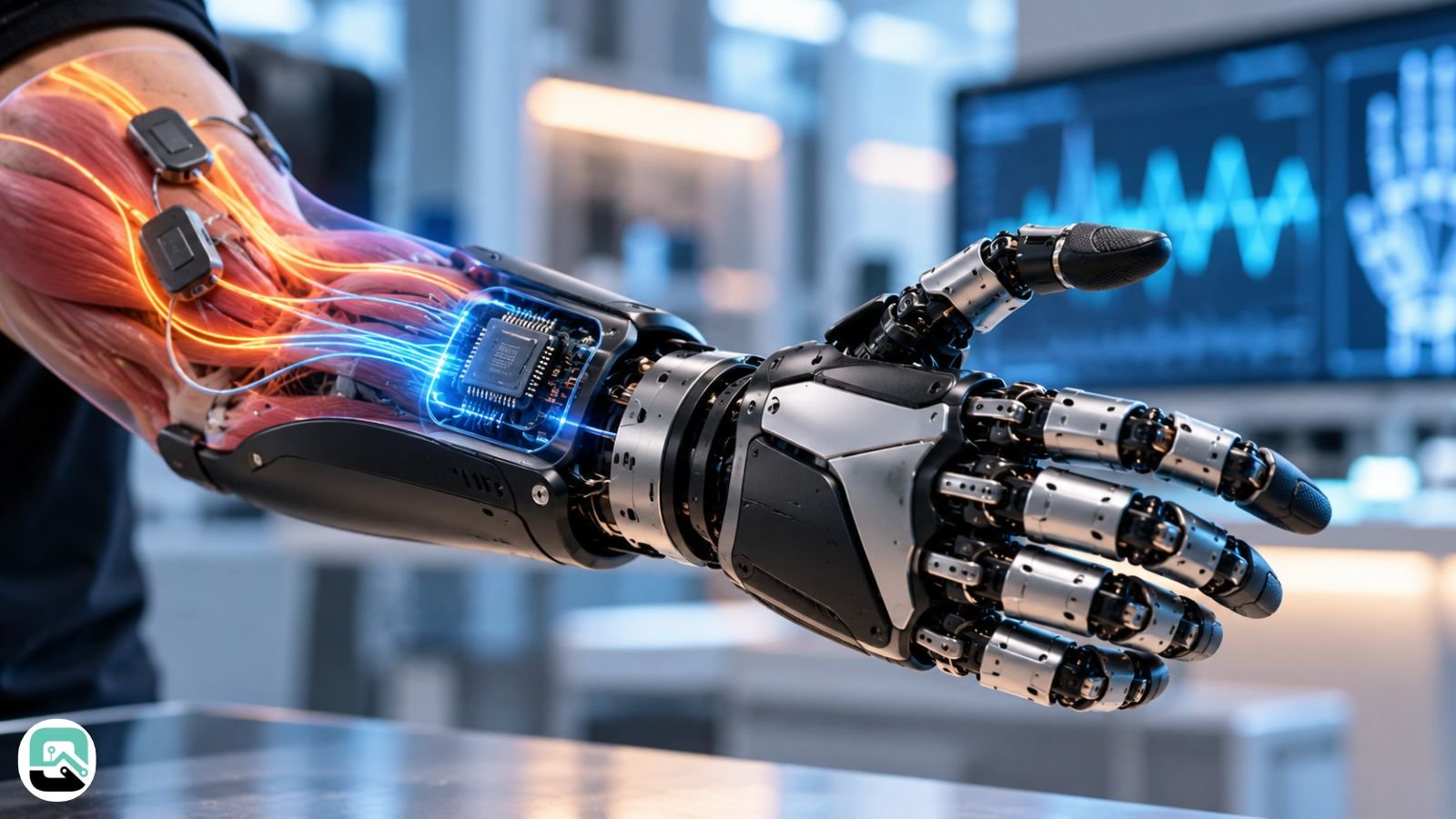
Here’s the basic loop. Electrodes sit against the skin of your residual limb, and every time you tense a muscle, they catch its faint electrical signal. Software decodes it. Motors then move the fingers, usually in a fraction of a second.
Most people begin with direct control. Flex one muscle group and the hand opens; flex the opposite group and it closes, much like you’d do with a natural hand. Changing grips takes a small trick, like a quick double flex, a button on the hand, or a tap in an app.
Pattern recognition takes things further. Instead of watching one or two spots, the controller reads several electrode sites together and uses machine learning to guess what you’re trying to do. Medicare even gave it a code, L6700. Noridian’s L6700 coding guidance sets the bar: the system has to decode signals from at least three EMG sites at once.
Touch is still the missing sense. PSYONIC tucks pressure sensors into the Ability Hand’s fingertips, so your arm buzzes gently when you grab something. With most other bionic hands, you feel nothing at all, which means you end up staring at your fingers to know whether you’ve got a grip.
Two problems still dog the whole field. A 2026 review in Frontiers in Rehabilitation Sciences points to surface EMG signals that drift and wobble, making control unreliable, and to missing sensory feedback, which wears users out and pushes some to quit. So when a brochure promises “intuitive control,” treat it as a claim you’ll test during a trial fitting.
What Can a Bionic Hand Do, and What Can It Not Do?
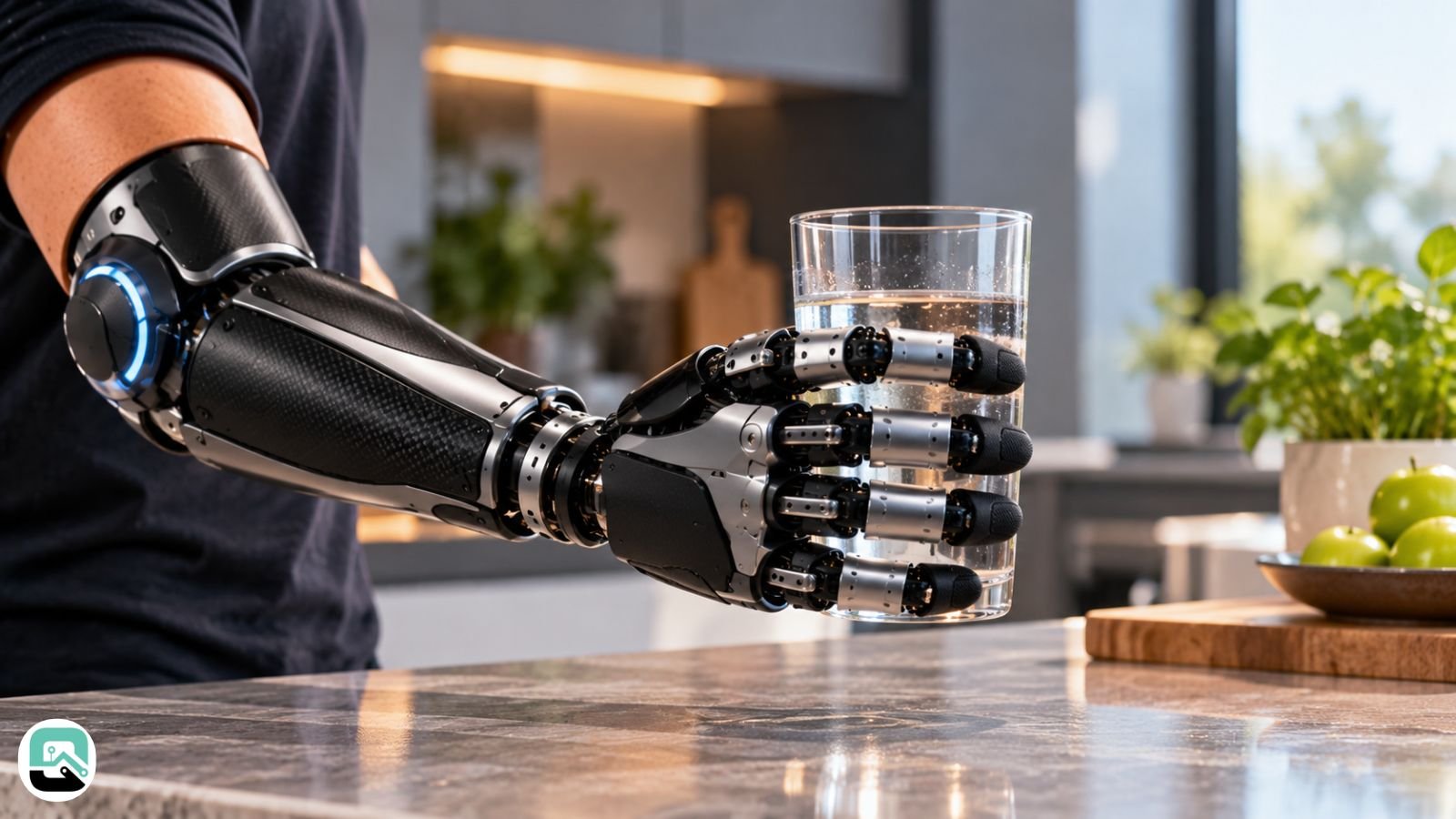
A good bionic hand handles a set of preset grips, and some models lift surprisingly heavy loads. What none of them can do is give back the feel of a natural hand, or the tiny automatic corrections your fingers make without thinking. How well one works for you comes down to the device, your limb, your signal quality, and how much you train.
Spec sheets vary a lot. A US distributor lists the Ability Hand’s full spec sheet at 20 predefined and 11 custom grips, with a 0.2-second open-to-close time and a 100 lb static load limit. Open Bionics, by comparison, gives the Hero PRO and Hero RGD seven grip modes each and rates them to carry 57 lb and 77 lb.
Don’t read too much into grip counts. Robot engineers learned the same lesson with humanoid hands, where tallying degrees of freedom in robots tells you the ceiling but not how gracefully a hand moves. Some designs drive many joints from a handful of motors, and the software usually decides more than the hardware.
Grip force is the number brochures rarely put up front. The Ability Hand tops out at 13 N, while TASKA rates its CX thumb at up to 29 N. Speed and low weight are great, but a quick, light hand may not hold a heavy pan as firmly as a bulkier rival.
The real test is your own routine. Write down the three things you do every day, whether that’s buttoning a shirt, slicing bread, or typing, and ask your prosthetist for a demo unit to try them on. A 20-minute session at the clinic won’t feel like a week at home, but it beats guessing.
How Much Does a Bionic Hand Cost?
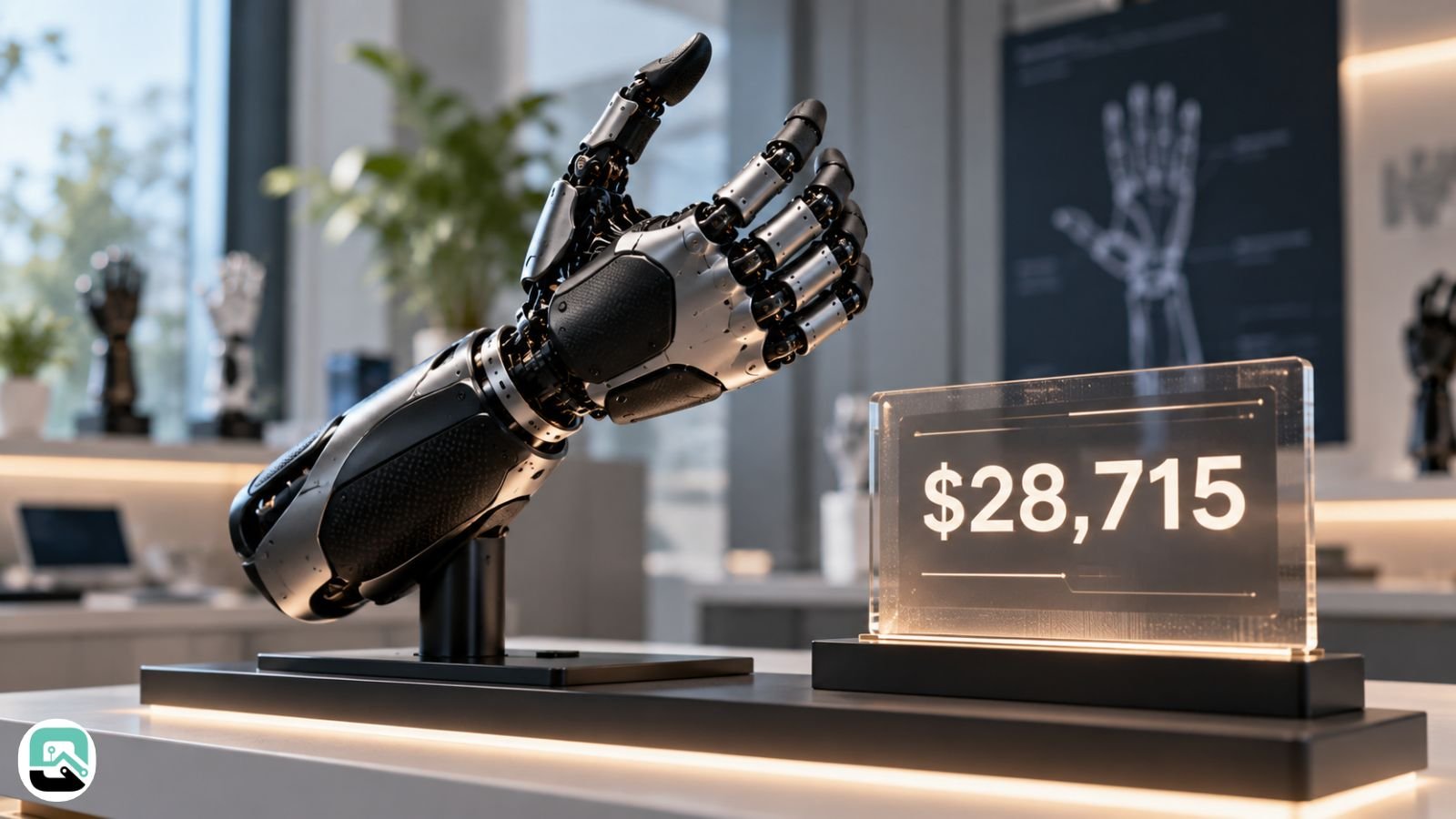
For 2026, Medicare allows about $28,715 for a multi-articulating hand, and that’s the hand alone. One analysis of the January 2026 CMS file worked out that the hand made up 64.6% of a sample myoelectric arm build, which puts the whole system near $44,500. Private insurers and self-pay patients usually pay more.
Where does the rest go? Think socket, wrist unit, electrodes, batteries, a charger, fitting appointments, and training. If the amputation sits above the elbow, the math gets worse: Medicare allows $48,155.50 for an electronic elbow with simultaneous control, more than it pays for the bionic hand.
What Medicare allows in 2026 (January fee schedule)
| HCPCS code | Device | 2026 allowable |
|---|---|---|
| L6708 | Mechanical hand, voluntary opening | $1,365.39 |
| L6709 | Mechanical hand, voluntary closing | $1,977.62 |
| L7007 | Adult electric hand, single motor | $4,212.72 |
| L7008 | Pediatric electric hand | $7,082.01 |
| L6880 | Electric hand, independently articulating digits | $28,715.00 |
| L7181 | Electronic elbow, simultaneous control | $48,155.50 |
Source: a code-by-code analysis of the 2026 file; the raw data sits on the CMS DMEPOS fee schedule page. These amounts show what Medicare pays, not what a clinic charges, and approval remains a separate question.
A quick caveat. From January 2025 to January 2026, almost every upper-limb code went up by the same 2%. In other words, CMS rolls old prices forward with an inflation bump; it doesn’t measure what these devices cost to build today.
Reported prices outside Medicare
| Device | What sources report | Confidence |
|---|---|---|
| PSYONIC Ability Hand | $10,000 to $20,000 per media reports; about $15,000 to produce (2024) | Media reports |
| Esper Hand | US insurers paid about $22,000 per arm (2024) | Company statement |
| Atom Limbs Atom Touch | Target near $20,000; still in development | Company goal |
| Open Bionics Hero line | Quoted case by case | No list price found |
| High-end bionic arms overall | $20,000 to $80,000 | Media estimate |
Whatever clinic you pick, get an itemized quote in writing. It should spell out the socket, wrist, electrodes, batteries, charger, covers, fitting visits, training, warranty length, and what repairs cost once the warranty runs out.
Does Insurance Cover Bionic Hands?
Often, yes, though it depends heavily on who your insurer is. Your prosthetist handles prior authorization, usually under L6880 for an articulating hand, and backs it up with notes on your limb, your muscle signals, and what you need the hand to do.
Here’s something most articles skip: Medicare has no national or local coverage determination for upper-limb prostheses. With no rulebook from the top, each contractor and Medicare Advantage plan writes its own. Blue Cross NC even says it built its Medicare Advantage policy because that rulebook doesn’t exist.
Published policies show how wide the spread runs:
- UnitedHealthcare (commercial): UnitedHealthcare’s 2026 prosthetic policy calls a myoelectric prosthesis for amputations above the wrist proven and medically necessary when members meet its criteria.
- Nebraska Blue (Medicare Advantage): Funds one myoelectric prosthesis per limb every five years when medically indicated, yet excludes implantable sensors and targeted muscle reinnervation.
- Washington L&I (workers’ compensation): Approves myoelectric devices for some claims after a board-certified amputee-rehab physician recommends one and the patient completes a successful trial.
- Medica (commercial): Labels the multi-articulating hand investigative and unproven, so it denies coverage.
- Premera (commercial): Argues the value of individually powered digits remains unproven.
Ask the companies, and you’ll hear a rosier story. Open Bionics said in 2024 that more than half of insured applicants got the Hero Arm fully funded, and PSYONIC says US insurers cover the Ability Hand at no cost to the user. Neither shares how many people applied, so take both figures as best-case marketing.
Other ways to fund a bionic hand
- Veterans Affairs: The VA runs its own prosthetics program for eligible veterans, separate from Medicare rules.
- Medicaid: Rules differ by state, and Open Bionics reports that some Medicaid plans fund its Hero hands.
- Workers’ compensation: Job-related amputations usually follow this route, with its own trial requirements.
- Charities and crowdfunding: Nonprofits and community fundraising often fill gaps after a denial or a coverage cap.
- Low-cost 3D-printed hands: Volunteer groups and startups print simpler hands for a fraction of the price, though most lack multi-grip myoelectric control.
Got denied? Paperwork is often the culprit, not the device. Before you commit to a clinic, ask how often it wins appeals with your particular insurer.
Live outside the US? Your public health system sets its own rules. In the UK, for example, Open Bionics posts updates on its push to get the Hero PRO funded by the NHS.
How Do Today’s Leading Bionic Hands Compare?
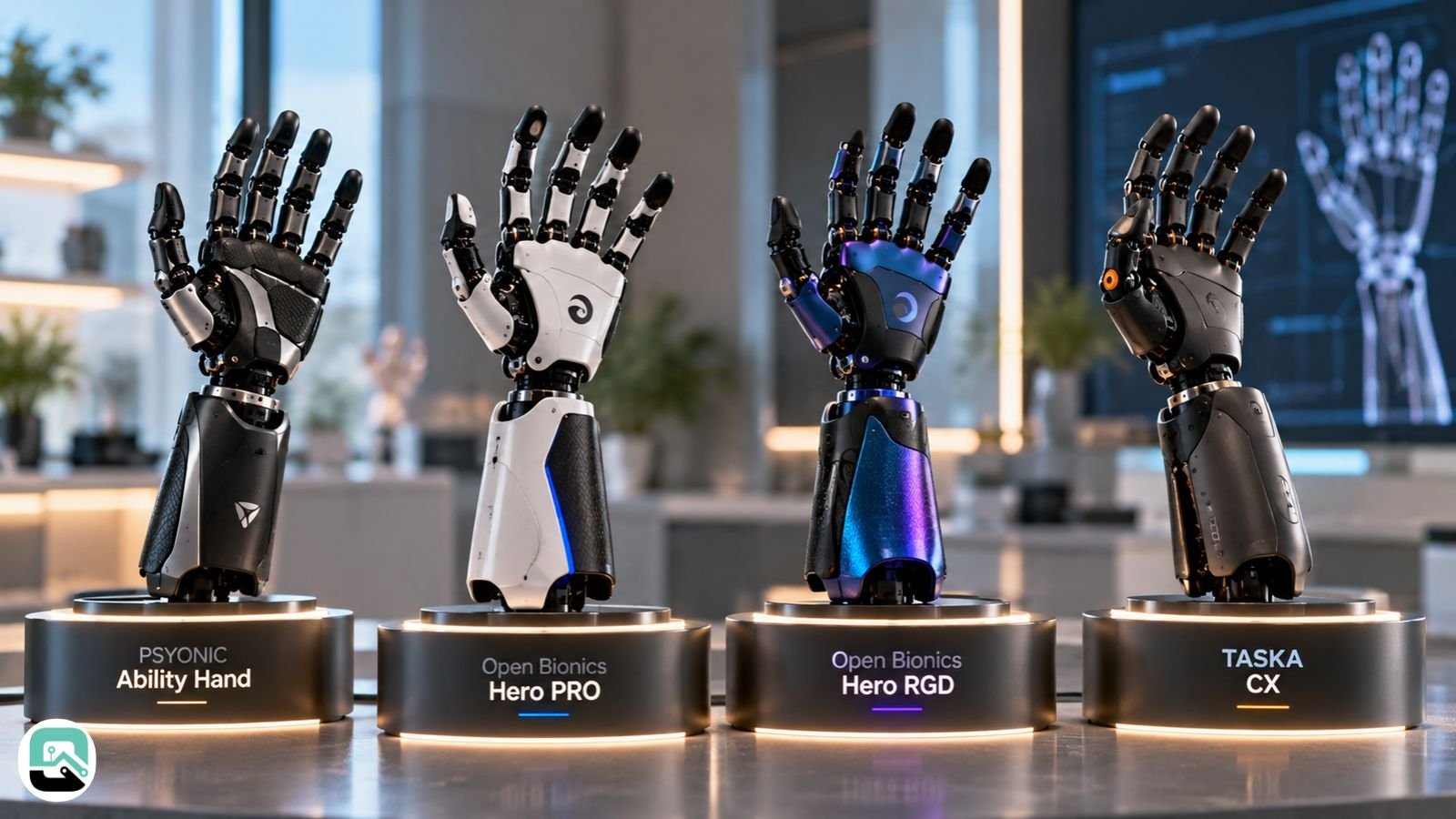
There’s no single best hand, only the best one for your life. We picked four with published specs and pulled the numbers from manufacturers and their distributors.
| Spec | Ability Hand (PSYONIC) | Hero PRO (Open Bionics) | Hero RGD (Open Bionics) | TASKA CX |
|---|---|---|---|---|
| Grip patterns | 20 preset, 11 custom | 7 | 7 | 18 automated, 5 custom |
| Speed | 0.2 s open to close | 0.6 s open to close (distributor) | Grips close in 0.4 s | 0.7 s fingers, 0.52 s thumb |
| Strength | 13 N grip; 100 lb static load | 57 lb carry | 77 lb carry | 29 N thumb grip; 44 lb static load |
| Water rating | IP64 (splash only) | IPX7 (full system) | IPX7 (full system) | IP67 (submersible) |
| Touch feedback | Fingertip pressure via vibration | Not advertised | Not advertised | Not advertised |
| Weight | 450 to 500 g | About 549 g, battery built in | Not published | Not published |
| Warranty | 24 months | 2 years | 2 years (distributor) | Extended plans; free annual service with loaner |
Notice something odd in the speed row? Open Bionics markets the Hero PRO as twice as fast as leading bionic hands, yet one distributor lists its full open-to-close time at 0.6 seconds, three times slower than the Ability Hand’s figure. Companies probably measure speed in different ways, so trust a side-by-side demo over either number.
Weight deserves a second look too. Hero PRO hides its battery inside the hand, so that figure already includes power. When someone quotes you a weight, ask whether the battery counts.
And remember you’re buying a system, not just a hand. PSYONIC designs the Ability Hand to plug into most third-party wrists, elbows, and controllers. Open Bionics builds around its own Hero FLEX socket and wireless MyoPod electrodes. TASKA throws in a free yearly service and lends you a spare hand whenever yours goes in for repair.
Other hands worth asking about: Ottobock’s bebionic and Michelangelo, Össur’s i-Limb, Covvi’s Nexus, the AI-assisted Esper Hand, and Atom Limbs’ Atom Touch, which promises individual finger control with haptic feedback but remains in early development.
Who Qualifies for a Bionic Hand?
Your prosthetist makes that call after an assessment. They’ll look at your amputation level, the condition of your residual limb, how clean your muscle signals are, your skin, how a socket fits, and what you want to get back to doing.
Limb level narrows things fast. Below-elbow and wrist-level users get the widest choice. Above the elbow, you’ll need a powered elbow as well, which means more weight, more cost, and trickier control. People with partial-hand loss often need something else entirely, like powered fingers or a body-powered device such as Hero GAUNTLET.
Kids can get bionic hands too, though growth makes it complicated. Open Bionics fits its Hero ARM on children as young as 8. Interestingly, Medicare allows more for a pediatric electric hand ($7,082.01) than for the adult single-motor version ($4,212.72), and growing kids need refits far more often than adults.
Push for a baseline signal test early on. It shows whether your muscles fire cleanly and consistently enough to drive a hand. We couldn’t find published data on how often weak signals rule someone out, so it’s worth asking your clinic directly.
How Does the Fitting Process Work?
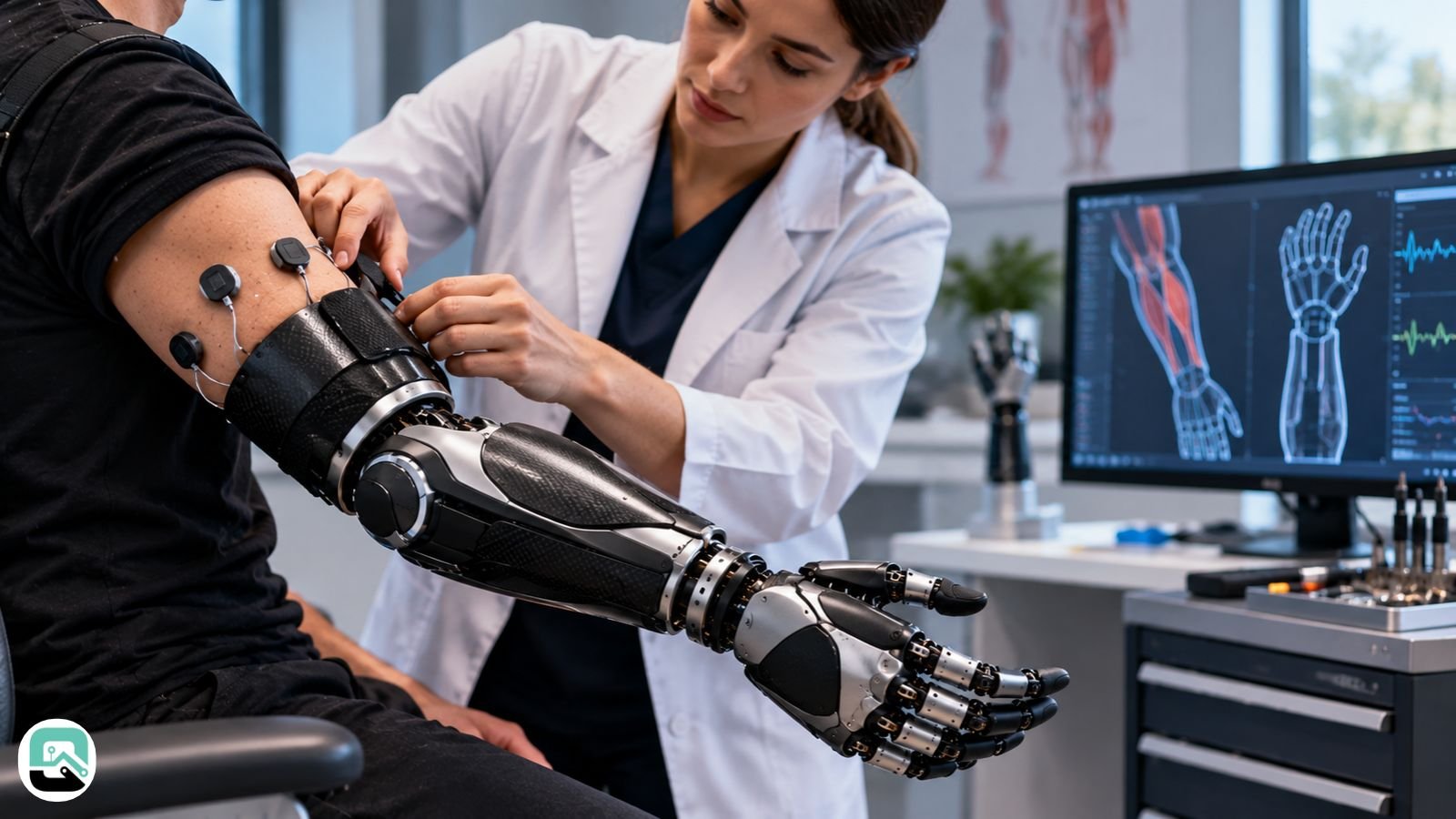
A typical fitting runs through five stages:
- Assessment: Your prosthetist examines your limb, tests muscle signals, and maps out your goals.
- Authorization: The clinic sends documentation to your payer and handles any appeal.
- Casting and test socket: The team molds your limb and fits a clear diagnostic socket to check comfort and electrode contact.
- Delivery: You receive the final socket with the hand, wrist, and electrodes installed.
- Training: An occupational therapist teaches grip switching, daily tasks, and care routines.
Waiting on the insurer usually takes the longest. Your clinic has dealt with your payer before, so ask what timeline it actually sees.
What Advanced Options Go Beyond a Standard Fitting?
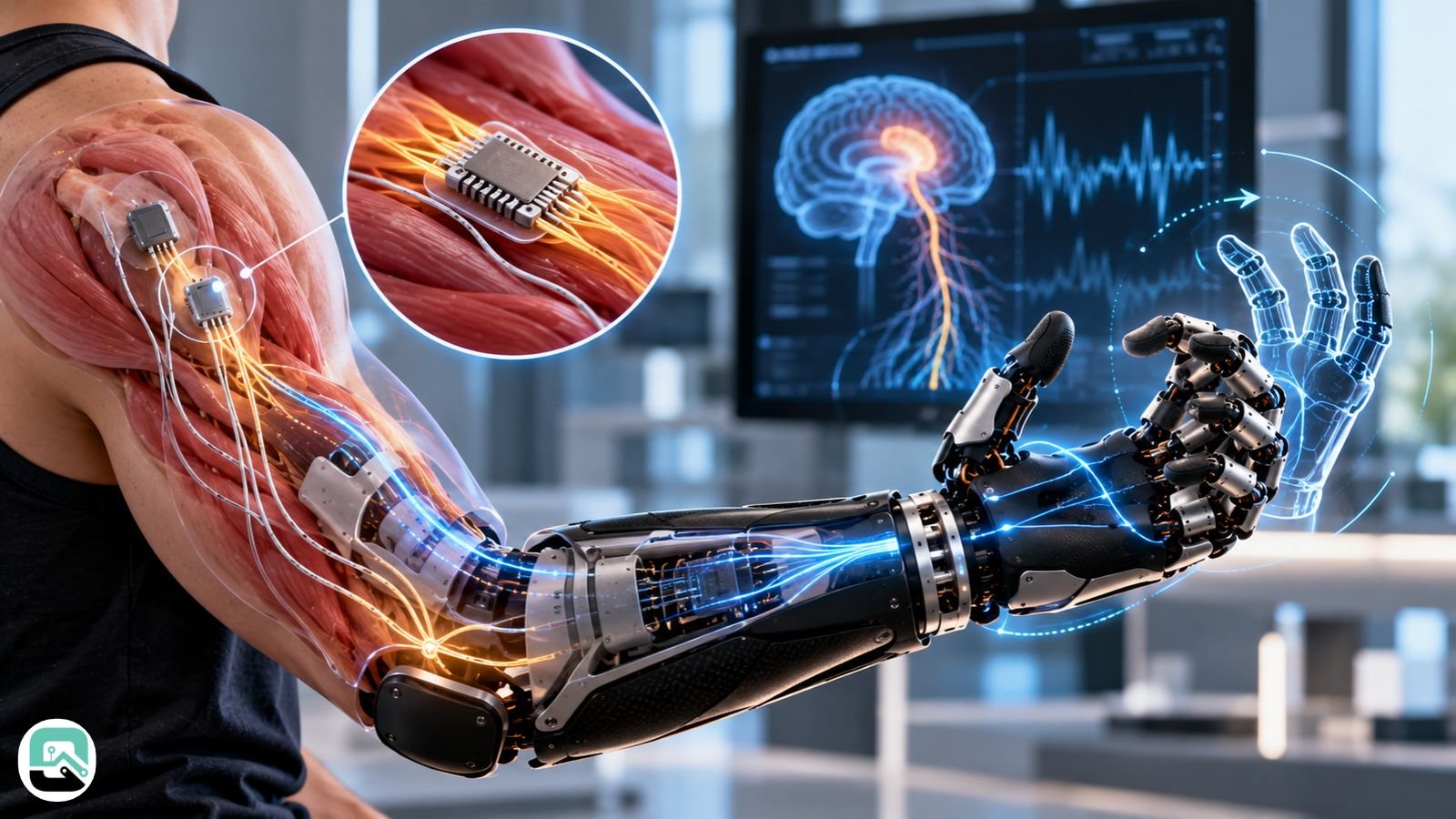
For some people, surgery makes the biggest difference. Targeted muscle reinnervation (TMR) moves the nerves that once ran the hand into nearby muscles, giving the prosthesis extra signal sites and often calming nerve pain. Osseointegration takes a different route: surgeons anchor a titanium post in the bone so the arm clips on without a socket. Researchers are also trialing electrodes implanted under the skin.
Insurance hasn’t caught up. Nebraska Blue’s Medicare Advantage policy excludes TMR and implanted sensors outright, and UnitedHealthcare runs bone-anchored prostheses through separate criteria.
Meanwhile, robotics labs keep raising the bar. Humanoid robot makers are chasing touch now, and 1X’s tendon-driven robot hands carry fingertip skin that senses force and slip as it happens. Over at MIT, researchers built electrically driven artificial muscles that contract with no motor at all. You won’t find either in a prosthetic clinic yet, but they point toward lighter limbs that can actually feel.
How Long Do Bionic Hands Last, and Do People Keep Using Them?
Insurers tend to budget for a replacement every three to five years. That’s a coverage habit, not a lab-tested lifespan. One health plan ties replacement to average product life and won’t go below three years.
Warranties give you a better hint. Two years is standard for the hands we compared, and most makers sell extensions.
The harder question is whether people keep wearing them. Biddiss and Chau’s 2007 review, which covered 25 years of research, found average adult rejection rates of 26% for body-powered arms and 23% for electric ones. Among children, those figures jumped to 45% and 35%. Newer reviews blame the same things again and again: reliability, function, comfort, and mental health factors like anxiety and depression.
Still, a statistic isn’t your future. Researchers define “rejection” in different ways and follow people for different stretches of time. A trial period, real training, and a hand chosen around your daily tasks will protect you far better than any average.
Can You Shower or Swim With a Bionic Hand?
That depends on the exact model and setup. Ignore the word “waterproof” on marketing pages; the IP rating on the spec sheet tells the real story.
- IP64, Ability Hand: Dust-tight and splash-resistant only. Keep it out of the shower and the pool.
- IPX7, Hero PRO and Hero RGD: Open Bionics rates the full system, including the Hero FLEX socket and MyoPods, for 30 minutes at a depth of 3 feet. Swap in a different socket and that rating no longer applies.
- IP67, TASKA: The company’s HydroSeal waterproofing technology lets its hands survive submersion to 1 metre for up to 30 minutes, and an optional wrist extends that protection.
Before you get any hand wet, check the manual and the warranty’s fine print on water damage.
When Is a Body-Powered or Passive Device the Better Choice?
Sometimes the low-tech option wins. A body-powered prosthesis runs on a harness and cable, so shrugging your shoulder opens or closes the hook or hand. Price-wise, it’s not close: Medicare allows $1,365.39 for a voluntary-opening mechanical hand against $28,715 for a multi-articulating one.
Fancier doesn’t automatically mean better. In Biddiss and Chau’s review, adults rejected body-powered and electric arms at nearly the same rate, 26% versus 23%. Body-powered devices also cope with water, dirt, and hard labor, and some people keep one of each for different jobs.
We couldn’t find solid data comparing durability or repair bills across device types. So ask every clinic two things: how fast repairs come back, and whether you get a loaner. A hand sitting in a repair queue doesn’t help anyone.
What Happened to PSYONIC After Shark Tank?
PSYONIC’s founder, Aadeel Akhtar, walked into the Shark Tank on February 23, 2024, asking for $1 million for 2% of the company, a $50 million valuation. Mark Cuban balked at the company’s crowdfunding. In the end, Lori Greiner, Daymond John, and Kevin O’Leary teamed up on $1 million for 6%, split three ways.
Unlike plenty of TV handshakes, this one closed. BGR’s follow-up on PSYONIC found all three sharks listed as investors on PitchBook, with a February 2025 deal date. Production has grown too, to 150 Ability Hands a month, and the company now aims for 10,000 a year.
Keep in mind that $50 million was an asking price, not a valuation anyone paid. PSYONIC also sells a robotics edition of its hand, and NASA, Meta, and Apptronik, the company behind the Apollo humanoid robot, have all put it to work in research.
How Do You Choose a Bionic Hand?
Start with your day, not the spec sheet. A basic hand you actually wear will always beat a cutting-edge one sitting in a drawer.
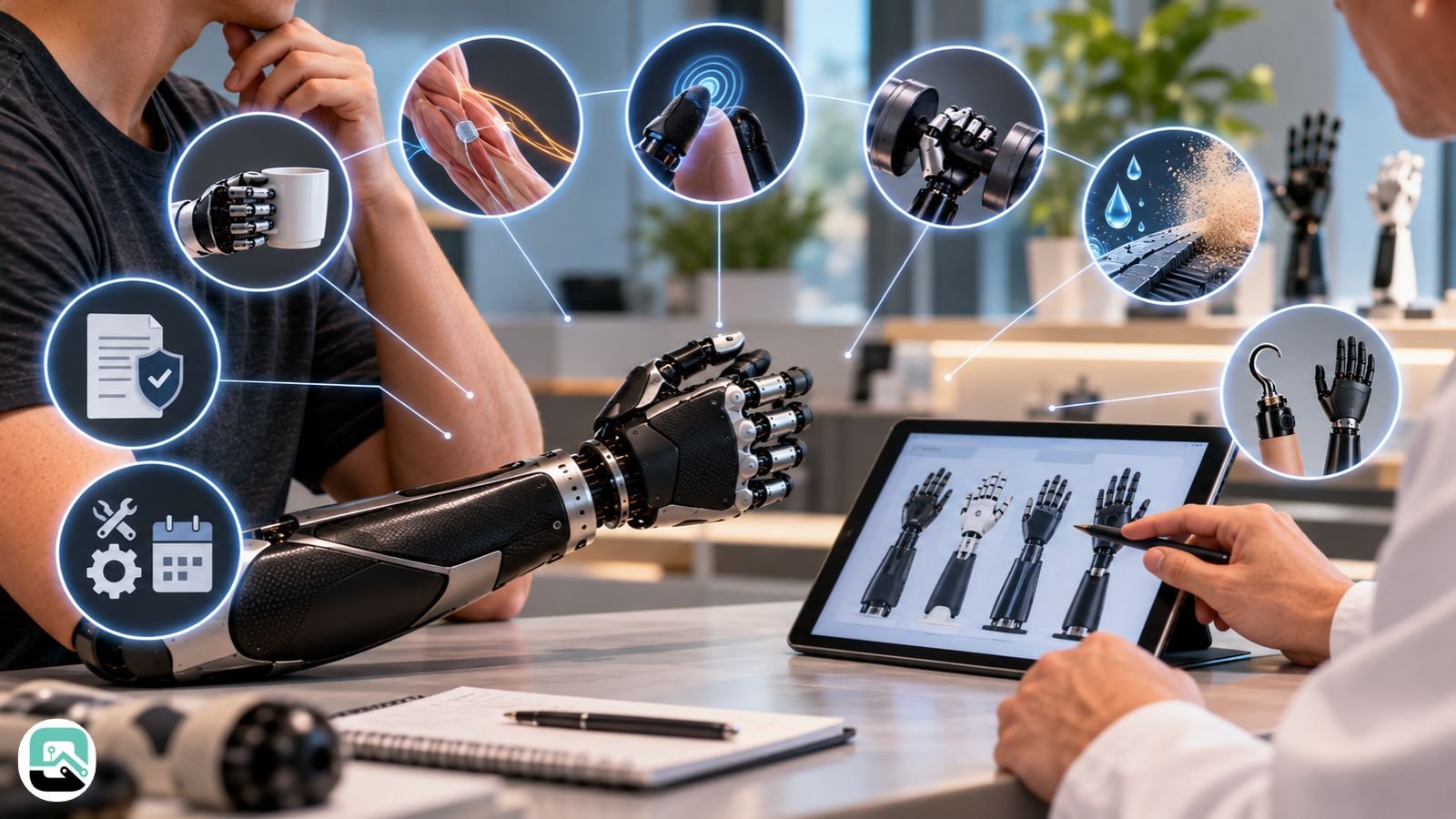
Take these questions to your first appointment:
- Tasks: Which three tasks matter most, and can I try them on a demo unit?
- Signals: Do my muscles produce clean, repeatable signals, and would pattern recognition help?
- Feedback: Do I want touch feedback, and does vibration-based feedback work for me?
- Strength: What grip force and carrying load do my tasks demand?
- Environment: Will I face water, dust, impact, or heavy loads? Get the exact rating and warranty terms in writing.
- Funding: Which billing codes will you use, and what does my payer require?
- Support: Who repairs the device, how fast, and do I get a loaner meanwhile?
- Alternatives: Would a body-powered or passive device meet my needs for less?
What Is the Best First Step Toward Getting a Bionic Hand?
Book an assessment with a certified upper-limb prosthetist, and bring two things: your three must-do tasks and your insurance card. While you’re there, ask for a signal test, a hands-on demo, and an itemized quote in writing.
Whatever a manufacturer tells you about price, coverage, or specs, treat it as a starting point. Your clinic and your insurer get the final say for your exact model and plan.
Frequently Asked Questions
Q. What is the L6880 code for a bionic hand?
L6880 is the HCPCS billing code for an electric prosthetic hand with independently articulating fingers. In 2026, Medicare’s allowable amount is approximately $28,715 for the hand alone, excluding the socket, wrist, fitting, and other components.
Q. Does Medicare cover bionic hands in 2026?
Yes, Medicare may cover myoelectric and multi-articulating bionic hands when medically necessary. However, coverage depends on documentation, eligibility, and the Medicare contractor or plan. Approval is not guaranteed.
Q. How much does the PSYONIC Ability Hand cost?
The PSYONIC Ability Hand reportedly costs between $10,000 and $20,000, although the manufacturer does not publish an official retail price. The total prosthetic system may cost more, and insurance coverage varies by plan.
Q. Is PSYONIC still in business in 2026?
Yes, PSYONIC remains active in 2026. The company completed its Shark Tank investment deal in 2025 and reportedly produces approximately 150 Ability Hands per month, with plans to expand production.
Q. How long does a bionic hand battery last?
Bionic hand battery life varies by model and usage. The PSYONIC Ability Hand offers approximately 6–8 hours per charge, while the Open Bionics Hero RGD supports over 1,200 opening and closing cycles per charge.
Q. Which bionic hands are waterproof?
TASKA bionic hands have an IP67 water-resistance rating, while the Open Bionics Hero PRO and Hero RGD systems offer IPX7 protection. The PSYONIC Ability Hand is rated IP64, meaning it resists splashes but is not suitable for submersion.
Q. What is the cheapest type of bionic hand?
Single-motor electric prosthetic hands are generally more affordable than advanced multi-articulating models. In 2026, Medicare allows approximately $4,213 for an adult single-motor electric hand. Body-powered prosthetic hands can cost less but do not provide the same electronic finger control.
Related: Free Humanoid Robot CAD Files: 6 Best Downloads Compared
| Disclaimer: This article is for informational purposes only and does not constitute medical or financial advice. Bionic hand prices, specifications, and insurance coverage may vary. Consult a certified prosthetist and your insurance provider before making any decisions. |