

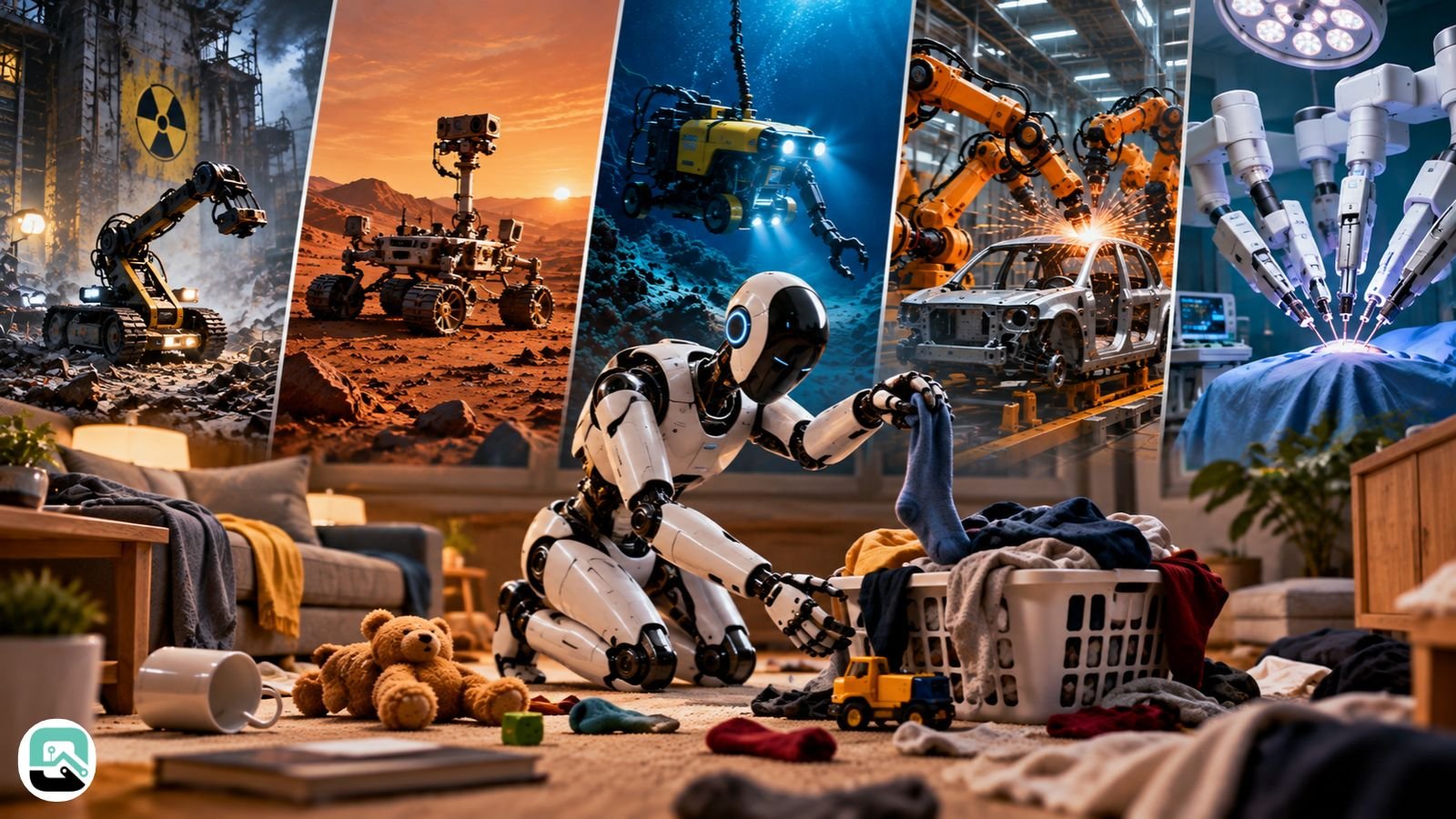
Robots can work in places too dangerous for people. They can repeat a structured task all day without drifting, and they can steady a surgeon’s hand. What they can’t do is the thing a toddler does without effort: handle ordinary objects in a messy room. In most jobs, they also still cost more than the person they’d replace.
That pattern runs through every example here. A robot’s edge shows up in extreme environments and structured settings. It fades once the surroundings get unpredictable.
In this article, “robot” means a machine that senses and acts physically. Some run autonomously and others are controlled remotely by people. Each example below names which kind it is.
Most of these advantages belong to industrial, space, ocean, and medical machines, not general-purpose humanoids.
Quick answer
- Radiation: remotely operated robots enter reactor buildings that people can’t.
- Mars and the deep ocean: robots work for long stretches without life support.
- Factories: programmed robots repeat structured tasks at a scale no workforce matches.
- Everyday physical work: robots struggle, and cost blocks most deployment.
What can robots do that humans physically cannot?
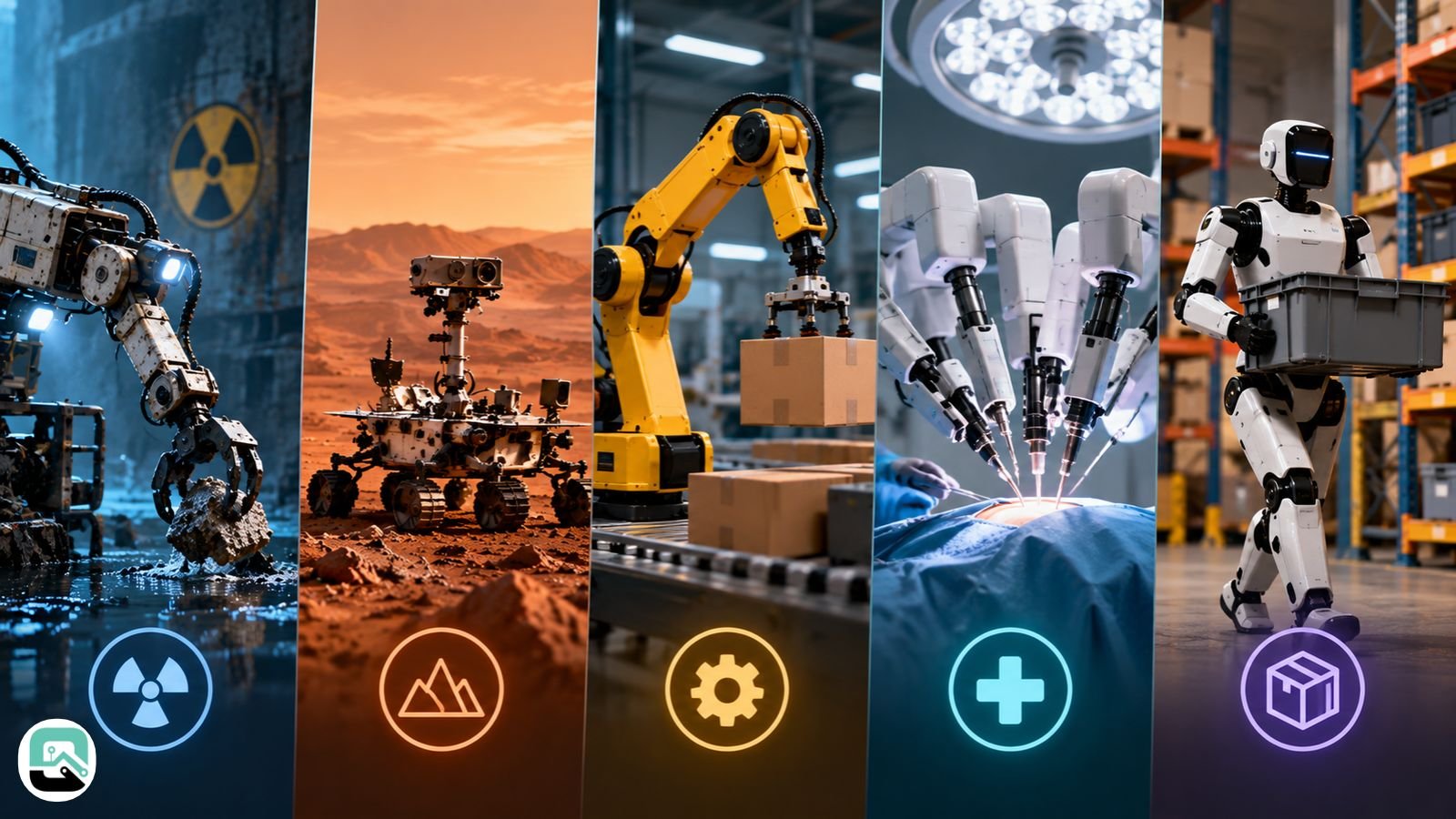
Robots can operate where a human body can’t survive, or can’t stay long enough. Think intense radiation, the deep ocean, and other planets. For a robot, the limit is engineering, like electronics that tolerate radiation. For a person, the limit is biology.
The cases below show how far that advantage goes and where it stops.
Can robots work inside intense radiation?
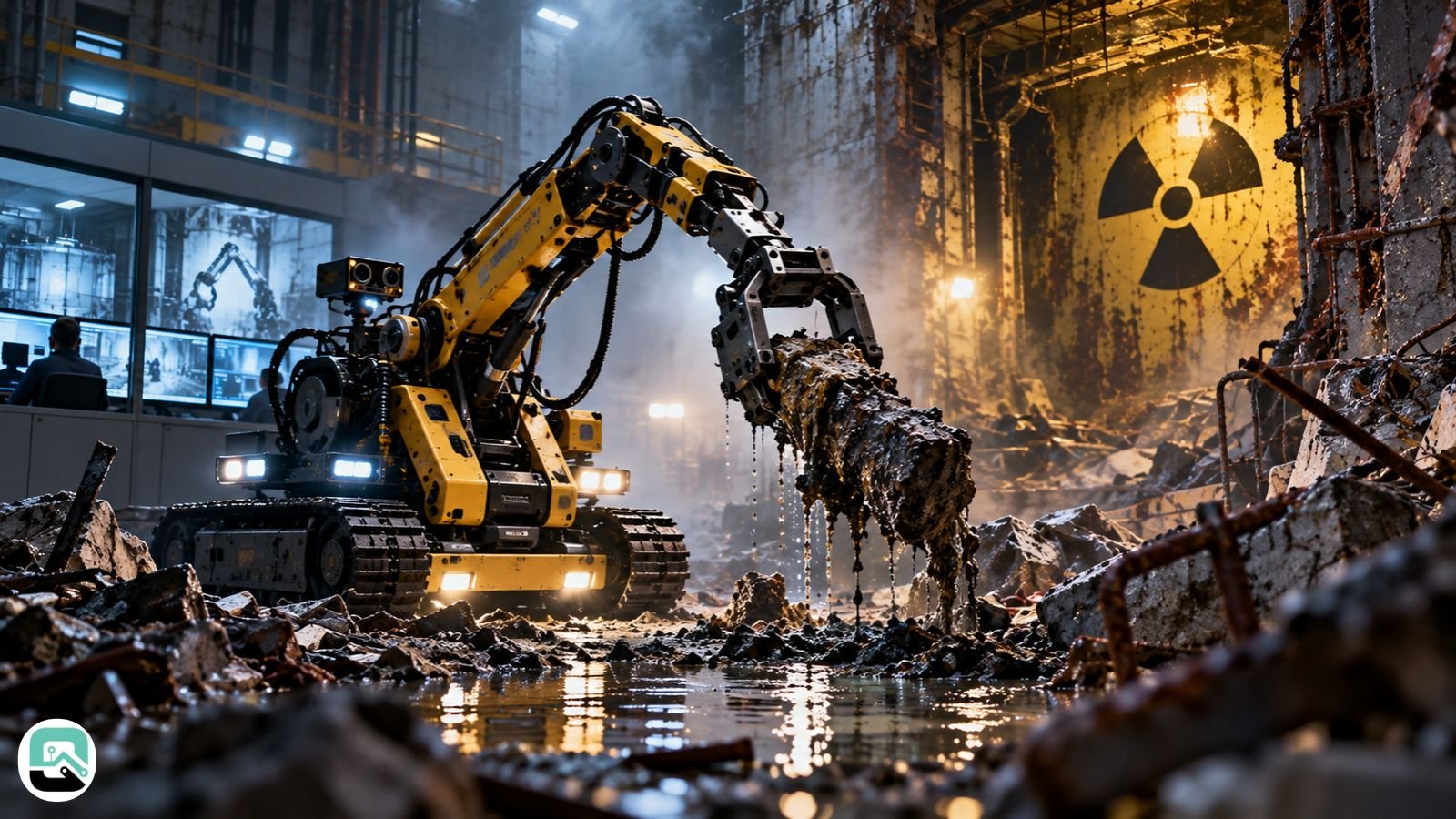
Fukushima Daiichi is the clearest example, and it shows the limits too. AP reported an estimated 880 tons of fuel debris, which it described as fatally radioactive, in the three damaged reactors. The retrieval robots are not autonomous. TEPCO operators run the arm from a remote operations center.
Progress is slow. Retrieval so far has produced only small samples of debris.
Radiation hurts the robots too. TEPCO’s analysis of the 2024 camera failures traced the problem to the imaging circuit boards in two cameras. TEPCO assumes radiation built up charge on those boards, and the cameras sometimes couldn’t restart after power-off. The workaround was to keep them running throughout retrieval.
The same document says irradiation tests couldn’t confirm the manufacturer’s radiation ratings under some conditions harsher than the site.
Can robots operate on Mars and in the deep ocean?
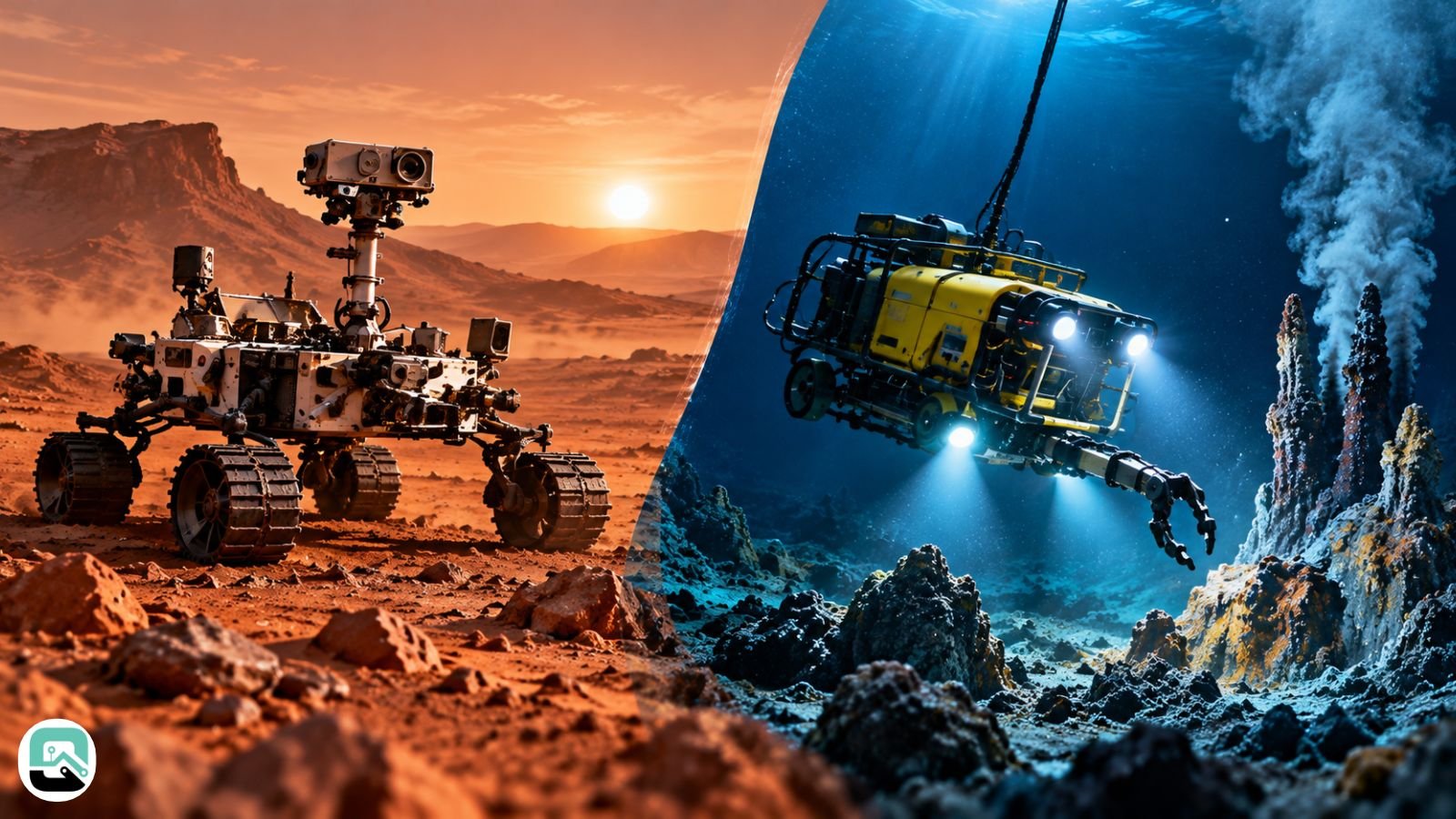
Mars is the easy case to explain. A robot there needs no life support. NASA designed the Ingenuity helicopter for up to five test flights over 30 days. It completed 72 flights, more than 14 times the plan.
Then it crashed. NASA’s investigation concluded that the navigation system couldn’t get accurate data over featureless terrain, which likely caused the hard landing that ended the mission.
The deep ocean is less clear-cut, because people go there too. The crewed submersible Alvin and the remotely operated vehicle Jason both reach 6,500 meters, and Jason handles multi-day missions.
So the robot’s advantage at depth is staying longer with no crew at risk, not reaching a depth humans can’t.
Can robots do factory work at a scale humans can’t match?
On volume, factories are where robots win. The International Federation of Robotics (IFR) counted 603,307 industrial robots installed in 2025 and an operating stock of 5,079,078. About 76% of new installations went to Asia.
These robots run programmed routines. The setting matters as much as the machine. Factories are built around robots, with parts arriving in known positions and the same motion repeating.
Are robots stronger, tougher, and better at sensing than humans?
In some respects, yes. A 2023 review in Frontiers in Robotics and AI found that electromagnetic and fluidic actuators outperform human muscles on some measures.
The same review found that robots trail humans in locomotion energy efficiency, operational time, and transportation costs. It concluded that humanoid robots are far from matching human dexterity and versatility.
Sensing is another real advantage, and it belongs to the sensor, not the robot. Thermal cameras read infrared radiation and ultrasonic sensors pick up high-frequency sound, and people can’t perceive either directly. The robot adds the ability to carry a sensor into awkward places and repeat an inspection the same way each time.
Robots also run for long periods without biological fatigue. They still need power, maintenance, and supervision, so “works around the clock” oversimplifies it.
Are surgical robots more precise than human hands?
Robotic instruments can improve control of movement, but that doesn’t establish better results for patients. Surgical robots are instruments that surgeons operate, not autonomous surgeons. Anthropic’s study, covered below, leaves such machines out of its definition of a robot.
Patient outcomes are mixed, with some procedures leaning positive. A 2026 meta-analysis of randomized colorectal-cancer trials found fewer conversions to open surgery (risk ratio 0.52) and about 0.7 fewer hospital days. Operating time rose by about 39 minutes.
Cost remains a debated trade-off, and results vary by procedure.
Why do robots still struggle with ordinary physical work?
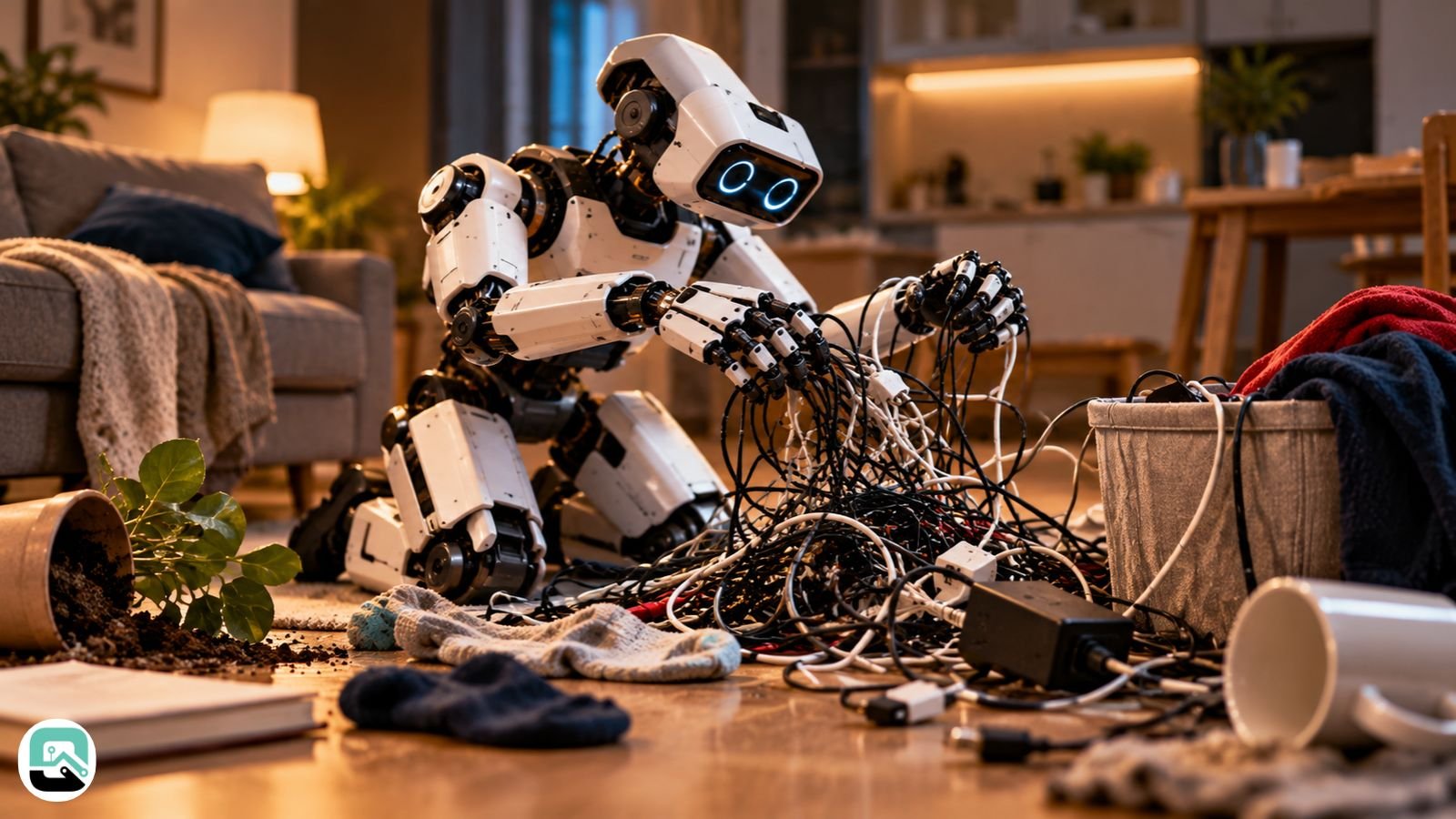
The hard part is messy, unpredictable settings. Anthropic’s robot exposure study modeled that today’s robots could perform only 2% of physical tasks in unstructured environments. Capabilities block adoption for about 70% of physical tasks.
Handling objects is the biggest gap. Half of physical tasks would need robots that touch and grip things better. The study’s examples of what robots can’t do include untangling wires and erecting scaffolding, which takes strength, balance, and mobility.
Dexterity is expensive in hardware. Comparing the 23-joint and 43-joint Unitree G1 configurations shows where added joints go: mostly the hands and wrists. That’s why hands take up so many of a humanoid’s joints.
Field tests show the same limit. On Ecuador’s Chimborazo volcano, a modified Unitree G1 walked unaided only where the terrain stayed manageable. On slopes around 30 degrees and steeper, the team had to carry it.
Factories stay predictable, while homes change every day. That’s why homes are a harder target for robots than factories.
Roboticist Hans Moravec made the broader point in 1988, and the Anthropic paper cites him. Short task descriptions leave out details that people find easy and robots find hard.
If robots can do most physical tasks, why aren’t they everywhere?
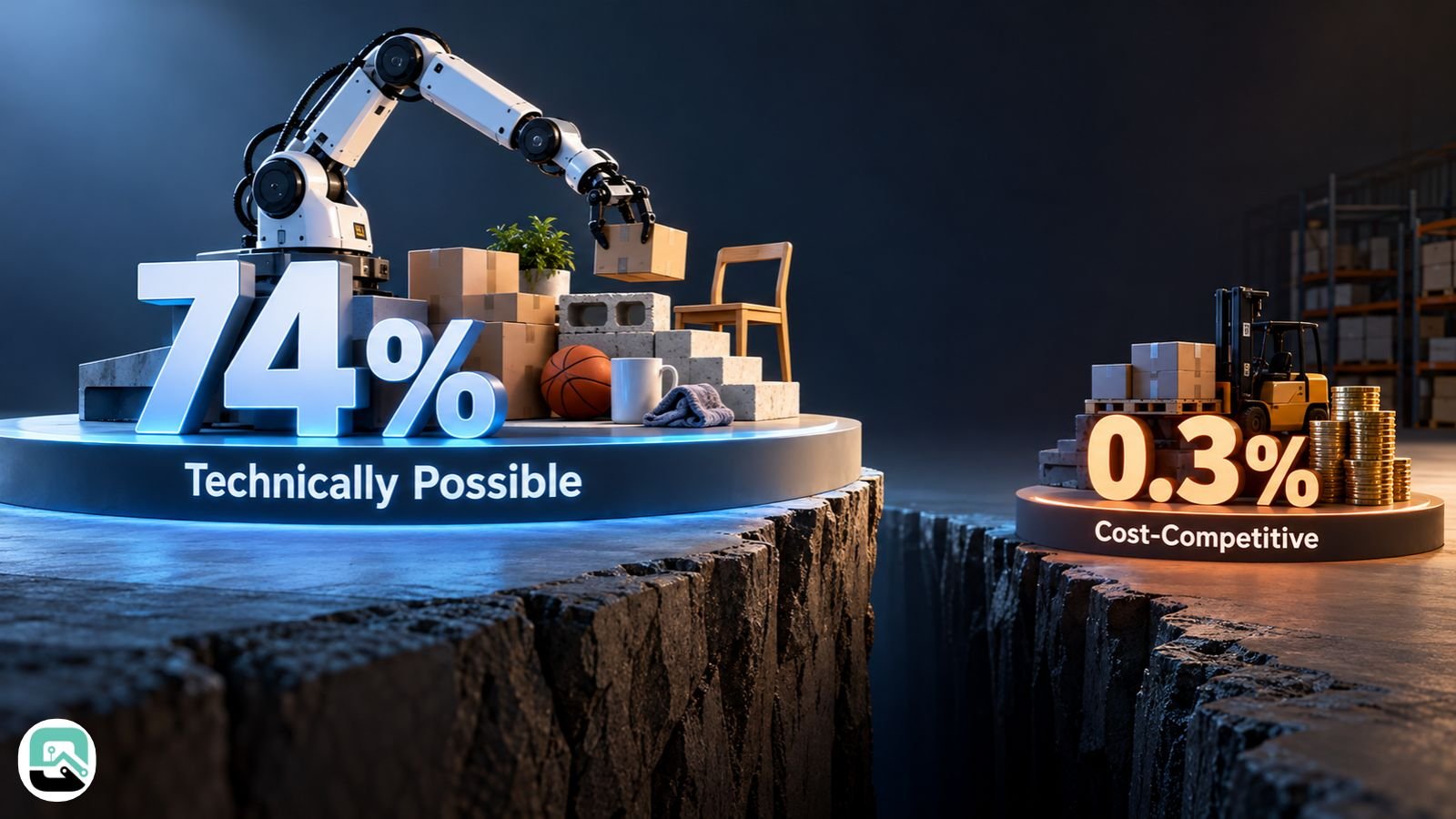
Mostly because of cost. Anthropic’s modeled estimates say robots could perform 74% of physical tasks in the US, which make up 34% of working hours, in at least some circumstances. Those are assessments of task descriptions, not measurements of robots working in real workplaces.
On cost, the same study finds robots are cost-competitive with people for just 0.3% of job tasks. At past price declines, it would take about 40 years to reach 10%.
Anthropic, the company behind the Claude AI model, published the study and used Claude to rate tasks and estimate costs. The authors call the cost estimates approximate and acknowledge judgment calls in the method.
Packers and packagers are the clearest cost-competitive case. The robots needed cost over $2 million to buy and install and replace roughly 14 workers’ yearly output. Annual cost comes to about $45,000, against about $49,000 for labor.
For welders, the robots needed cost around five times more than human welders.
Warehouse humanoids show the same pattern. One model’s grippers are tuned around a single standardized tote, and the robot stops rather than guess when a tote is warped.
Doing a task also isn’t the same as doing a job. A job bundles physical work with judgment, communication, and exceptions. A robot can take over one task without replacing the person who performs the whole role.
How can you judge a claim about robot capabilities?
Test each claim against four questions. This is editorial analysis built from the examples above, not a published standard.
- Capability: can the machine perform the action at all?
- Reliability: can it repeat the action across varied objects and surprises?
- Autonomy: does it work independently, or do people program, remote-control, or rescue it?
- Economics: does it deliver the output at a competitive total cost?
| Example | System type | What it demonstrated | Critical qualification |
|---|---|---|---|
| Fukushima retrieval | Remotely operated | Retrieved small debris samples | Radiation damaged cameras; progress is slow |
| Ingenuity on Mars | Autonomous flight, Earth-directed mission | Powered flight on another planet | Featureless terrain ended the mission |
| Factory robot | Programmed | Repeats defined operations at scale | Needs predictable inputs |
| Surgical robot | Surgeon-controlled | Finer control of instruments | Benefits depend on the procedure |
| Warehouse humanoid | Semi-autonomous | Handles a defined tote | Stops when objects fall outside its limits |
Which claims about robots hold up best?
The strongest claims combine a biological limit with a structured task: radiation, other planets, factory repetition. Surgical precision is real, but outcomes vary by procedure. Messy physical work and cost remain the main barriers, and these describe today’s technology, not a permanent rule.
Robot capabilities: common questions
Q. What is a robot’s biggest weakness?
Unstructured environments. Anthropic’s study modeled that robots could perform only about 2% of physical tasks in unstructured settings. Handling varied objects and adapting to unpredictable conditions is where most tasks stay out of reach today.
Q. What jobs can humans do that robots can’t?
Work that mixes hands-on manipulation, face-to-face interaction, and judgment, such as nursing and general repair. Anthropic found that today’s robots can do little of that work even in controlled settings. That describes current technology, not a permanent rule.
Q. Can robots see things humans cannot?
Yes, when equipped with sensors such as thermal cameras. The ability comes from the sensor, which a person could also carry, so a robot mainly adds the ability to reach awkward places and repeat inspections.
Q. Are robots stronger than humans?
On some measures, yes. A 2023 review found electromagnetic and fluidic actuators outperform human muscles on some measures. Strength alone doesn’t establish better dexterity, efficiency, or overall task performance.
Q. Are surgical robots better than human surgeons?
They don’t operate on their own, since surgeons control them. Trials show some benefits, such as fewer conversions to open surgery, along with longer operating time. Results vary by procedure.
Q. Can robots work without humans?
For parts of a task, some can. Most real deployments still rely on people for programming, maintenance, supervision, and exceptions.
Q. Will robots replace humans?
They can replace specific tasks without replacing whole jobs. Anthropic’s study found cost, not capability, to be the larger barrier right now.
Related: Will Robots Replace Humans? Which Jobs Are Most at Risk?
| Disclaimer: This article is for informational purposes only. Robot capabilities, costs, and performance vary by technology, environment, and application. AI-generated illustrations are conceptual and may not represent actual robotic systems. |