


Realbotix isn’t selling a robot with a personality. It’s selling a face that someone else’s chatbot can wear.
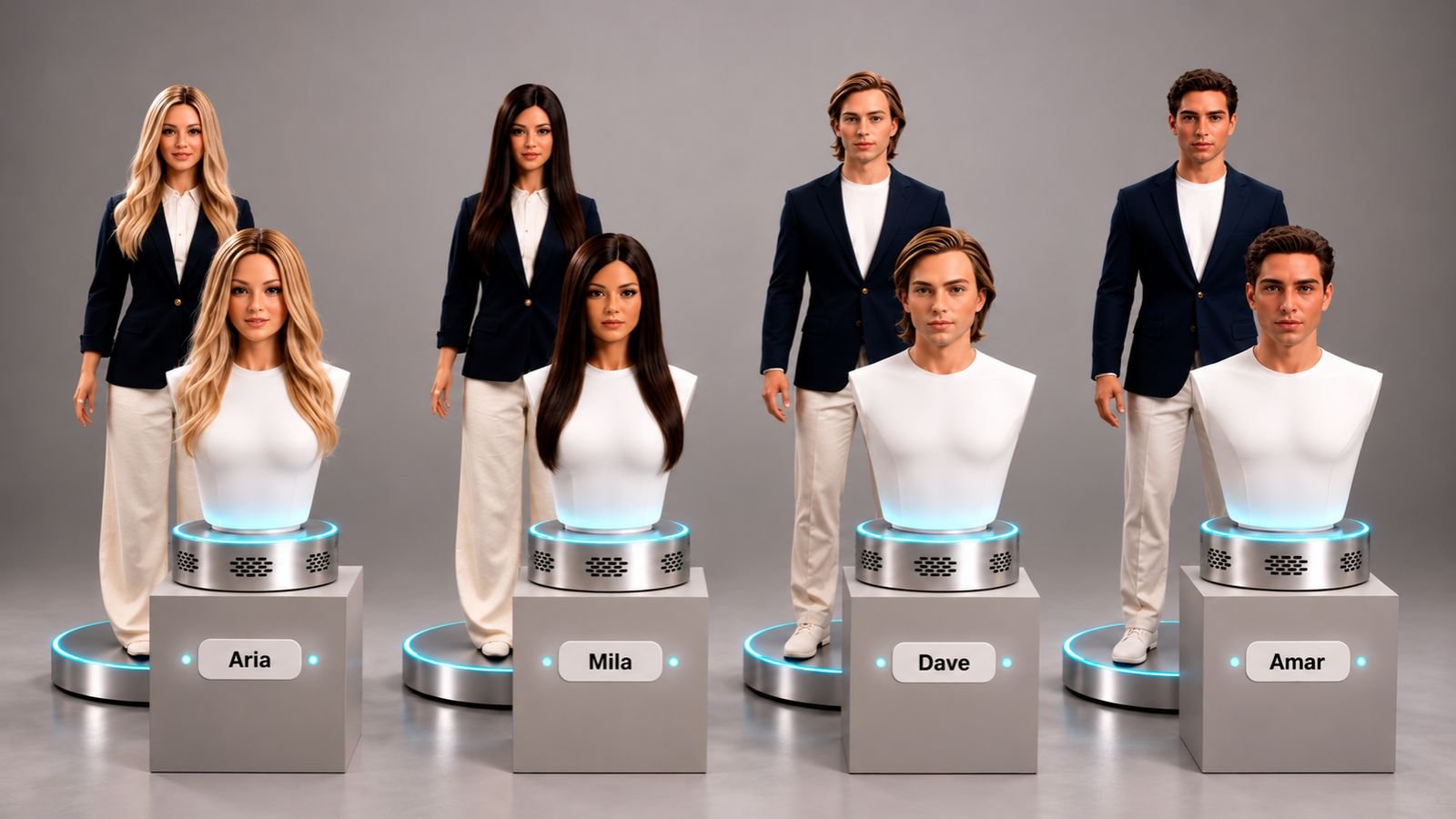
The Echo line, announced October 26, wraps silicone skin and a chest speaker around whichever model the buyer rents. Subscription tiers unlock ChatGPT, Claude, or Gemini. Four characters ship at launch: Aria, Mila, Dave and Amar. They answer in the language they hear, across more than 100.
The part Realbotix doesn’t build
Most humanoid makers pitch their own intelligence. Figure AI trains Helix for its robots. Realbotix skipped that fight.
It plugs in models from OpenAI, Anthropic, and Google, then spends its money on what those companies don’t make: skin, eyes, a jaw that moves. That’s a smart split, and a precarious one.
The best part of Echo, the conversation, runs on terms someone else writes. Pricing, model retirements, and usage rules all sit outside Realbotix’s control. A $59,950 buyer inherits every one of them.
Memory is the real character
Here’s the odd consequence. If the model underneath can change, what keeps Aria being Aria?
Realbotix’s own design points to the answer: memory. The company says conversation histories and saved memories stay on the robot or a paired device. Its planned 2027 digital twins would carry encrypted memories and preferences between the robot and a phone or tablet.
So the buyer doesn’t bond with a chatbot. The buyer bonds with a file of shared history. Swap the model, and Aria carries on. Lose the memory, and she’s a stranger with the same face.
That also changes what the robot is. If subscribers can talk to their character on any screen, the $11,950 body becomes the priciest accessory to a $19.99 plan.
The price ladder
The Echo Tabletop costs $11,950. It stands 32 inches tall, weighs about 25 pounds, and wears skin on its face and neck.
The Full Body model costs $59,950. It stands 72 inches tall (female) or 77 (male) and offers 39 degrees of freedom, all in the upper body. Don’t picture a walking humanoid. Picture a very expensive torso that gestures.
Then the meter starts. Every Echo needs a Robot Configuration App subscription, starting at $19.99 a month. The hardware is the down payment, and the model access is the rent.
Rivals price differently. 1X offers NEO at $20,000 or $499 a month. Realbotix asks for the purchase and the subscription.
Why the face costs so much
Work robots usually skip realistic faces because synthetic skin and facial motors add cost and break easily. Realbotix turned that liability into its signature.
The optional Vinci system adds facial recognition, gaze tracking and emotional-cue detection, so the robot looks back at you. Realbotix claims it processes all of that locally in under a second. That speed matters, because a late glance reads as a glitch.
Local memory, cloud mind
Realbotix says conversation histories, saved memories, and facial-recognition data never reach the company. It also says it doesn’t use that data for advertising, analytics, or training.
The gap opens when Echo calls an outside AI, speech, or avatar service. The data that feature needs can reach that provider. Realbotix keeps usage logs and says it can’t see the conversation content those providers process.
The most intimate record stays in the robot’s chest. The conversation still travels.
Scarcity as strategy
Realbotix plans 250 units in the first run: 225 tabletops and 25 full-body robots. A $199 deposit holds a spot, and deliveries start in the second half of 2027, at least eight months out.
A small batch and a cheap deposit make a waiting list feel like a launch. They also buy Realbotix time to learn what Echo does in real homes before it scales.
The delay cuts both ways. The chatbots inside will go through several release cycles before the first unit ships. The body stays fixed while the mind updates.
What to watch
Realbotix has sold this face to business customers before, and Ericsson lined up a deployment at its Plano Experience Center. Consumers are a harder sale.
As Interesting Engineering notes, the price only makes sense if the hardware performs outside a demo. Work robots face that test in real deployments, where uptime decides everything. Echo takes its test in someone’s living room.
Watch three things: who controls the memory layer, how the subscription tiers price the models, and whether 250 deposits turn into 250 working robots.
Related: Humanoid Robot Mobility Breakthroughs 2025–2026: What’s Real?