

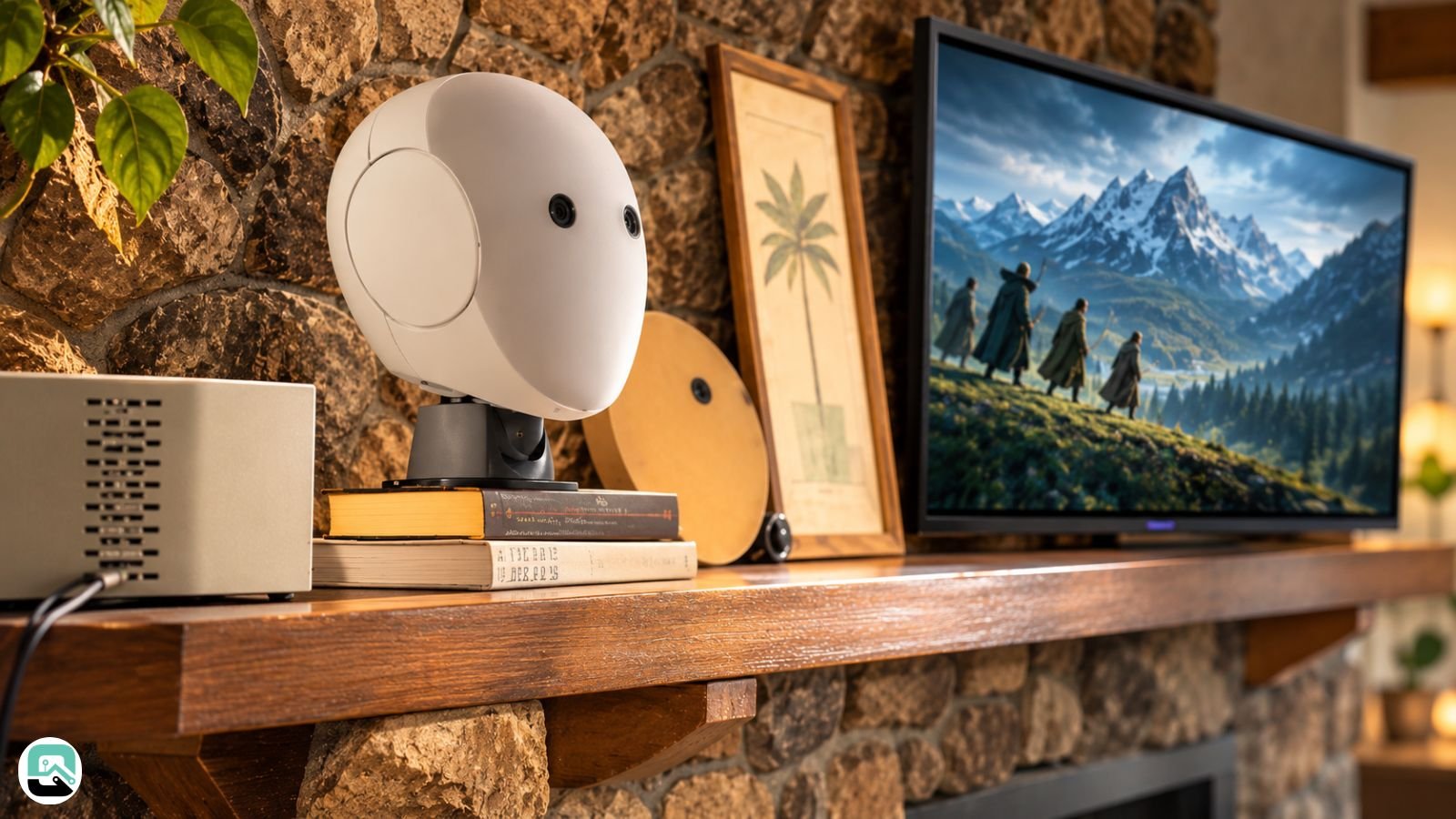
A disembodied Neo head played a movie on an Apple TV. The clip points to what home humanoids may do first.
A robot head sits on a fireplace mantel beside a stack of books. Someone asks it to pick a movie. The TV wakes, the search bar fills in, and The Fellowship of the Ring starts.
1X chief designer Dar Sleeper posted the clip on X over the weekend. He said teammates without full Neo robots use factory-defect heads to wire up their homes. John Koetsier reported the story at Forbes on November 3.
What the clip shows
The head has no body, no hands, and no remote. It still controls the TV.
Sleeper’s post doesn’t explain how. The head could send network commands. It could use an Apple TV integration. It could also read the screen and navigate it the way an AI agent uses a computer. Commenters asked the same question, and nobody has answered it yet.
Koetsier bets this is a team experiment, not a planned feature. He may be right. Plenty of shipped features started as an engineer’s side project.
Why “defective” matters
A head that fails factory checks still works as a hub. That detail says something about the design.
The intelligence stack sits in the head. Cameras, microphones, a speaker, a network link, and an AI model all live there. A flawed neck joint or a cosmetic fault doesn’t break any of them. The robot’s brain can work without the rest of the robot.
That split matters for 1X. Heads that miss the bar for a $20,000 machine can still do useful work in a home.
The head already does the job
Most humanoid pitches center on chores. Laundry. Dishes. A drink from the fridge.
Those tasks are hard. One test Koetsier covered found humanoids failed 88% of home tasks. 1X has built Neo’s 25-DOF hands to close that gap, but software will decide how fast they become useful.
A smart display skips the hard part. It has the same ingredients as a Neo head and handles digital tasks well. Apple’s $299 HomeView follows that recipe. Neo’s head matches it, then adds legs and hands.
The gap no hub can cross
Few homes are fully smart. Most have a few connected bulbs and a thermostat. A TV might sit on an old receiver. Doors stay unlocked. Windows stay open. The garage door stays up.
A countertop hub controls only what connects to it. Everything else stays out of reach.
A robot works differently. It uses the network where an integration exists. Where none does, it walks over and uses its hands. It can close a window or push a button on a device that never joined the network.
Homes make that harder than it sounds. Stairs, clutter and tight corners test balance control quickly. The digital side of the job arrives first.
Day-one usefulness
Pre-launch pricing sits at $20,000 to buy or $499 a month to rent. Those figures may change.
Early owners will teach Neo new chores. According to 1X, remote operators may step in on tasks it hasn’t learned, with the owner’s permission.
A robot that will someday fold laundry has to earn its keep sooner. Music, lights, TV, reminders and scheduling are chores AI handles well today. 1X has also said Neo will remember birthdays and conversations. New physical skills can arrive later through over-the-air updates.
Sleeper made a similar point to Koetsier. Small moments of usefulness matter more than headline tasks like end-to-end laundry. Changing a channel is about as small as it gets.
A face changes the deal
A speaker is an appliance. A head on the mantel feels closer to a presence.
That presence may build trust faster. It also raises the stakes. Cameras and microphones sit in the living room, and a human operator may sit on the other end. Owners will want clear controls over when that happens.
The race is wider than 1X
Other companies are moving in the same direction. Meta is testing a consumer AI agent with a humanoid body through its Muse assistant.
Forbes also notes that Figure’s CEO runs Hark, an agent assistant. That pairing could reach a humanoid built for home life.
Apple, Amazon and Google have spent a decade fighting over the home. None of their smart displays can walk to the door.
What to watch
Three questions remain open.
- How does the head control devices? The method decides how far it can scale.
- Will 1X ship this as a feature? Today it looks like an internal hack.
- When does Neo reach homes? CEO Bernt Børnich has promised some deliveries this year.
If the answers go 1X’s way, the first job of a home humanoid may not be the dishes. It may be picking the movie.
Related: Meta Max Humanoid Robot: Why Did Meta Turn to China?