

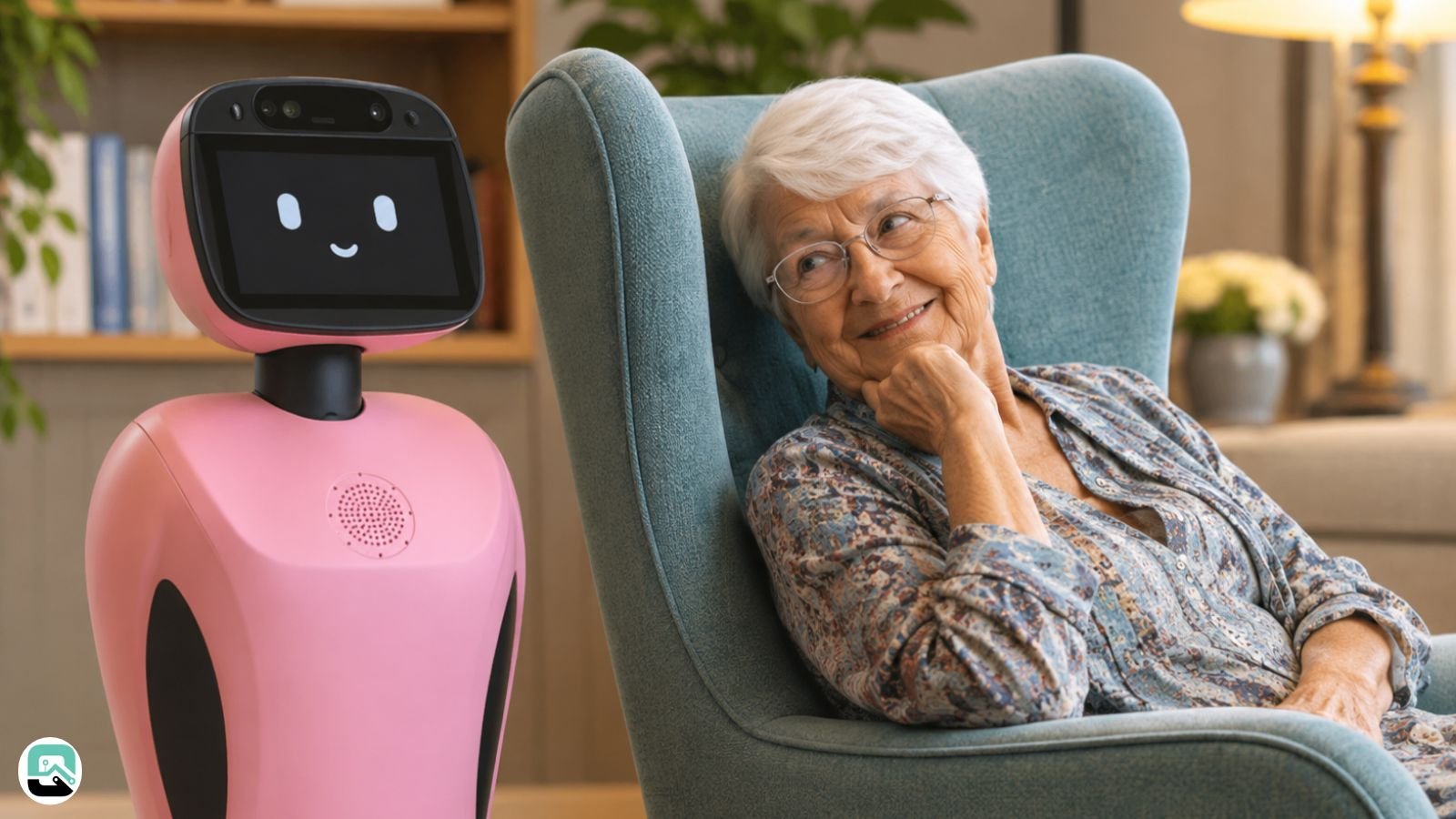
A humanoid robot may have the strength to lift a 96-year-old woman off the floor after a fall. Philip Cola says that move could injure her. The robot should call for help instead.
Cola leads healthcare management programs at Case Western Reserve University’s Weatherhead School of Management. He also teaches in the School of Medicine. Cleveland Magazine’s report this week quotes him on that example. It captures the central tension in a Cleveland study of AI in senior living. Every resident account and expert remark below comes from that report. RoboPulse did not conduct these interviews.
The Permission Gap
Most robotics coverage asks what a machine can do. According to Cleveland Magazine, Cola’s team asked what older adults want a robot to do.
I call the distance between those two answers the Permission Gap. Engineers keep closing the capability side. Nobody has settled the permission side. Cola says no one has a formula for what a robot should do inside a person’s home.
Demos can hide this gap. The Optimus snack demo in Austin looked smooth, yet a human operator steered the robot. Smooth motion proves the hardware works. It says little about judgment.
Three Tiers of Senior-Care AI
The Cleveland report covers three kinds of technology. Each one steps further into a resident’s personal space.
| Tier | Example | What it does | Intrusion level |
|---|---|---|---|
| Ambient sensing | Nobi Smart Lights at Eliza Jennings | Watches for falls and risky behavior, lights the way at night | Depends on the privacy setting. Eliza Jennings reportedly uses stick-figure playback |
| Pattern analytics | Vitalist pilot at Judson | Tracks sleep, activity, hydration, pulse, and mobility | Low to moderate. Data flows continuously |
| Conversational companion | Navi from NaviGait | Talks, remembers, answers questions | Moderate. It enters personal and emotional space |
Physical caregiving robots would sit above all three. No one in the story proposes them yet.
The tiers are my framing. The technologies and their capabilities come from the Cleveland report.
Cleveland Starts With the Quiet Tools
Mike Gray is chief information officer at Eliza Jennings, a nonprofit aging services provider. Cleveland Magazine reports that he calls the organization careful and choosy about resident-facing technology.
Its Cleveland campus uses Nobi’s AI light fixtures. Gray says they flag falls and predicted falls to staff. They also switch on when a resident gets out of bed at night.
On privacy, Gray describes playback that reduces each resident to a stick figure. That reflects Eliza Jennings’ setup, not a universal rule. Nobi’s documentation lists four privacy levels for escalation images: no images, stick figure, blurred images, and actual images. Each community and resident profile sets its own level. The same documentation says the stick-figure option is no longer available to new communities.
Judson Services asks similar questions. Cindy Struk leads its health services research and innovation work. She points to a pattern. Shifts in sleep, mobility, or drinking often come before a crisis. Software that spots those shifts tells staff where to spend their time.
Struk frames the goal as using AI to support human interaction and make it easier for staff.
What Navi Showed
Cleveland Magazine describes Navi as a prototype about the size of R2-D2. It has a female voice, an expressive face, and eyebrows that move. It holds conversations and remembers what residents say.
Researchers placed it with residents at Judson Park, including overnight stays. The report says they kept its movement limited. Its mapping and navigation weren’t ready for free roaming, Cola says.
Couple Art and Nancy Glidden tested it and reacted differently.
Art is an engineer. He quizzed Navi on heat-treating metals and got solid answers. At times, he forgot he was talking to a machine. He sees value for residents whose memory is fading.
Nancy worked in human services. She started doubtful. Navi missed jokes and double meanings, and she questioned whether a machine without empathy could reach someone with dementia. The report leaves that question open. Her view softened with more time. She still isn’t ready to put a robot in every living room.
Their split mirrors the field. The tool helps in some cases. People still disagree on where it belongs.
Conversation Is Ahead of Movement
Cola says companionship technology is far along. Smart speakers already hold conversations. Put that intelligence in a mobile body, and a robot could talk, remember, and keep someone company, he says.
Movement lags behind conversation. A home robot must navigate a real living space and adapt to one person. It must also avoid becoming another obstacle in the hallway.
Robots that learn household chores face the same test. Each maker trains them differently, as this comparison of how five home robots learn chores shows.
Cola also notes that AI stays patient. It can wait while someone searches for a word or a memory.
The Bigger Market Sits at Home
Struk sees the largest opportunity outside facilities, according to the report. Many older adults want to stay in their own homes. They still want connection, monitoring, and a human point of contact.
Judson Link serves people living independently in the community. Pattern-tracking tools could extend there. Residents could watch their own health trends. Families would know when something needs attention.
The demand will grow. The World Health Organization projects that one in six people worldwide will be 60 or older by 2030.
What Builders Should Take From This
- Conversational features are further along than movement. Voice and memory work well in the study. Navigation, safety, and judgment lag, and Navi still missed jokes and double meanings.
- Privacy settings shape trust. Nobi offers anonymized and fully recognizable options. Communities decide, and the setting changes what staff see.
- Restraint counts as a feature. The best products will know when to call a human instead of acting.
FAQs
Q. What is Navi?
Navi is a conversational AI robot prototype from NaviGait. Case Western Reserve researchers tested it with residents at Judson Park in Cleveland.
Q. Can AI robots help people with dementia?
The Cleveland study raised the question and left it open. Cola notes that AI can stay patient when someone struggles to recall something. He says the field needs more research.
Q. Do Nobi lights always show residents as stick figures?
No. Eliza Jennings reportedly uses stick-figure playback. Nobi’s documentation lists four privacy levels, from no images to actual images, and the stick-figure option is closed to new communities.
Q. Why not let a humanoid robot lift someone who has fallen?
Cola says moving a person after a fall can cause further injury. He points to calling an emergency contact immediately as the safer response.
Q. What senior-care AI is in use in Cleveland?
The report describes fall-detection lighting, monitoring of sleep, hydration, and mobility, and a conversational companion prototype. Eliza Jennings and Judson Services are running pilots.
Related: This Humanoid Robot Uses Living Human Brain Cells. But Why?