

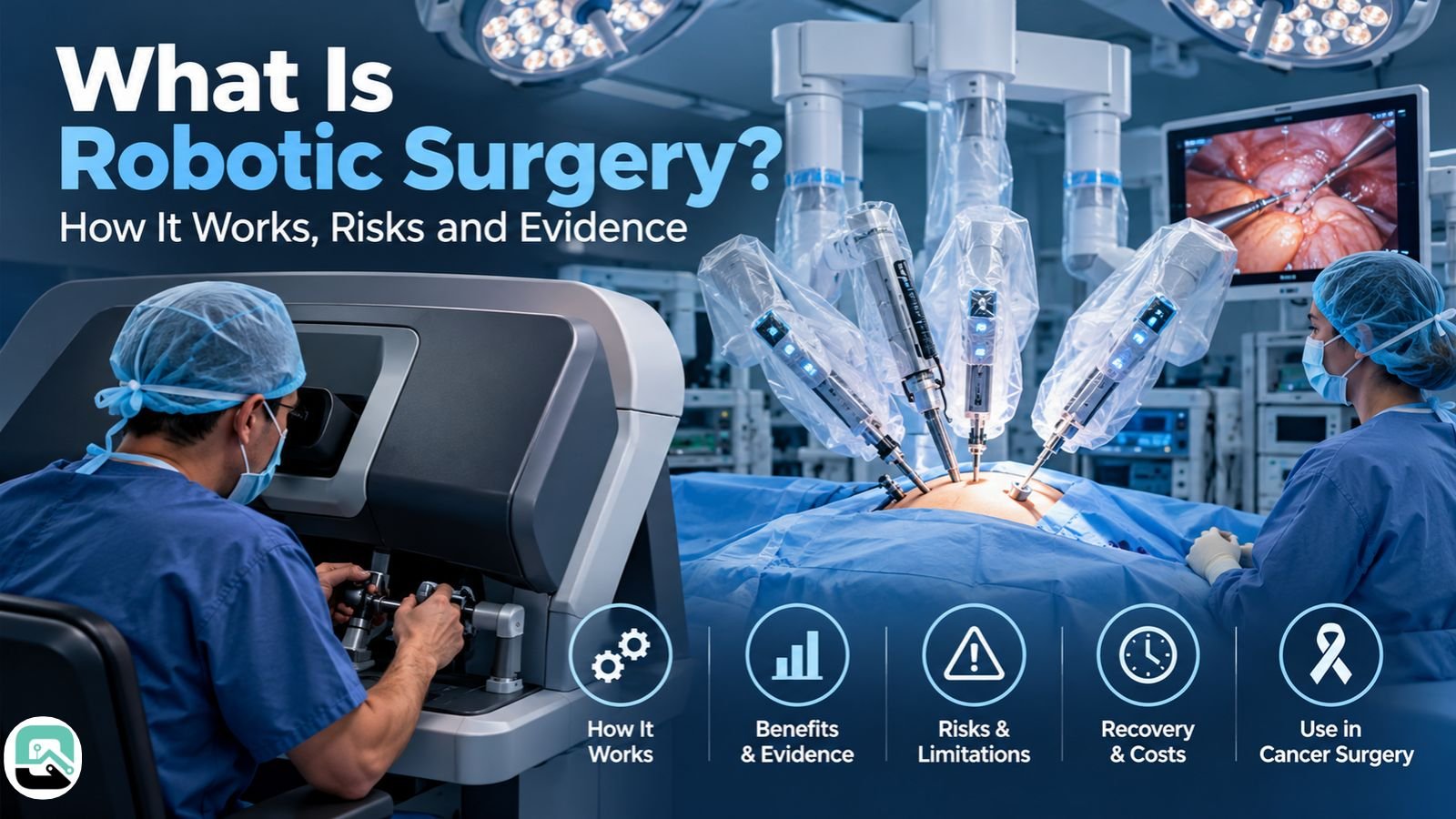
Robotic surgery is minimally invasive surgery in which a surgeon controls robot-held instruments and a 3D camera from a console. The robot never decides anything or moves on its own. A surgeon guides every motion, which is why the FDA classifies these systems as robotically assisted surgical (RAS) devices.
So does the robot make surgery better? For most operations, the trials say no. Randomized studies mostly find similar complication and death rates to standard keyhole (laparoscopic) surgery, while robotic cases tend to run longer and cost more. A few procedures do show specific gains, such as fewer conversions to open surgery in certain rectal cancer trials, but those gains don’t carry over to every operation.
We’ll walk through the equipment, the evidence (where it holds up and where it’s thin), cancer-surgery caveats, recovery, the main systems on the market, and the questions worth asking your surgeon. None of it replaces medical advice.
Does a robot actually perform robotic surgery?
No. A surgeon performs every step. The system takes the surgeon’s hand movements at the console and scales them into smaller, steadier instrument movements inside the patient.
Cleveland Clinic puts it plainly: robotic surgery does not replace your surgeon. Built-in safety mechanisms keep the arms still unless the surgeon is actively controlling them.
A robot in the room tells you nothing about who’s at the console or how often they’ve done your procedure. Your health, the operation itself, and the surgeon’s training and experience with that specific procedure all shape the result. The checklist near the end of this article is built around those questions.
Robots that operate on their own exist only as research prototypes. The section on autonomous surgery covers how close that research has come.
How does a robotic surgery system work?
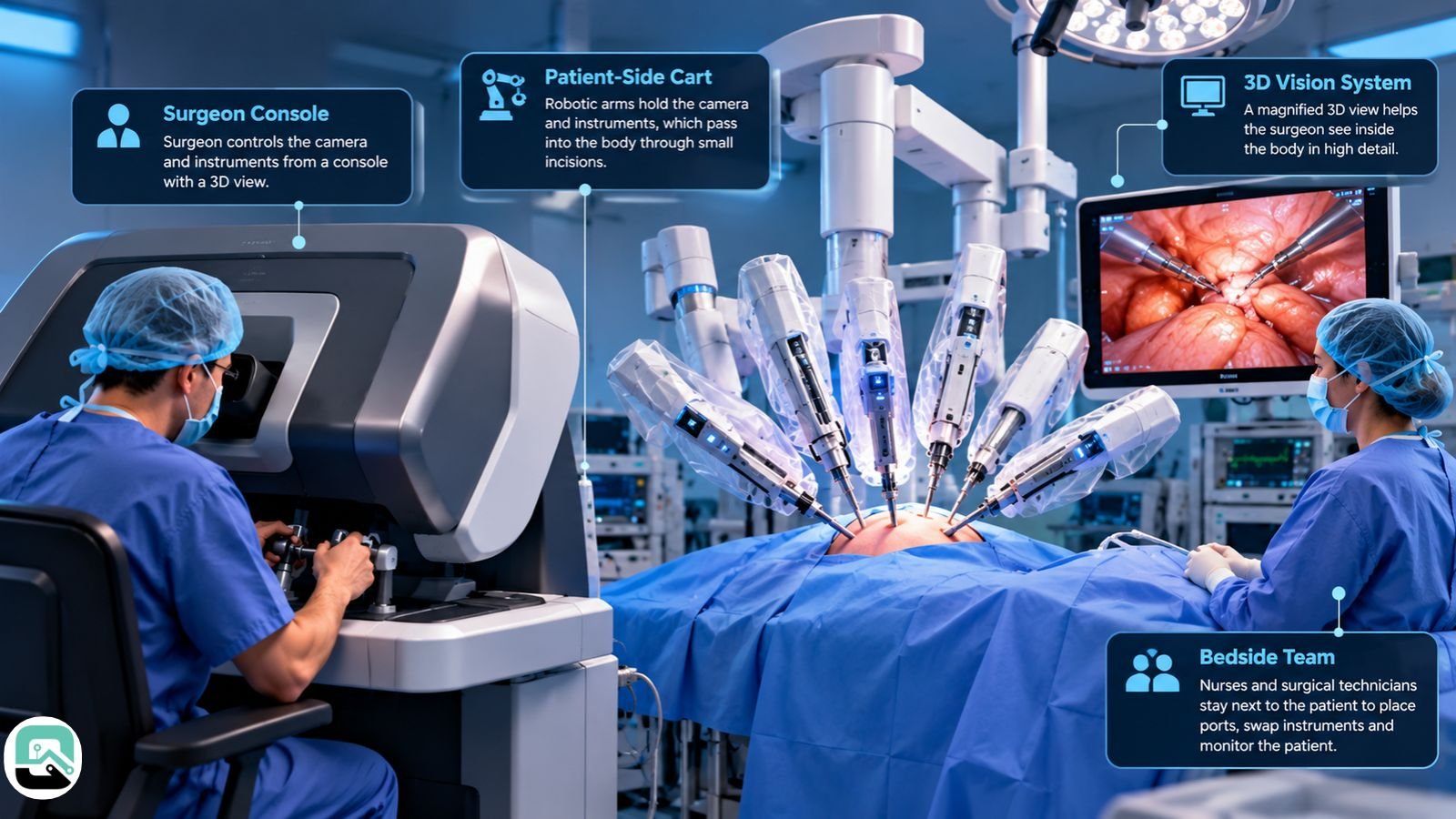
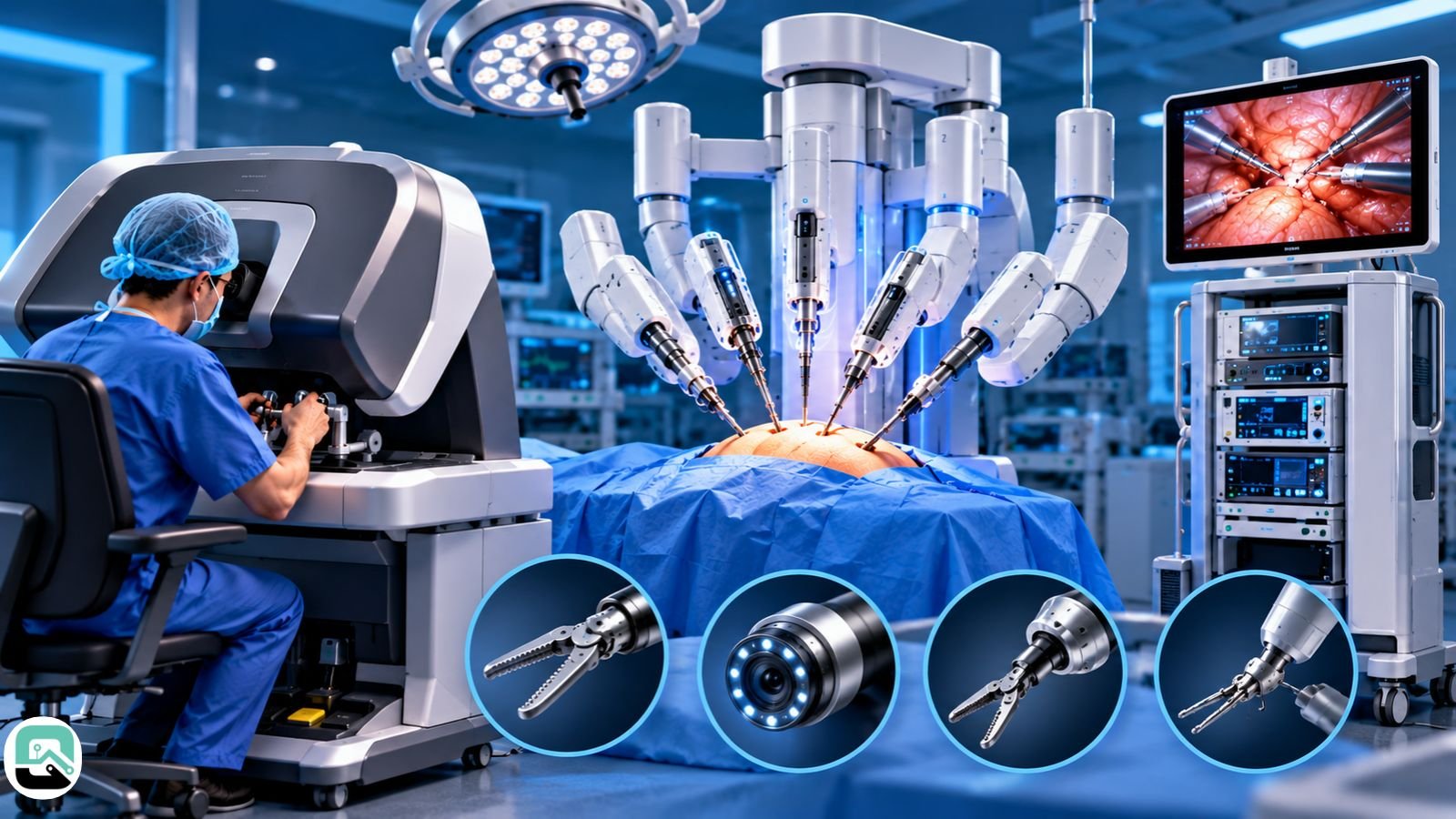
A typical soft-tissue system has three working parts: a surgeon console, a patient-side cart with robotic arms, and a 3D vision system. The surgeon steers both the instruments and the camera from the console instead of holding them.
- Surgeon console. It usually sits a few feet from the operating table. The surgeon looks into a magnified 3D view and works the hand controls and foot pedals.
- Patient-side cart. Robotic arms hold the camera and instruments, which pass into the body through small incisions. A multiport da Vinci uses three instrument arms plus a fourth for the endoscope (the camera).
- Bedside team. Nurses and surgical technicians stay next to the patient to place ports, swap instruments, and monitor the patient throughout.
Multiport systems work through several small incisions. Single-port systems like the da Vinci SP fit the camera and every instrument through just one.
In most hospitals, the console stays in the same room as the patient. It can be placed elsewhere, though, and some hospitals use a separate console for remote training.
What training do robotic surgeons need?
Before operating a robotic system, surgeons complete extra training, and some go further with a formal robotic surgery fellowship. The FDA leaves it to hospitals and facilities to make sure surgeons are properly trained and credentialed, so standards differ by hospital, specialty, and platform. That’s a good reason to ask your surgeon directly about their robotic training and case volume.
What is the difference between laparoscopic and robotic surgery?
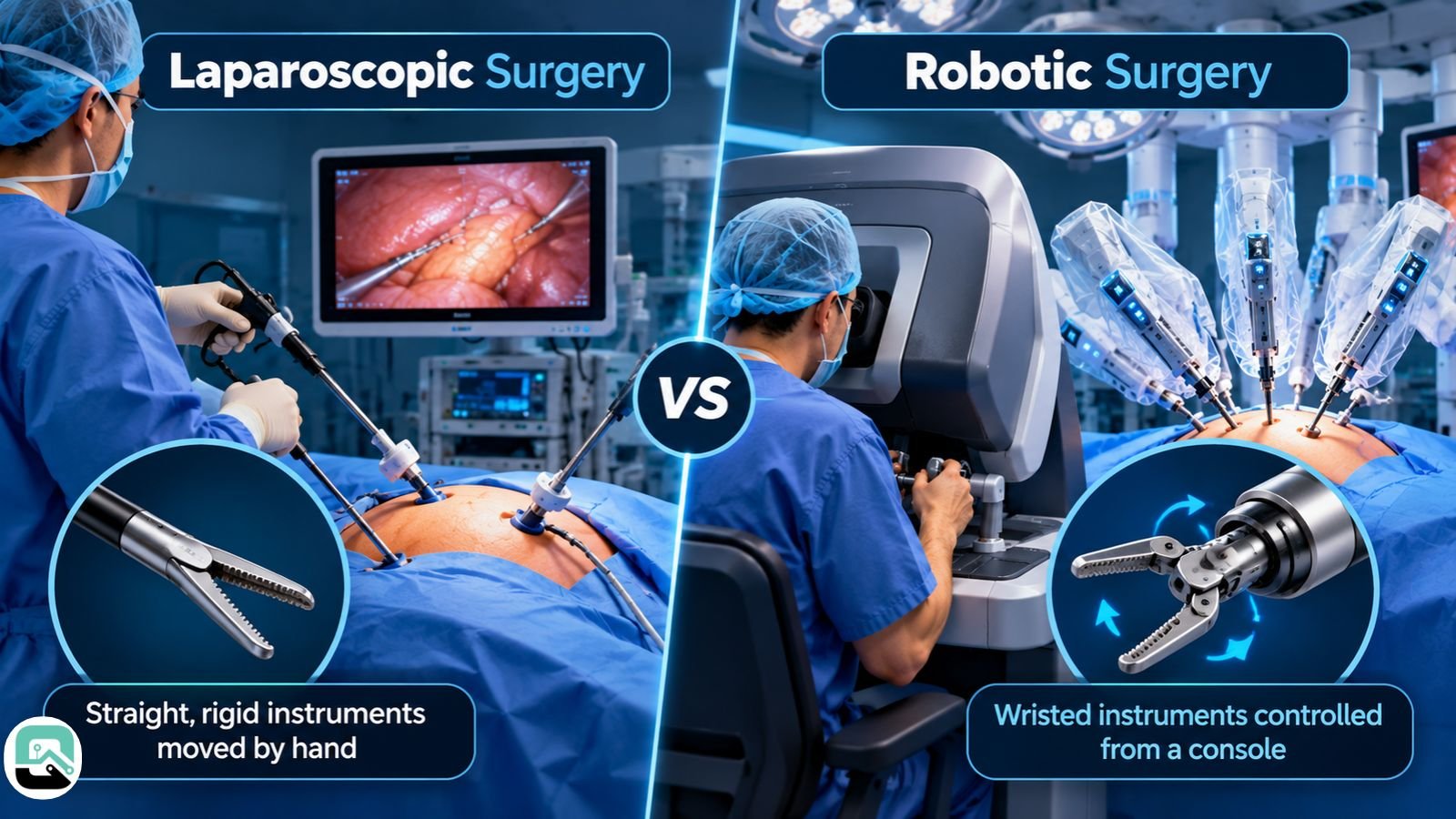
Both are minimally invasive: small incisions, a camera, no large opening. The real difference is who holds the instruments. A laparoscopic surgeon works long, rigid tools by hand, while a robotic surgeon guides wristed, robot-held instruments from a console.
| Feature | Laparoscopic surgery | Robotic surgery |
|---|---|---|
| Instrument control | Surgeon moves instruments by hand | Surgeon controls robot-held instruments from a console |
| Instrument articulation | Conventional instruments are mostly rigid and straight | Many systems use wristed instruments that bend and rotate inside the body |
| Visualization | Camera view, 2D or 3D depending on the system | Usually magnified 3D view, controlled by the surgeon |
| Hand tremor | Depends on the surgeon and setup | Filtered by the control system on many platforms |
| Sense of touch | Limited, indirect feedback through the instruments | Limited or absent on most systems; da Vinci 5 adds Force Feedback instruments |
| Operating time | Often shorter in comparative studies | Often longer in comparative studies |
| Cost | Often lower | Often higher |
Treat these as general differences. Actual capabilities depend on the platform, the instrument, and the operation.
A degree of freedom is one independent direction an instrument can move. Because a robotic instrument has a wrist, it can bend and rotate inside the body in ways a straight laparoscopic tool can’t. Engineers rate robot joint degrees of freedom on the same principle, where an extra axis lets an arm work around obstacles in tight spaces.
More dexterity hasn’t translated into clearly better results for patients. Cleveland Clinic notes that research shows similar outcomes for the two approaches. Most of the benefits people credit to the robot, such as small scars, less pain, and quicker recovery, really come from minimally invasive surgery itself, and laparoscopy delivers those too.
How does robotic surgery compare with open surgery?
Against open surgery, both minimally invasive approaches usually mean smaller incisions, less blood loss, and a shorter hospital stay. Direct robotic-versus-open trials are much scarcer than robotic-versus-laparoscopic ones, though.
What is robotic surgery used for?
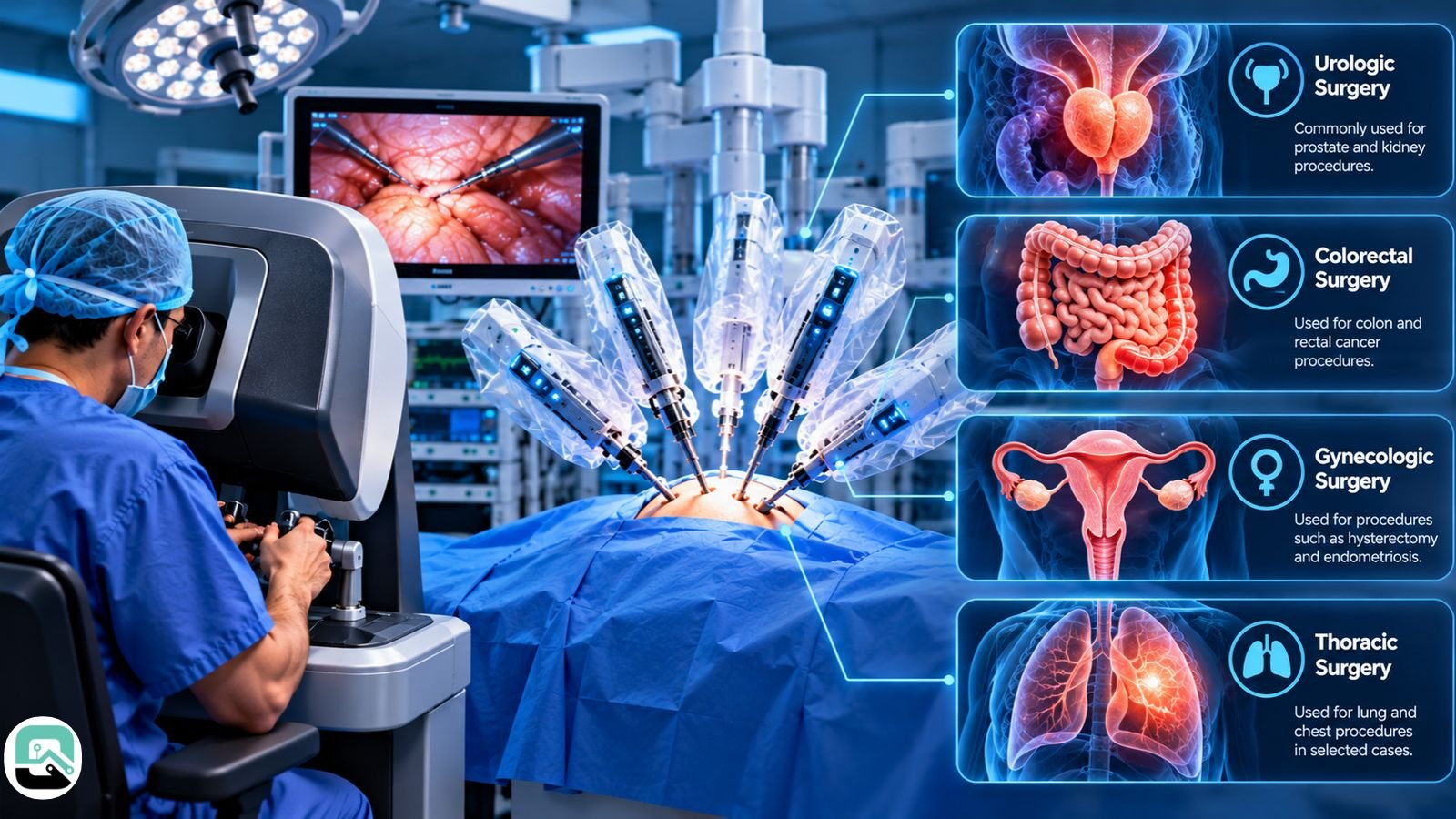
Soft-tissue robots show up most often in urology, gynecology, general surgery, colorectal surgery, and chest (thoracic) surgery. Typical cases include prostate removal, hysterectomy, hernia repair, gallbladder removal, and colon or rectal resection.
Da Vinci’s FDA history starts in 2000 with general laparoscopic procedures, and chest and prostate procedures followed a year later. Heart surgery is the newest addition. The FDA cleared da Vinci 5 for selected cardiac procedures in January 2026, including mitral valve repair and internal mammary artery mobilization, and Europe granted a CE mark for da Vinci 5 cardiac procedures that September.
Not every surgical robot works like da Vinci. Orthopedic robots help with knee and hip replacements, other systems support spine and brain surgery, and robotic bronchoscopy platforms such as Intuitive’s Ion travel deep into the lungs. Each of those deserves its own explainer.
Is robotic surgery used for cancer?
Yes, and routinely. Surgeons use robots for cancer operations such as prostatectomy, hysterectomy, and colectomy, all procedures for which the FDA has cleared robotic devices.
What remains unsettled is the long-term cancer picture. The FDA says it has not granted marketing authorization to any robotic device specifically for preventing or treating cancer, and that outcomes such as survival, recurrence, and disease-free survival haven’t been established. That’s a statement about how the devices were evaluated, not a ban on robotic cancer surgery.
Cervical cancer explains part of the agency’s caution. In a multicenter randomized trial, women who had minimally invasive radical hysterectomy (laparoscopic and robotic combined) had lower long-term survival than women who had open surgery.
Why is robotic mastectomy controversial?
Few areas have moved as fast as robotic mastectomy. On December 15, 2025, the FDA cleared a 510(k) submission for the da Vinci SP system (K252675), and nipple-sparing mastectomy appears among the cleared indications. A 510(k) clearance rests on substantial equivalence to a device already on the market. It isn’t premarket approval, and it isn’t a finding of long-term cancer safety either.
Meanwhile, the FDA’s broader overview page still says the agency hasn’t authorized any robotic device for mastectomy and that effects on recurrence and survival remain unestablished. The two records describe the issue at different levels, so they’re best read side by side. In February 2026, Northeastern Law’s Amy J. Reed Collaborative filed a citizen petition asking the FDA to rescind or amend the clearance until long-term cancer data exist. A petition argues for regulatory action; it isn’t a safety finding.
Evidence for the procedure is thin so far. A randomized trial presented at the American Society of Breast Surgeons meeting enrolled 81 women with early-stage breast cancer across 14 sites. Investigators called robotic nipple-sparing mastectomy safe and effective in carefully selected patients, though operations ran longer. Still, the trial stopped early once the FDA cleared the device, the data come from a conference presentation, and short-term follow-up can’t show long-term cancer equivalence.
Facing cancer surgery? Ask what long-term survival and recurrence data exist for the robotic version of your exact operation.
Is robotic surgery better than laparoscopic surgery?
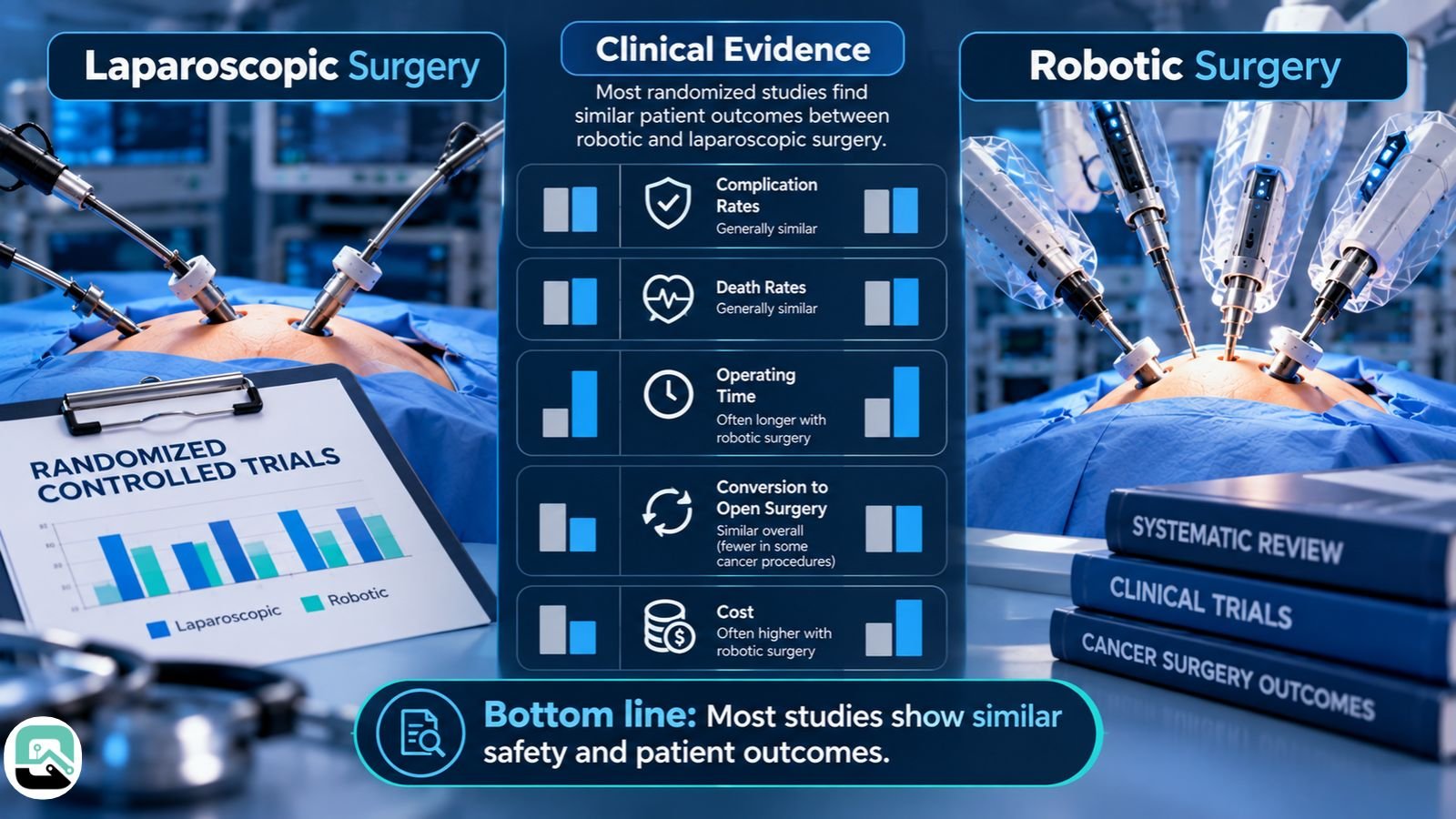
For most operations, no. A 2023 systematic review of 45 randomized trials (7,364 patients, 13 procedures) found no difference in mortality between robotic and laparoscopic surgery. Most trials also found no significant gap in complications (31 of 35), hospital stay (27 of 32), or conversion to open surgery (15 of 18). Where trials tracked time and money, laparoscopy came out shorter in about half and cheaper in 11 of 13.
Some procedures do show specific benefits, but the quality of that evidence varies a lot. The table separates randomized trials from weaker study designs.
| Evidence | Study type | Main finding | How to read it |
|---|---|---|---|
| Abdominal and pelvic surgery, 45 trials | Randomized trials only | No mortality difference; most trials found no difference in complications or conversion | The strongest broad comparison, though results still vary by procedure |
| Mid-low rectal cancer, 8 trials, 2,342 patients | Randomized trials only | Fewer conversions to open surgery (RR 0.48, 95% CI 0.24–0.95); about 39 minutes longer; no clinically relevant overall benefit | A procedure-specific signal. RR 0.48 is a lower relative risk in this population, not half the risk for every patient |
| Rectal cancer, 2024 meta-analysis | Randomized and non-randomized studies | About 41 minutes longer, less blood loss, fewer conversions | Observational studies can carry selection bias and differences in surgeon experience |
| Endometrial cancer, 8 trials, 647 patients | Randomized trials | Conversion to open surgery less frequent with robotic surgery | Applies to this operation and outcome only |
| Prostate surgery | Meta-analysis of randomized trials | Better urinary control and erectile function with robotic surgery | A functional-outcome signal for prostatectomy, not for surgery in general |
In colorectal cancer, critics point out that no definitive evidence yet shows better long-term survival after robotic surgery.
Results hinge on the operation, the surgeon’s experience, and the system generation. Many published trials also predate the newest platforms, da Vinci 5.
What are the risks of robotic surgery?
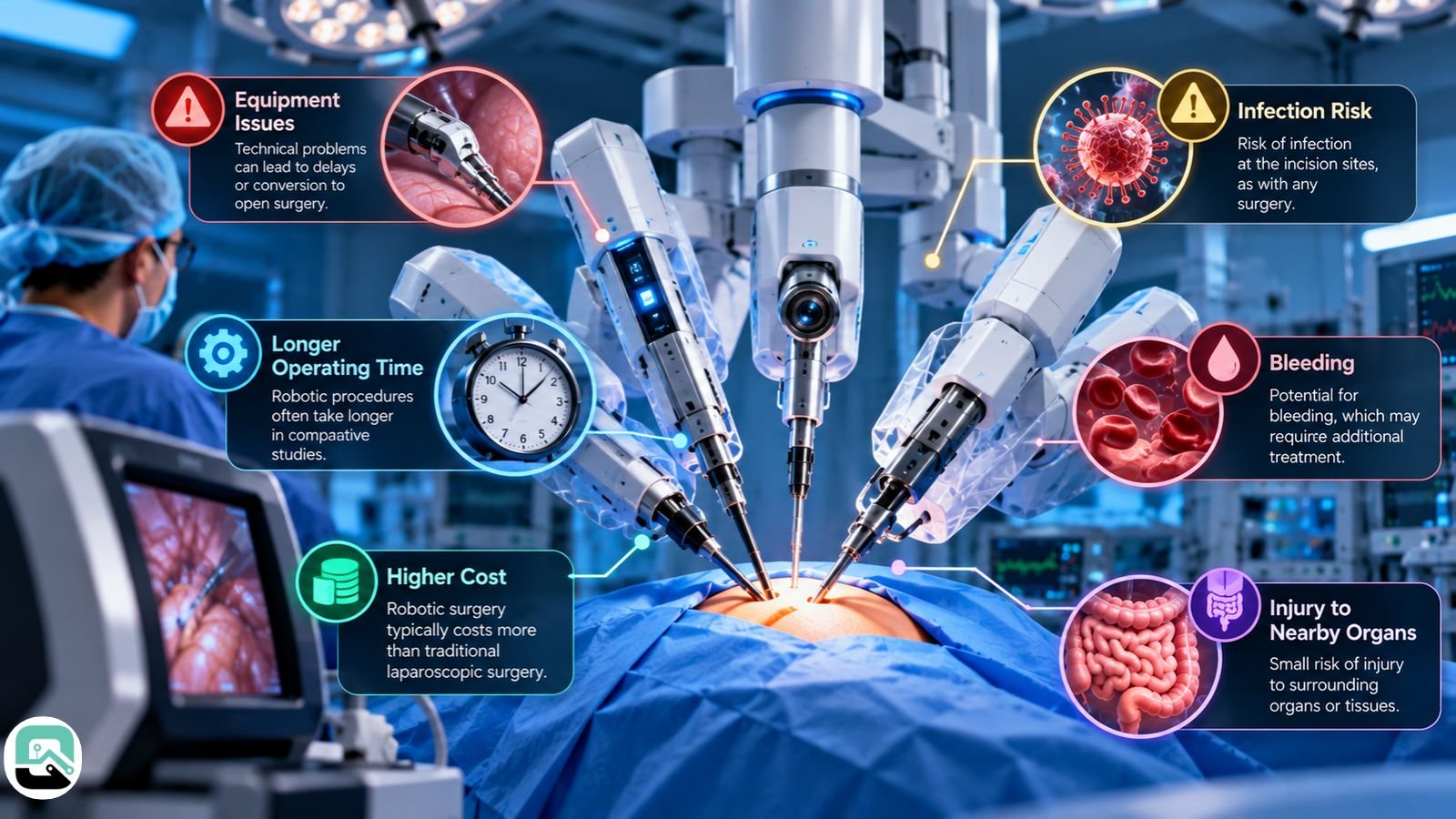
Any robotic operation carries the usual surgical risks: bleeding, infection, and complications from anesthesia. The technology and setup add a few of their own:
- Nerve injury from pressure of the robotic arms or prolonged patient positioning
- Burns and tissue damage from energy instruments
- Mechanical malfunction of any part of the robotic system
- Injury to nearby organs, such as the bladder
Patient guidance used by many U.S. health systems flags these risks. The FDA has also received reports of injuries and deaths involving robotic devices, and it keeps analyzing them.
What are the practical downsides?
- Longer operating time. Rectal cancer meta-analyses found robotic cases ran roughly 35 to 41 minutes longer. Extra time under anesthesia matters most for patients with other health problems.
- Higher cost. A colorectal review found laparoscopic resections cheaper overall, though its authors urged caution because few randomized trials measured cost. Insurers may not fully cover the robotic approach.
- Limited access. You’ll only find robotic surgery at centers with the equipment and trained teams.
- Learning curve. In the robotic mastectomy trial, operating time improved significantly between each surgeon’s first and third procedures.
- Little or no sense of touch. On most systems, surgeons can’t feel tissue pressure directly and rely on what they see instead.
What is recovery like after robotic surgery?
Recovery depends mostly on the operation, not the robot. Next to open surgery, robotic procedures usually mean smaller incisions, less blood loss, and a shorter stay. Next to laparoscopy, recovery tends to be about the same.
Timelines vary with the operation, your overall health, and any complications. After some minimally invasive urologic procedures, Cleveland Clinic notes that patients may go home the same day or the next. Bigger operations, including many cancer resections, usually mean a longer hospital stay. Call your care team right away if you notice blood-soaked dressings, a fever, or pain that keeps getting worse.
What is the da Vinci system, and who else makes surgical robots?
Intuitive Surgical’s da Vinci is the most widely used soft-tissue surgical robot. The FDA cleared it in July 2000, making it the first robot cleared for general minimally invasive surgery, and Intuitive tightened its hold on the market by merging with rival Computer Motion in 2003.
By the company’s own count, surgeons performed more than 3.1 million da Vinci procedures worldwide in 2025, more than 2 million of them in the United States. Those totals come from Intuitive itself, not an independent count.
The current lineup includes the multiport X and Xi, the single-port SP, and the fifth-generation da Vinci 5. Force Feedback is da Vinci 5’s headline feature: it lets surgeons feel some of the force they apply to tissue. Intuitive reported up to 43% less force on tissue in preclinical testing, but the clinical impact hasn’t been established yet.
Which other surgical robots have FDA clearance?
Rivals have multiplied since 2017. These soft-tissue systems hold U.S. clearance, newest first:
| System | Maker | FDA clearance | Cleared for |
|---|---|---|---|
| Hugo | Medtronic | December 2025 | Urologic surgery: prostatectomy, nephrectomy, cystectomy |
| Versius | CMR Surgical | Late 2024 (de novo) | Gallbladder removal |
| Dexter | Distalmotion | Late 2024 (de novo) | Outpatient inguinal hernia repair |
| Senhance | Asensus Surgical | 2017 | Colorectal and gynecologic surgery |
| da Vinci | Intuitive Surgical | 2000 | Urologic, gynecologic, general, thoracic, and selected cardiac surgery |
According to Medtronic, Hugo’s cleared procedures add up to about 230,000 U.S. surgeries a year, and the company expects gynecologic and general surgery indications to come next.
Can surgical robots operate on their own?
Not on real patients, at least not yet. Every soft-tissue surgical robot in clinical use today needs a surgeon at the controls, and autonomous surgery is still a research goal.
Progress has been quick, though. Back in 2022, Johns Hopkins University’s Smart Tissue Autonomous Robot (STAR) performed laparoscopic surgery on a live pig by following a fixed plan in a controlled setting. Three years later, the same lab’s SRT-H system performed the gallbladder-removal phase of surgery autonomously on pig tissue outside a living body, having learned from videos of surgeons. The results appeared in Science Robotics. SRT-H took spoken corrections from the team and worked more slowly than an experienced surgeon, and every test happened in a lab, not on a living patient.
Generalization is the real sticking point. A surgical robot has to cope with unusual anatomy, sudden bleeding, and situations its training data never covered. Robots outside medicine hit the same wall, and AI generalization in robotics remains the biggest open challenge for humanoid robot makers.
Then there’s liability and regulation. A robot that makes its own surgical decisions would face a very different evidence standard from today’s surgeon-controlled systems.
Is robotic surgery right for you?
Three things decide it: your operation, your surgeon’s experience with its robotic version, and what you value most. For plenty of procedures, a skilled laparoscopic or open surgeon gets the same result. Robotic surgery also isn’t an option for everyone, so expect your surgeon to weigh your health and the procedure before recommending it.
Questions to ask your surgeon before robotic surgery
Bring these to your consultation. They’re suggestions, not clinical guidance:
- Which approaches fit my operation: open, laparoscopic, or robotic? Why do you recommend this one?
- How many of these exact procedures have you performed robotically? What are your results, including conversion and complication rates?
- What does the evidence show for the robotic version of this specific procedure?
- For cancer surgery: what long-term survival and recurrence data exist for the robotic approach?
- What will I owe, and how does my insurer cover the robotic approach?
- Would a second surgeon recommend a different approach?
Robotic surgery FAQ
Q. Does a robot do robotic surgery by itself?
No. A surgeon controls every movement of the robotic instruments from a console. Autonomous surgical robots exist only in research labs.
Q. Is robotic surgery safer than laparoscopic surgery?
Trials mostly find no significant difference in mortality or complications between robotic and laparoscopic surgery. Some procedures, such as certain rectal cancer operations, show fewer conversions to open surgery with the robot.
Q. Is robotic surgery safer than open surgery?
Robotic surgery usually means smaller incisions, less blood loss, and shorter hospital stays than open surgery. However, fewer trials compare the two directly, and in early cervical cancer, minimally invasive hysterectomy showed lower long-term survival than open surgery.
Q. How long does robotic surgery take?
Robotic operations often take longer than laparoscopic ones. In rectal cancer surgery, meta-analyses found roughly 35 to 41 extra minutes. The gap varies by procedure and team experience.
Q. How long is recovery from robotic surgery?
Recovery depends on the procedure. Some smaller robotic procedures allow same-day or next-day discharge, while major cancer surgery usually needs a longer hospital stay.
Q. Why does robotic surgery cost more?
Reviews consistently report higher total costs for robotic surgery. Prices vary by hospital and insurance plan, so ask the hospital and your insurer for a written estimate before surgery.
Q. What is the most commonly used surgical robot?
The da Vinci system from Intuitive Surgical is the most widely used soft-tissue surgical robot. Medtronic’s Hugo, CMR Surgical’s Versius, DistalMotion’s Dexter, and Senhance also have FDA clearance for specific procedures.
Q. Is robotic surgery FDA-approved for cancer?
The FDA has cleared robotic devices for procedures commonly performed in cancer patients, such as prostatectomy and hysterectomy. It has not authorized any robotic device specifically for preventing or treating cancer.
Q. Can robotic surgery be done remotely?
The surgeon console can sit in a separate room, and the technology supports remote training. In most hospitals, however, the surgeon operates from a console inside the same operating room.
What robotic surgery means for your decision
Robotic surgery gives a surgeon more agile instruments and a better view. For most operations, though, it hasn’t beaten laparoscopy on outcomes, and it usually costs more and takes longer. Some procedures do show specific benefits, so the right answer depends on your operation.
Look past the machine to the person running it. Ask about your surgeon’s volume and results for your exact procedure. For cancer operations, also ask what long-term data support the robotic approach.
Related: Synthetic Humanoids Explained: Can Artificial Muscles Beat Traditional Robots?
| Disclaimer: This article is for informational and educational purposes only and does not constitute medical advice, diagnosis, or treatment. Robotic surgery outcomes, risks, benefits, and recovery times vary depending on the procedure, patient’s health, and surgeon’s experience. The information presented is based on available research and may change as medical technology and clinical evidence evolve. Always consult a qualified healthcare professional before making decisions about surgical treatment. |