

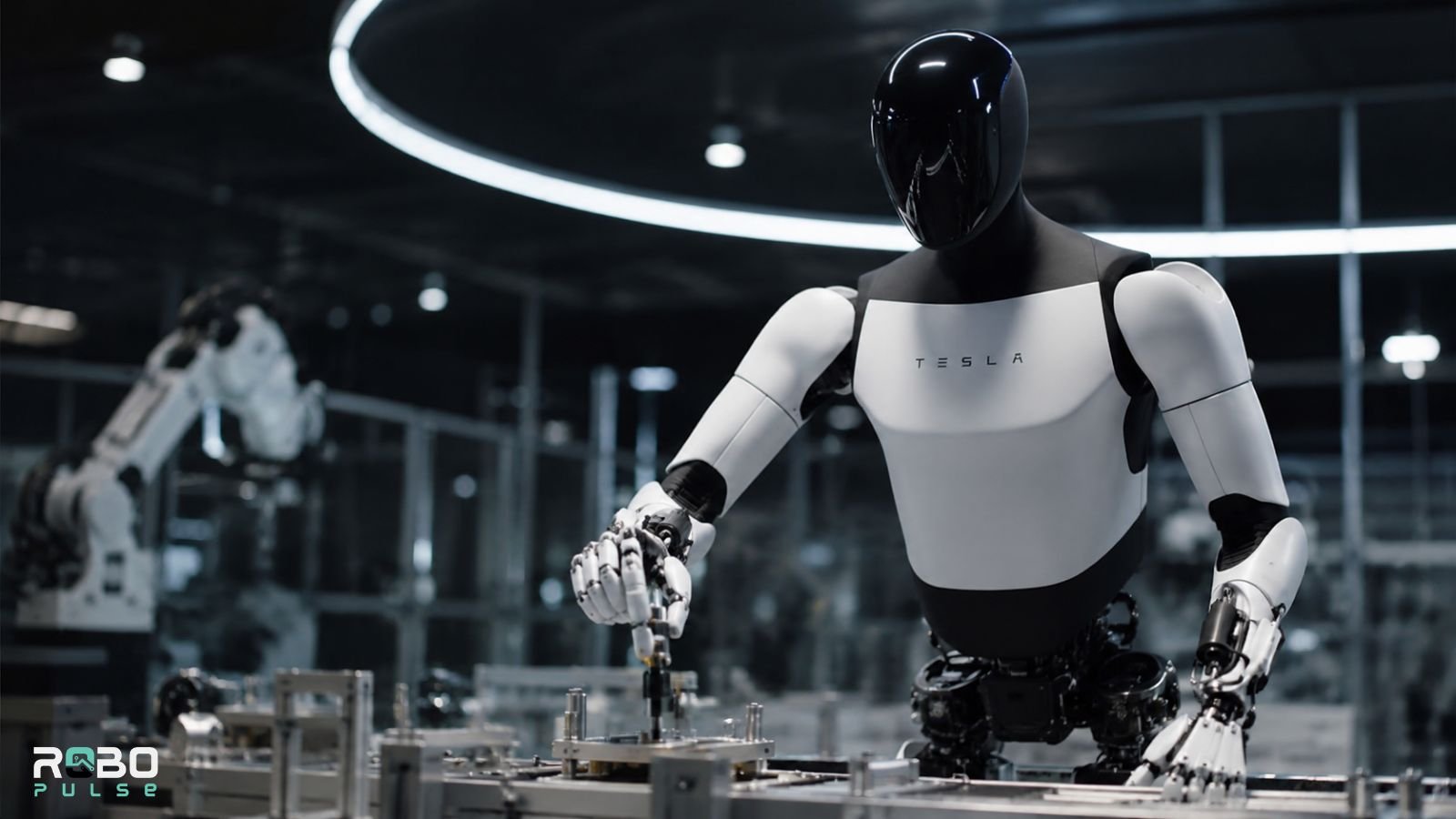
Tesla revealed Optimus Gen 2 in a short video on December 13, 2023, claiming 10 kilograms less weight than the 2022 prototype, 30% faster walking, and redesigned hands with tactile sensing in every finger.
This is the generation that first went to work inside Tesla’s own factories, and it’s also the one sitting at the center of a messier question: how much of what Optimus does is real autonomy, and how much is a human operator behind the scenes?
It isn’t the 2022 “Bumblebee” prototype that shuffled across a stage at AI Day. It isn’t the Gen 3 hand system Tesla started showing off in 2026 either. Gen 2 sits in the middle — a full hardware redesign, and the first version that actually made it onto a factory floor. Most of the conflicting Optimus numbers you’ll run into online trace back to this exact confusion, articles mashing three different machines together as if they were one.
Can you buy one? No. Tesla never sold Optimus Gen 2 to the public and never published a retail price for it — every unit anyone’s acknowledged has stayed inside Tesla’s own facilities. Those $20,000–$30,000 figures making the rounds are Musk’s long-term manufacturing targets, not a Gen 2 price tag.
So what follows separates what Tesla actually confirmed from what independent reporting dug up, points out where the real uncertainty sits, and covers what happened once Gen 3 showed up.
What Changed From Gen 1 to Gen 2?
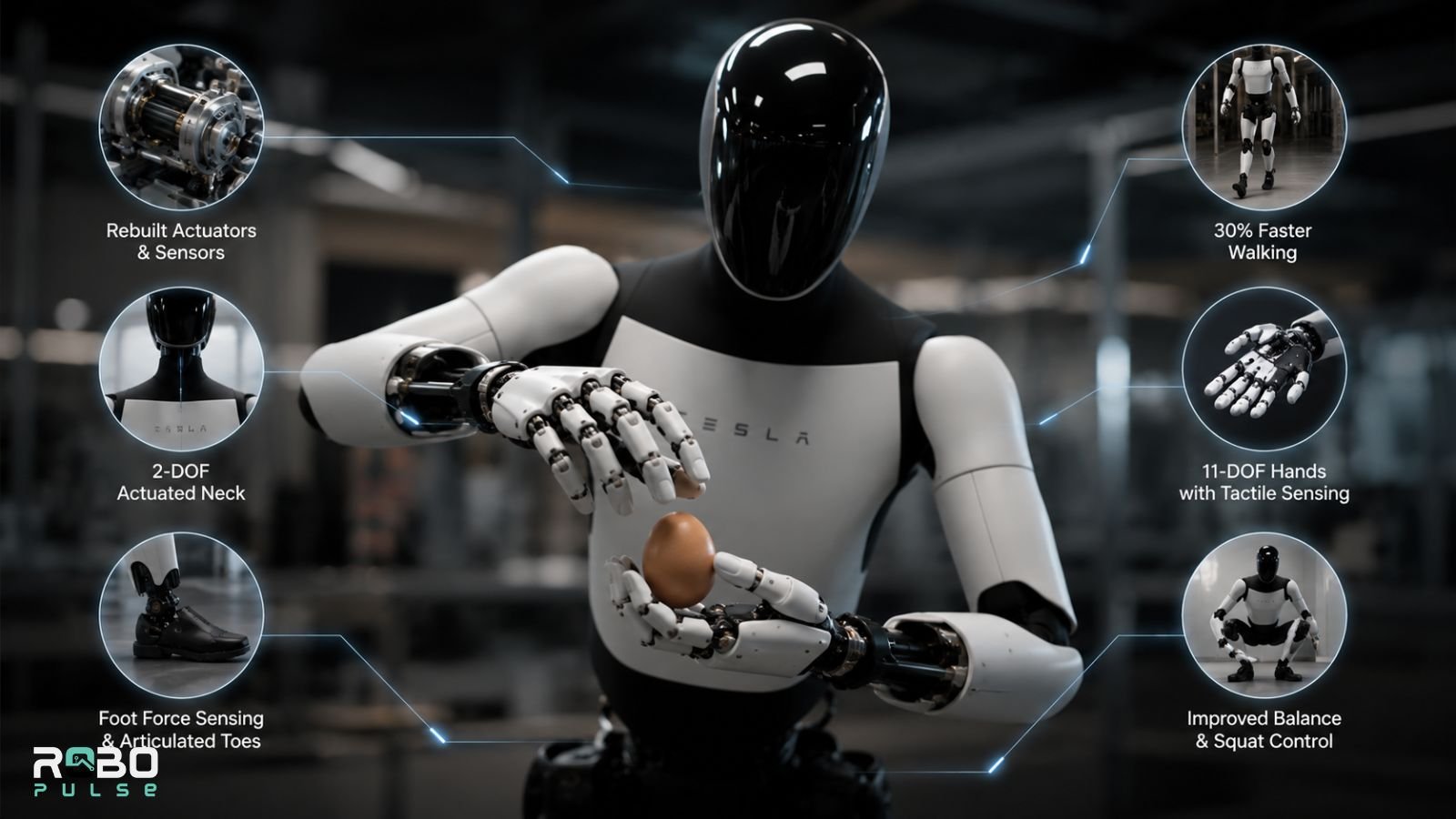
Gen 2 wasn’t a firmware patch — Tesla rebuilt the actuators, hands, feet, and neck from scratch. Since the December 2023 material frames these as changes relative to Gen 1 rather than a full standalone spec sheet, most of what’s confirmed describes the delta, not an absolute figure.
Here’s what the reveal video and the reporting around it actually back up:
| Area | Gen 1 (2022) | Gen 2 (Dec 2023) |
|---|---|---|
| Actuators & sensors | Mix of third-party and Tesla components | Fully Tesla-designed actuators and sensors |
| Weight | Baseline | 10 kg lighter (relative figure) |
| Walking speed | Baseline | 30% faster |
| Neck | Fixed/limited | 2 degrees-of-freedom actuated neck |
| Hands | Earlier gripper design | 11-DOF hands with tactile sensing on all fingers |
| Feet | No reported force sensing | Foot force/torque sensing, articulated toes |
| Balance | Early-stage | Demonstrated squats while balancing |
The egg demo became the signature moment of the reveal, and not by accident — Optimus picked up a raw egg, passed it between hands, and set it down without cracking the shell, which showcased the new tactile hands far better than another walking clip could have.
How Much Does Optimus Gen 2 Actually Weigh?
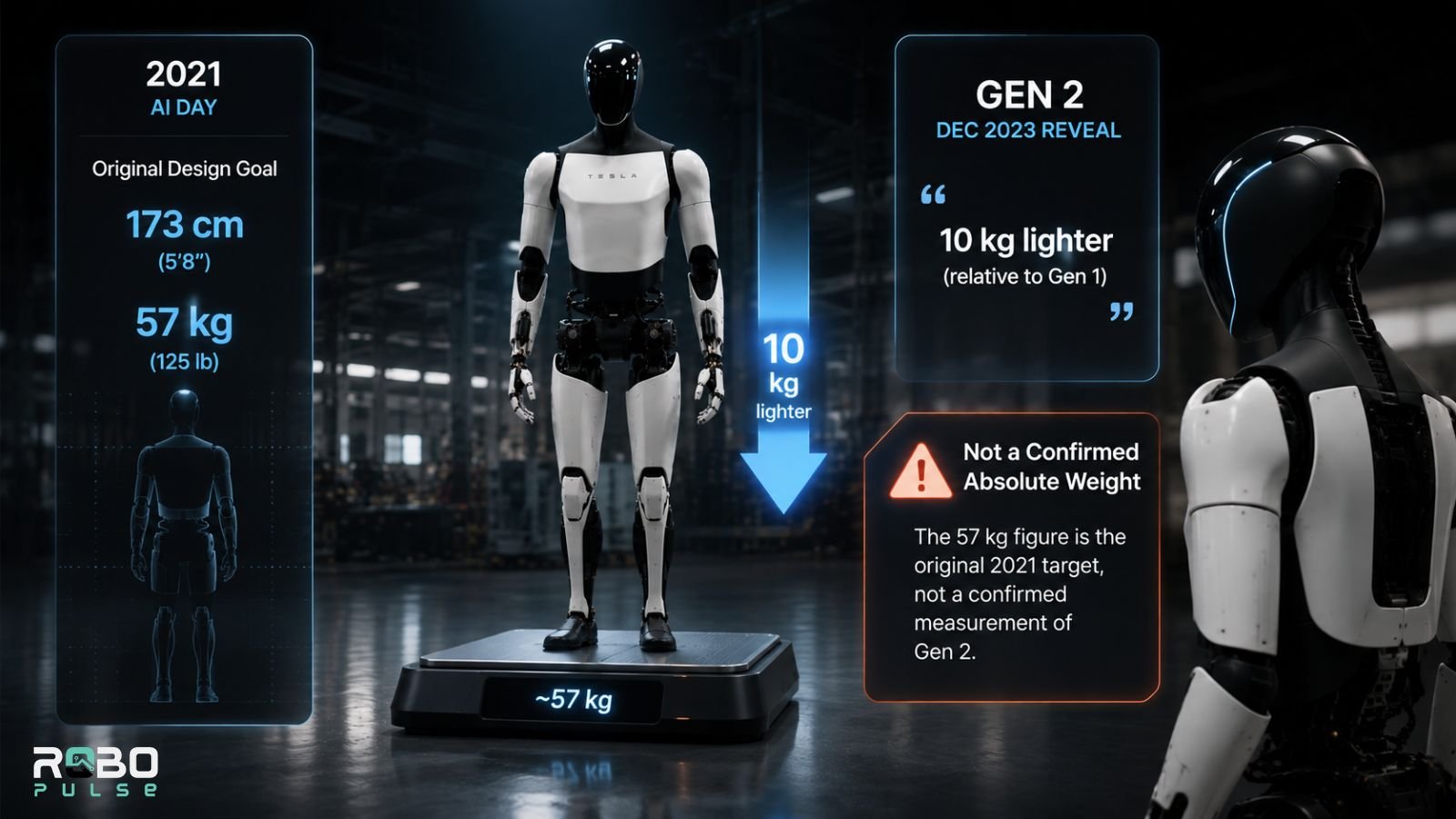
A lot of published “specs” get this wrong. Tesla’s original target — 173 cm (5’8″) and 57 kg (125 lb) — was a design goal stated at the company’s very first AI Day, in 2021, according to Optimus’s own robot entry on Wikipedia, not a confirmed measurement of the Gen 2 hardware.
Tesla’s December 2023 announcement only gave a relative figure, “10 kg lighter,” and it never restated an absolute weight anywhere.
Plenty of sites report Gen 2 as exactly 57 kg and 173 cm anyway, as if Tesla had re-confirmed those numbers at the reveal. It hadn’t. Gen 2 is probably close to that original target, since it’s the number Tesla keeps repeating, but any page presenting it as a precisely measured spec deserves a raised eyebrow.
Need an exact figure for technical work? A specific earnings call or an independent teardown will get you further than a general spec page ever will.
What Can Optimus Gen 2’s Hands Do?
The hands are the clearest engineering jump in this generation — 11 degrees of freedom per hand, tactile sensors across all five fingers.
That egg demonstration wasn’t just for show. It showed off delicate manipulation driven by touch feedback rather than vision alone, which in practice supports:
- Picking up irregularly shaped or fragile objects
- Transferring objects between hands
- Basic tool handling and assembly-style manipulation
- Fine grip adjustments based on tactile feedback
That’s a real jump from Gen 1, though it still falls short of the 22-DOF, 50-actuator hand system Tesla began showing off for Gen 3 in 2026, which moves the actuators into the forearm for a more biomimetic layout. So if a “Gen 2” spec sheet somewhere lists 22-DOF hands, it’s actually describing Gen 3 — not the machine Tesla revealed in December 2023.
Is Optimus Gen 2 Autonomous, or Is It Teleoperated?
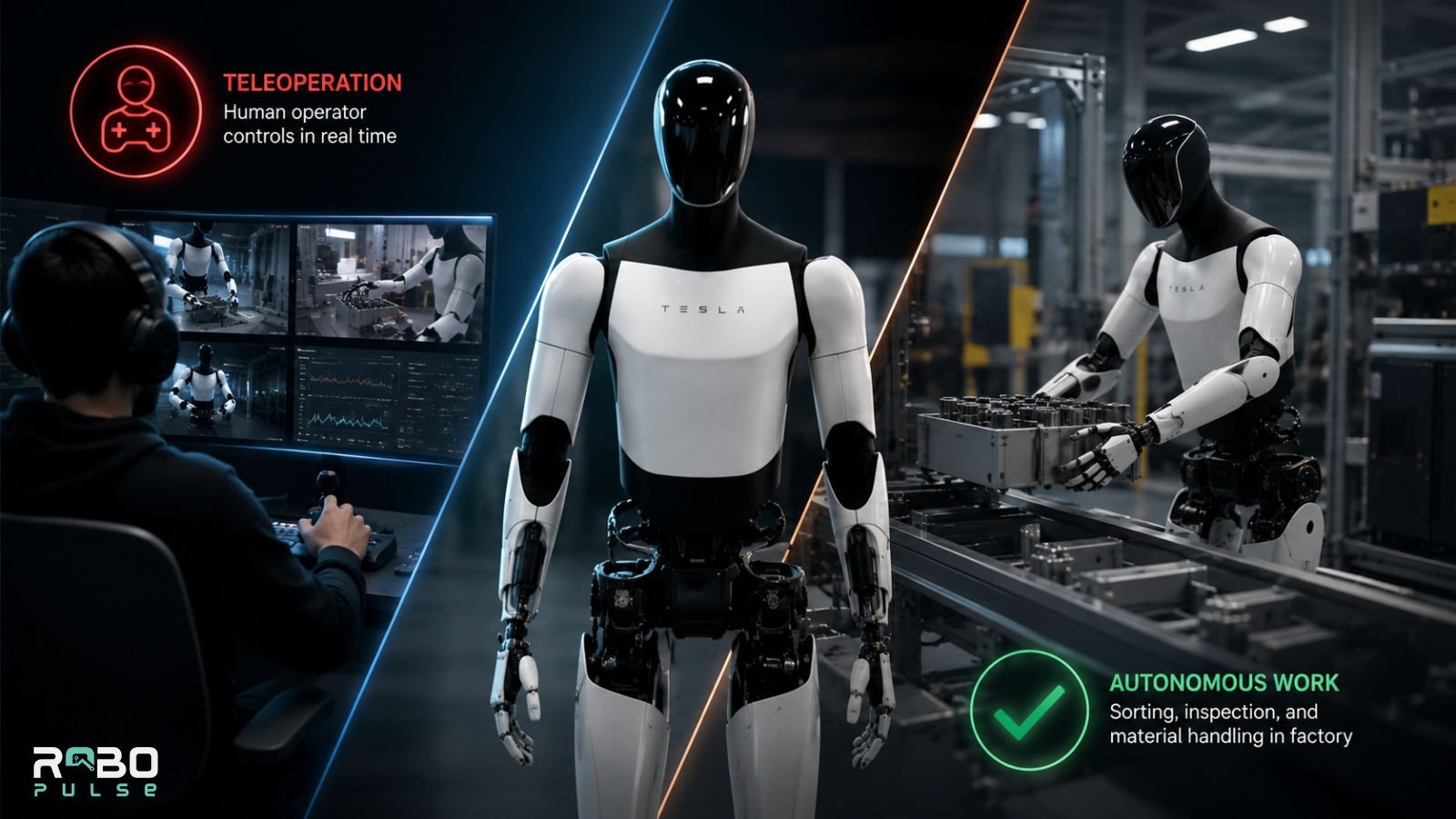
This is the trade-off readers most need to understand, and it’s the part a lot of competitor content softens. Tesla has repeatedly shown Optimus doing things that later turned out to involve a remote human operator, without saying so clearly at the time.
The pattern goes back to Gen 2 itself:
- Musk posted a video in January 2024 of Optimus folding a shirt. He later admitted a human was controlling it remotely the whole time.
- At Tesla’s October 2024 “We, Robot” event, units poured drinks and chatted with attendees, and the footage went viral days before reporting revealed human pilots were teleoperating those interactions rather than any autonomous system.
- At a December 2025 “Autonomy Visualized” event in Miami, a unit fell mid-demo, and its hand movement resembled someone pulling off a VR headset. The resemblance reignited the same speculation, though the footage alone doesn’t prove anyone was piloting the robot at that exact moment — Tesla never confirmed it either way.
None of this adds up to zero autonomous capability. Tesla has separately reported genuinely autonomous work, like battery-cell sorting on the factory floor. Still, public demos just aren’t a reliable way to gauge how autonomous the system is at any given moment, so any “Optimus did X” headline is worth a second look: autonomous, or piloted?
Where Has Optimus Gen 2 Actually Worked?
Gen 2 units started working inside Tesla’s Fremont, California, and Giga Texas (Austin) factories around mid-2024, and the task list stayed narrow the whole time: sorting 4680 battery cells, moving parts between production stations, kitting, basic quality inspection.
Cycle times, error rates, throughput data — Tesla hasn’t published any of it, so there’s not much way to independently check how productive this work really is. It doesn’t help that Tesla’s public communications increasingly just say “Optimus” instead of naming a generation for each task, which makes generation-level attribution murky past 2025.
The gap between Tesla’s targets and its actual output has been wide. The company aimed for roughly 5,000 units in 2025; reporting through mid-2025 put actual production at a few hundred.
Musk himself undercut the factory-automation story on the Q4 2025 earnings call (January 28, 2026), describing the deployed units as “primarily for learning and data collection rather than performing productive tasks.”
Is Optimus Gen 2 Still Being Made, or Did Gen 3 Replace It?
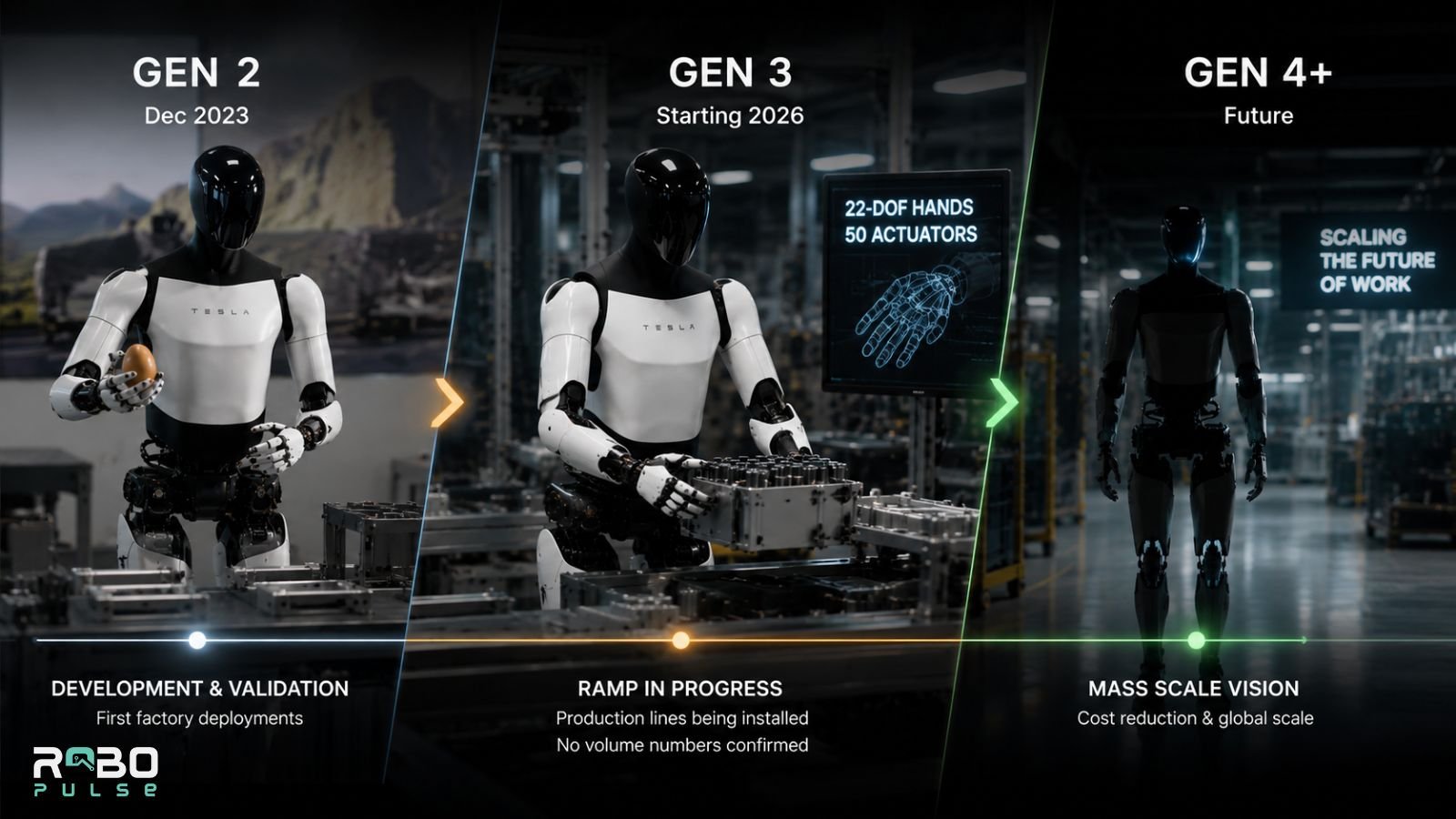
Gen 2 has turned into a transitional generation, but the pace is worth pinning down carefully, since Tesla’s own language on this shifted more than once through 2026.
Back in January 2026, Tesla framed Fremont as starting Gen 3 hand production, and Musk said the new 22-DOF, 50-actuator hands would go into 24/7 factory deployment that quarter. Model S and Model X production at Fremont ended that same period, freeing up those lines for Optimus assembly.
Then came the Q2 2026 earnings call on July 22, 2026, where Tesla described Fremont as still “installing the first-generation lines for Optimus.” Production was expected to start soon, not already running at any real volume, and no unit count was confirmed. Musk went as far as calling Optimus “the hardest product to scale manufacturing that we’ve ever made at Tesla.”
Mid-2026, in other words, is a ramp still underway, not a finished transition.
What does that leave Gen 2 as? A development and proof-of-concept generation, not the current product. It validated Tesla’s in-house actuator and tactile-hand design and put a humanoid robot on a real factory floor for the first time — genuinely useful groundwork, even if Gen 3’s own ramp is still early and hasn’t been backed up yet by independent, published numbers. Anyone tracking Optimus for current capability should be watching Gen 3’s progress, not Gen 2’s original spec sheet.
How Does Optimus Gen 2 Compare to Figure, Atlas, and Apollo?
Gen 2 showed up while Figure AI, Boston Dynamics (with its electric Atlas), and Apptronik (Apollo) were all pushing from lab prototypes toward factory pilots around the same time. Exact numeric comparisons look useful on the surface, but they rarely hold up — published specs for competing robots mix target numbers with confirmed, measured ones just as much as Optimus does.
| Robot | Company | Status as of 2026 | Public sale? |
|---|---|---|---|
| Optimus Gen 2 | Tesla | Superseded by Gen 3 ramp; historical/development platform | No |
| Figure | Figure AI | Factory pilots, active development | No |
| Atlas (Electric) | Boston Dynamics | Industrial development and pilots | No |
| Apollo | Apptronik | Industrial pilots | No |
None of these companies has sold a unit to the public yet, and evidence quality varies about as much as the marketing claims do.
A specification database tracking every major humanoid robot puts these platforms side by side on deployment status and verified specs instead of press-release numbers, while a comparison tool built around that same data makes working through it faster than parsing any single spec table.
FAQs
Q. When was Tesla Optimus Gen 2 released?
Tesla unveiled Optimus Gen 2 on December 13, 2023. The humanoid robot was introduced in a video showing major hardware and mobility improvements over the original Optimus prototype. Tesla did not sell Optimus Gen 2 to the public; the robots moved into internal factory testing around mid-2024.
Q. How much does Tesla Optimus Gen 2 weigh?
Tesla never officially published a confirmed absolute weight for Optimus Gen 2. Tesla said Optimus Gen 2 was 10 kg lighter than the previous generation, but the company did not state the robot’s exact Gen 2 weight. The frequently cited 57 kg (125 lb) figure comes from Tesla’s original 2021 Optimus target specification, not a confirmed measurement of the Gen 2 hardware.
Q. Was the Tesla Optimus Gen 2 shirt-folding demo autonomous?
No. The Optimus Gen 2 shirt-folding demonstration was remotely controlled by a human operator. Elon Musk later confirmed that a person was controlling the robot remotely during the shirt-folding video. The demonstration therefore should not be treated as proof of fully autonomous shirt-folding capability.
Q. How many degrees of freedom does Tesla Optimus Gen 2 have?
Tesla Optimus Gen 2 has 11 degrees of freedom (DOF) in each hand, with tactile sensing across all five fingers. The robot therefore has 22 hand degrees of freedom in total. However, the 22-DOF figure per hand sometimes attributed to Optimus Gen 2 belongs to the later Gen 3 hand system, not the Gen 2 design.
Q. How fast can Tesla Optimus Gen 2 walk?
Tesla said Optimus Gen 2 can walk 30% faster than the first-generation Optimus. This is a relative improvement reported by Tesla rather than an independently verified maximum walking speed in kilometers per hour or miles per hour. Tesla’s Gen 2 reveal emphasized improved mobility rather than publishing a specific top-speed measurement.
Q. Is Tesla Optimus Gen 2 still in production?
Optimus Gen 2 is no longer Tesla’s main development target, but the transition to Gen 3 was still underway in 2026. Tesla began moving toward the newer Gen 3 hand system in January 2026, while its Q2 2026 earnings call described Fremont as still installing the first-generation production lines for Optimus. Tesla has not confirmed a public unit count for Gen 3 production.
Q. How much does Tesla Optimus Gen 2 cost?
Tesla Optimus Gen 2 has no publicly announced retail price because Tesla never sold the robot to consumers. The $20,000–$30,000 figures often associated with Optimus are Elon Musk’s long-term manufacturing-cost targets for the humanoid robot, not the confirmed retail price of Optimus Gen 2.
Q. Can you buy a Tesla Optimus Gen 2?
No, Tesla Optimus Gen 2 is not available for public purchase. Tesla has kept acknowledged Gen 2 units within its own development and factory operations and has never announced a consumer retail price or public ordering program for the Gen 2 robot.
Q. What jobs does Tesla Optimus Gen 2 do in Tesla factories?
Optimus Gen 2 has been used for limited factory tasks including sorting 4680 battery cells, moving parts between production stations, kitting, and basic visual quality inspection. These deployments took place inside Tesla facilities and were intended primarily for testing, learning, and data collection rather than demonstrating a fully autonomous general-purpose factory worker.
Q. Is Tesla Optimus Gen 2 fully autonomous?
Tesla Optimus Gen 2 is not proven to be fully autonomous across its public demonstrations and factory tasks. Tesla has demonstrated autonomous capabilities in some controlled factory tasks, but other highly publicized demonstrations, including the shirt-folding video, involved remote human control. Because Tesla has not published comprehensive autonomy, error-rate, or productivity data for Gen 2, its overall autonomous capability remains difficult to independently quantify.
Q. What is the difference between Tesla Optimus Gen 2 and Gen 3?
The biggest difference is that Gen 3 introduces a substantially redesigned hand system with 22 degrees of freedom per hand and 50 actuators, compared with Gen 2’s 11-DOF hands. Gen 2 was the first major hardware redesign and the first Optimus generation to reach Tesla factory floors, while Gen 3 represents Tesla’s next attempt to scale the robot toward higher-volume production.
Related: Unitree G1 Review (2026): The $13,500 Humanoid That Isn’t Really $13K