

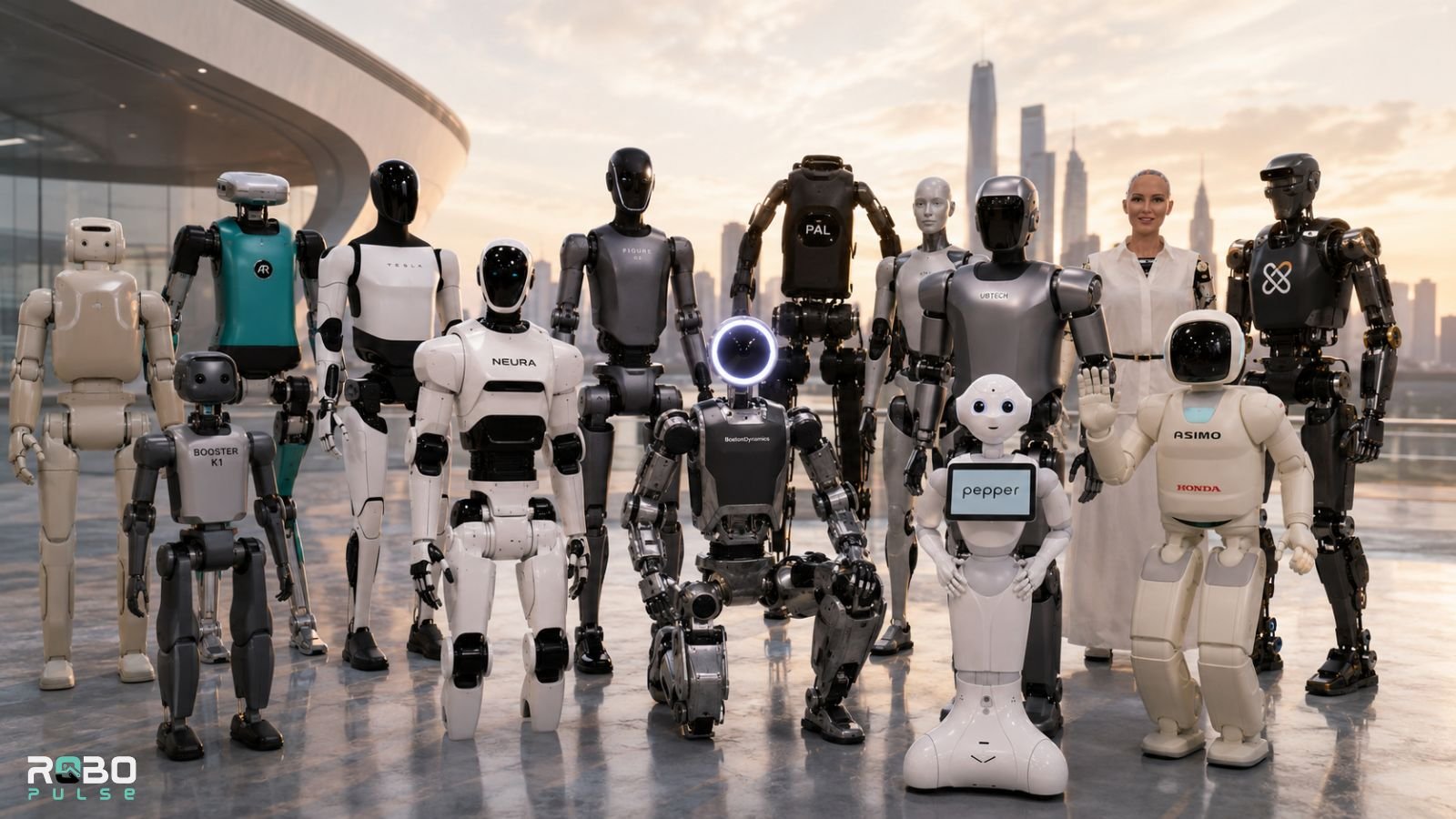
A robot packing BMW engine components needs rigid, high-torque actuators. Put that same robot next to an unsupervised toddler, and its torque threshold becomes the hazard. That’s the real dividing line between categories — not appearance, but what the joints are allowed to do.
This guide sorts 25 active humanoid robots into five categories: industrial/logistics, home/domestic, healthcare/care, research/general-purpose, and social/entertainment. For side-by-side specs across all of them, the robot comparison tool and full robot database cover current numbers as they change.
Building one humanoid that excels everywhere remains impractical. Handing a glass of water to an elderly person needs fundamentally different hardware than lifting automotive parts for eight hours a day. That’s why most manufacturers optimize for one environment first, then expand.
What Are the Main Categories of Humanoid Robots?
Five categories, split by deployment environment rather than looks: industrial/logistics, home/domestic, healthcare/care, research/general-purpose, and social/entertainment.
Industrial robots optimize for payload and duty cycles. Home robots optimize for low-force, low-injury-risk movement. Healthcare robots optimize for precision. Research platforms optimize for open software. Social robots optimize for expression over physical work. A robot’s deployment environment predicts its real capabilities better than its marketing does.
1. Industrial and Logistics Humanoids
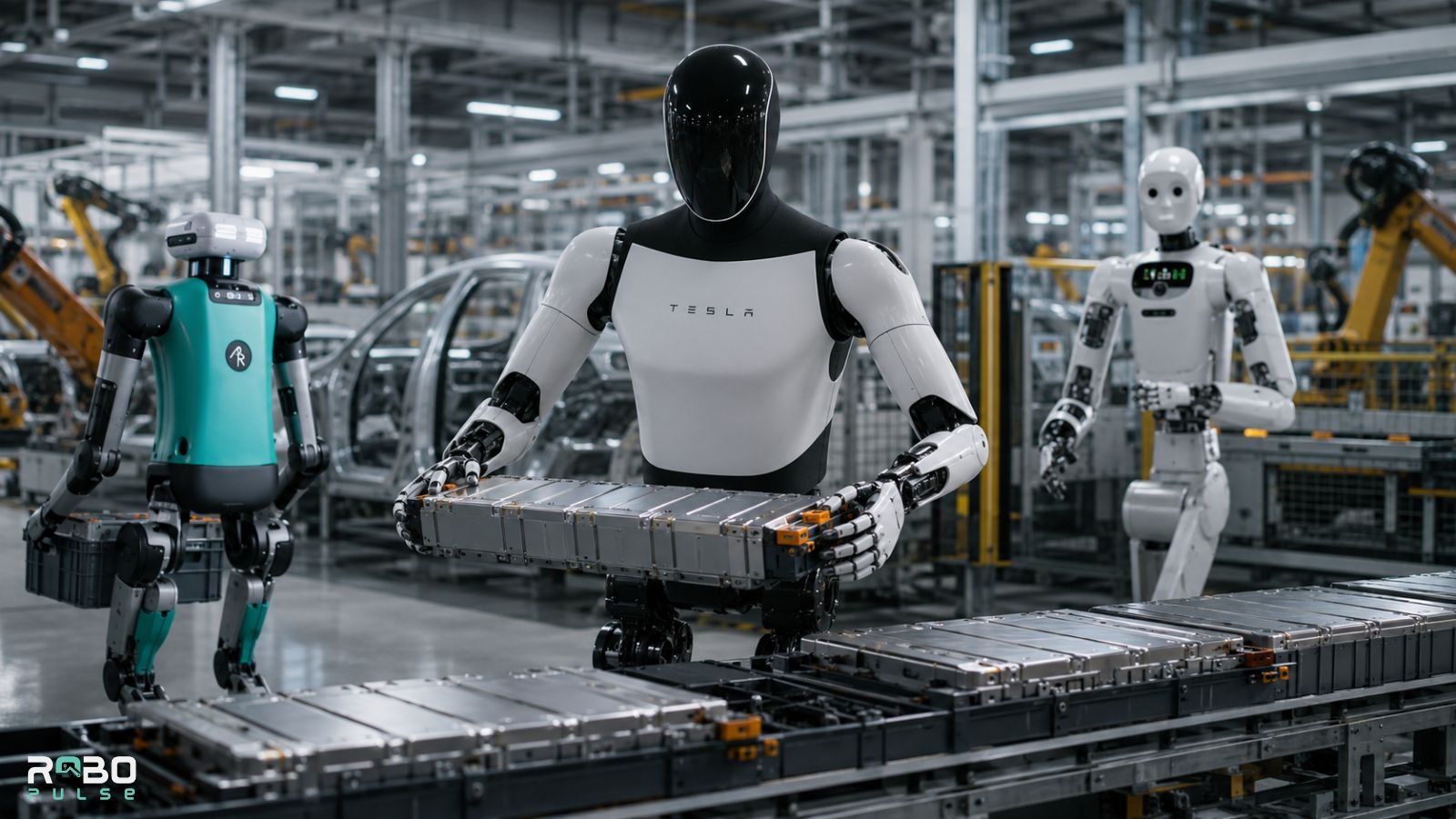
Once a robot leaves the factory floor, its priorities change completely. Inside the factory, uptime and duty cycles decide who keeps their contract — the kind of deployment on display at events like Automate 2026.
Tesla Optimus runs on Tesla’s Full Self-Driving neural network stack. Tesla deploys it internally at Fremont and the Gigafactories for tasks like battery cell handling. The company has confirmed a hand upgrade for its next full-body version — 22 degrees of freedom per hand, 50 actuators total — but hasn’t released official body specs yet. Production targets late July or August 2026 at Fremont; the Optimus Gen 3 tracking piece separates what’s confirmed from what’s still projected.
Figure AI’s BMW deployment has moved through two generations. Figure 02 spent 11 months in the Spartanburg body shop. It loaded sheet-metal parts and helped build more than 30,000 BMW X3 vehicles before retiring in mid-2026. Its successor now runs the same plant’s logistics sequencing role, on Figure’s Helix vision-language-action model.
The company actually engineered Figure 03 with home use in mind — soft textile covering, wireless foot-coil charging. So far, though, it only works on that BMW factory floor; the Figure 03 review covers the full history.
Together, Optimus and Figure show what industrial humanoids optimize for: uptime, repeatability, and safe handling of heavy components — not conversation or dexterity for its own sake.
Rounding Out the Industrial Fleet
Agility Robotics Digit has the most real commercial mileage of any humanoid platform. It has logged tens of thousands of hours across GXO, Schaeffler, and Toyota Motor Manufacturing Canada facilities. See the full Digit review for deployment specifics.
Boston Dynamics built Atlas — the electric successor to the earlier hydraulic version — for full-joint rotation and recovery moves no human body can copy. Hyundai has earmarked initial units for its Robotics Metaplant, and the Atlas electric review covers what’s confirmed so far.
Apptronik Apollo grew out of the company’s earlier NASA Valkyrie work. It’s built around swappable batteries for automotive-supply-chain tasks. The Apollo review has the current pilot-program details.
2. Home and Domestic Humanoids
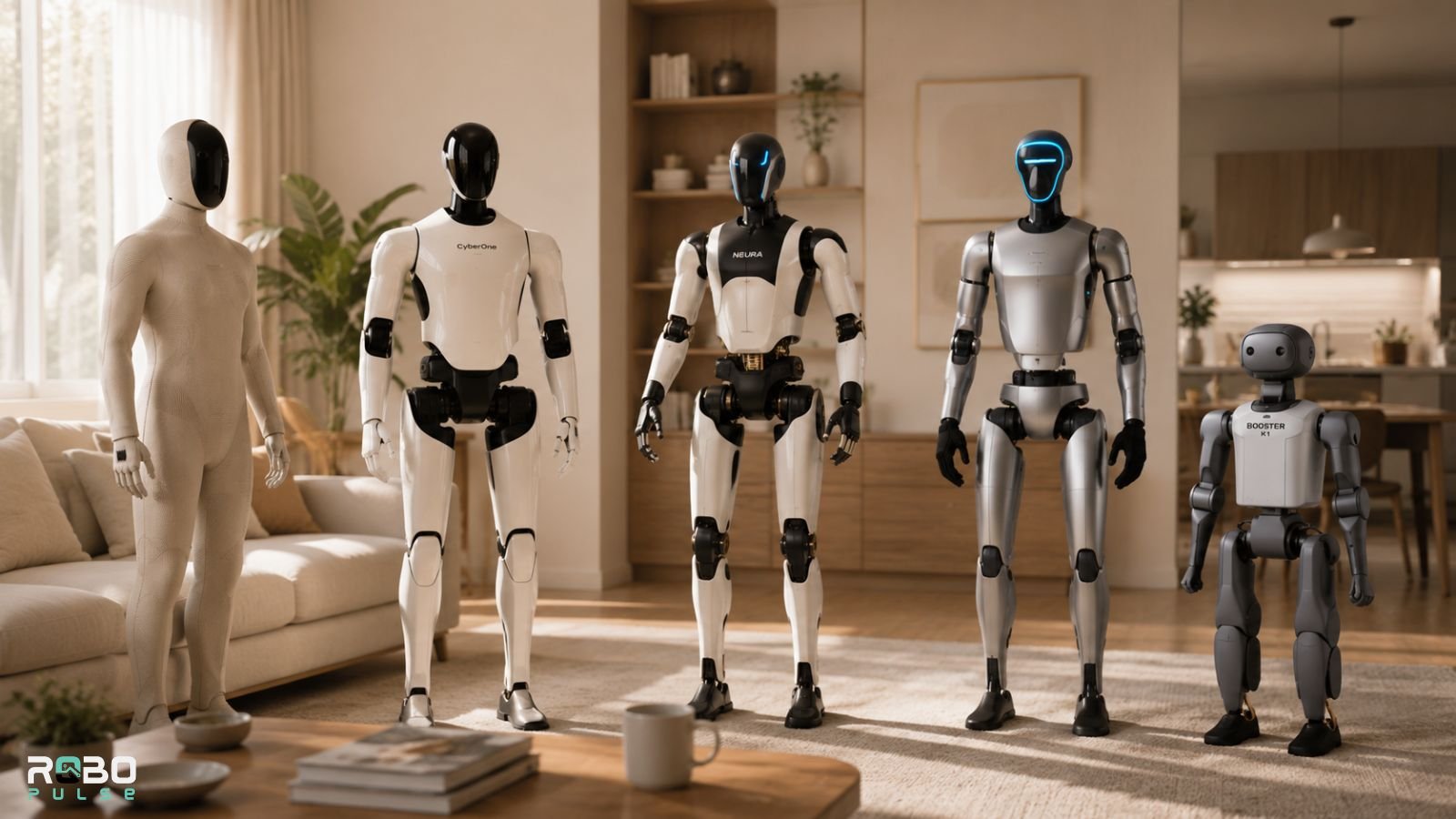
Living rooms are far less forgiving than warehouses. Home robots trade strength for quiet, low-force operation. The safety bar next to an unsupervised child is different from the bar next to a forklift, and that trade-off is reshaping labor-cost economics as home deployment gets closer.
1X NEO uses soft, tendon-driven actuation at roughly 30 kg to make household contact safer. In July 2026, 1X introduced a redesigned hand with 25 joints. Most motors sit inside the forearm instead of the fingers, which keeps the hand lighter. It still hits roughly ±0.2mm positioning accuracy, and the whole assembly is IP68 rated for dust and water. 1X promises deliveries by the end of 2026, though no consumer units have shipped yet.
Xiaomi CyberOne stands about 177 cm and 52 kg, positioned around home companionship — emotion and sound recognition rather than payload. It remains closer to a showcase than a shipping product.
NEURA 4NE1 Mini is the compact version of NEURA’s cognitive-robotics platform, aimed at home and light research use. NEURA has revised specs across generations, so treat published figures as provisional.
Unitree G1 isn’t marketed strictly for home use, but its price — around $13,500–$16,000 — makes it the most accessible full-size platform outside enterprise budgets.
Booster K1 sits at the low end of the market, reported around $5,999. It’s aimed at education and entry-level development rather than household task performance — a sign of how far entry pricing has dropped from the six-figure industrial tier.
3. Healthcare, Rehabilitation, and Care Humanoids
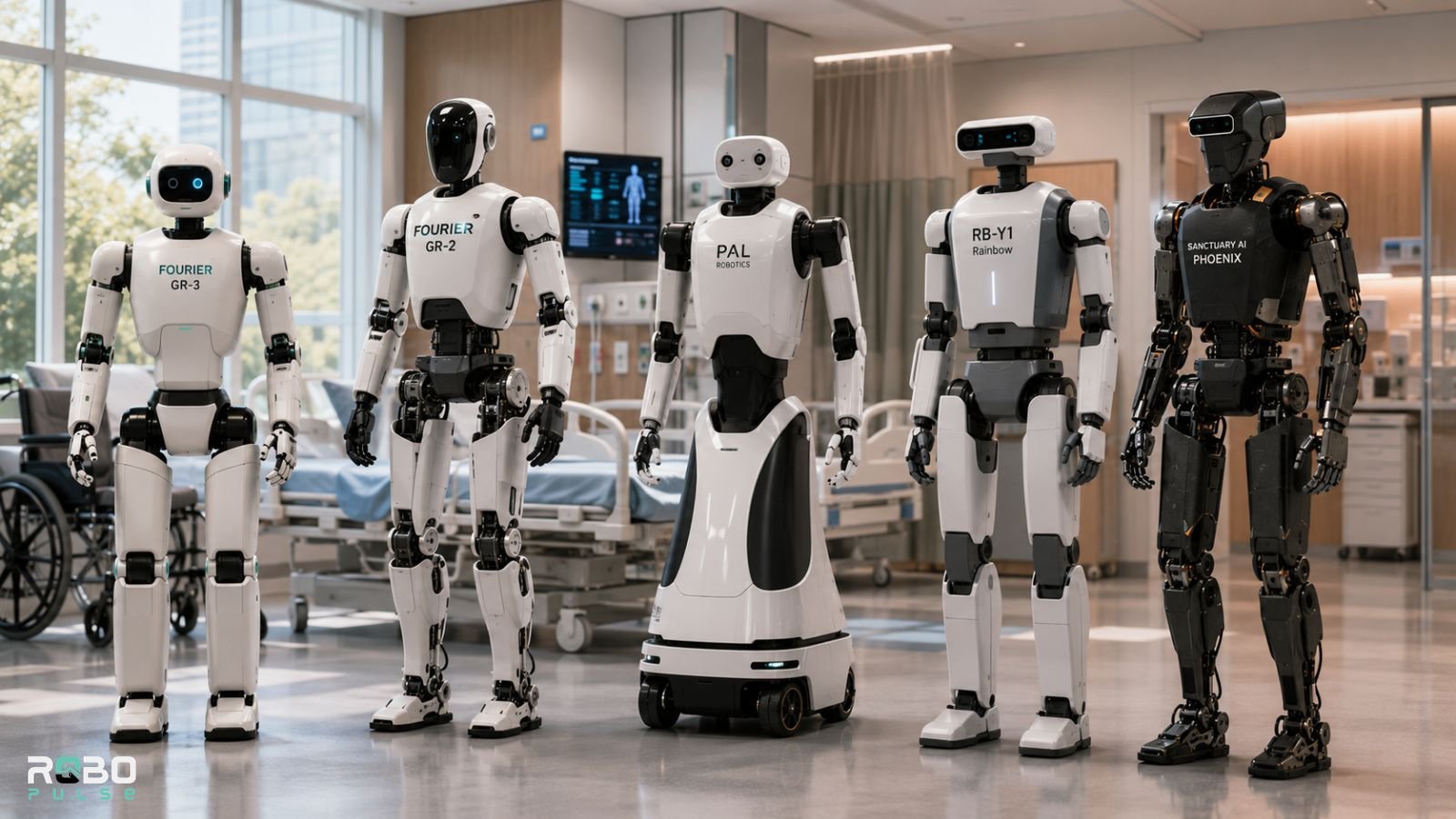
Working beside a patient demands a different kind of engineering — precision and gentle contact over speed, since the working partner is a person, not a pallet.
Fourier GR-3, Fourier’s “Care-Bot,” targets healthcare and rehabilitation settings and carries dozens of pressure sensors for safe contact.
Fourier GR-2, the platform GR-3 builds on, carries a reported 53 degrees of freedom — among the most articulated humanoid platforms publicly specified.
PAL Robotics Kangaroo comes from the Spanish firm’s research-grade humanoid line, targeting hospitality and human-robot-interaction research over industrial payload work.
Rainbow Robotics RB-Y1 is a Samsung-backed (roughly 35% ownership) South Korean platform aimed at service robotics.
Sanctuary AI Phoenix is still overwhelmingly associated with manufacturing, marketed toward partners like Magna. Its hydraulic hands report tactile sensitivity down to single-digit millinewtons — dexterity that future care robots will eventually need too. Sanctuary hasn’t published pricing, and independent verification of its specs is still limited.
4. Research and General-Purpose Platforms
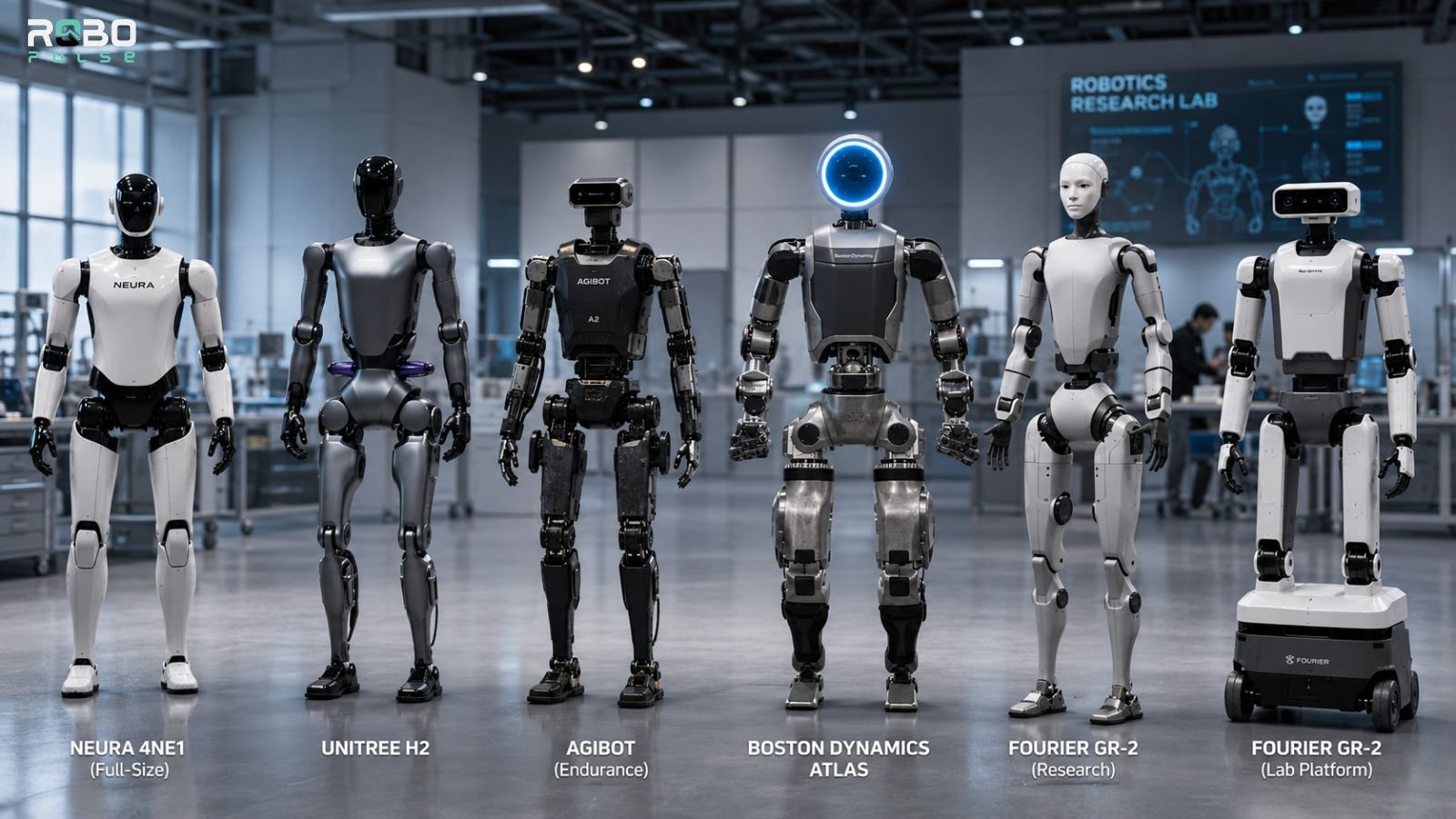
Some humanoids aren’t products at all — they’re laboratories on legs, sold mostly to labs and enterprise R&D teams advancing the underlying hardware and AI.
NEURA 4NE1 (full-size) reports a maximum lift capacity around 100 kg, alongside a fleet-learning layer called Neuraverse. NEURA’s specs have shifted across generations without independent verification, so read the numbers cautiously.
Unitree H2, the G1’s larger sibling, runs roughly $29,900–$40,900 depending on configuration, aimed at developers who need more reach and payload.
While most research platforms chase manipulation breakthroughs inside a lab, AgiBot (backed in part by BYD) has taken a different approach: proving endurance. Its robots have reportedly completed a 106 km trek without falling. Extreme-environment tests, like humanoid trials near Everest and Chimborazo, echo the same push — long-duration mobility is becoming a research goal in its own right. China’s broader rental-market boom reflects the same volume-first approach.
Boston Dynamics Atlas, already listed above under industrial use, doubles as the field’s most closely watched research platform for whole-body control.
Fourier GR-2, covered above for healthcare, also serves as a general embodied-AI research platform for labs testing manipulation on real hardware rather than only in simulation.
5. Social, Entertainment, and Human-Presence Humanoids
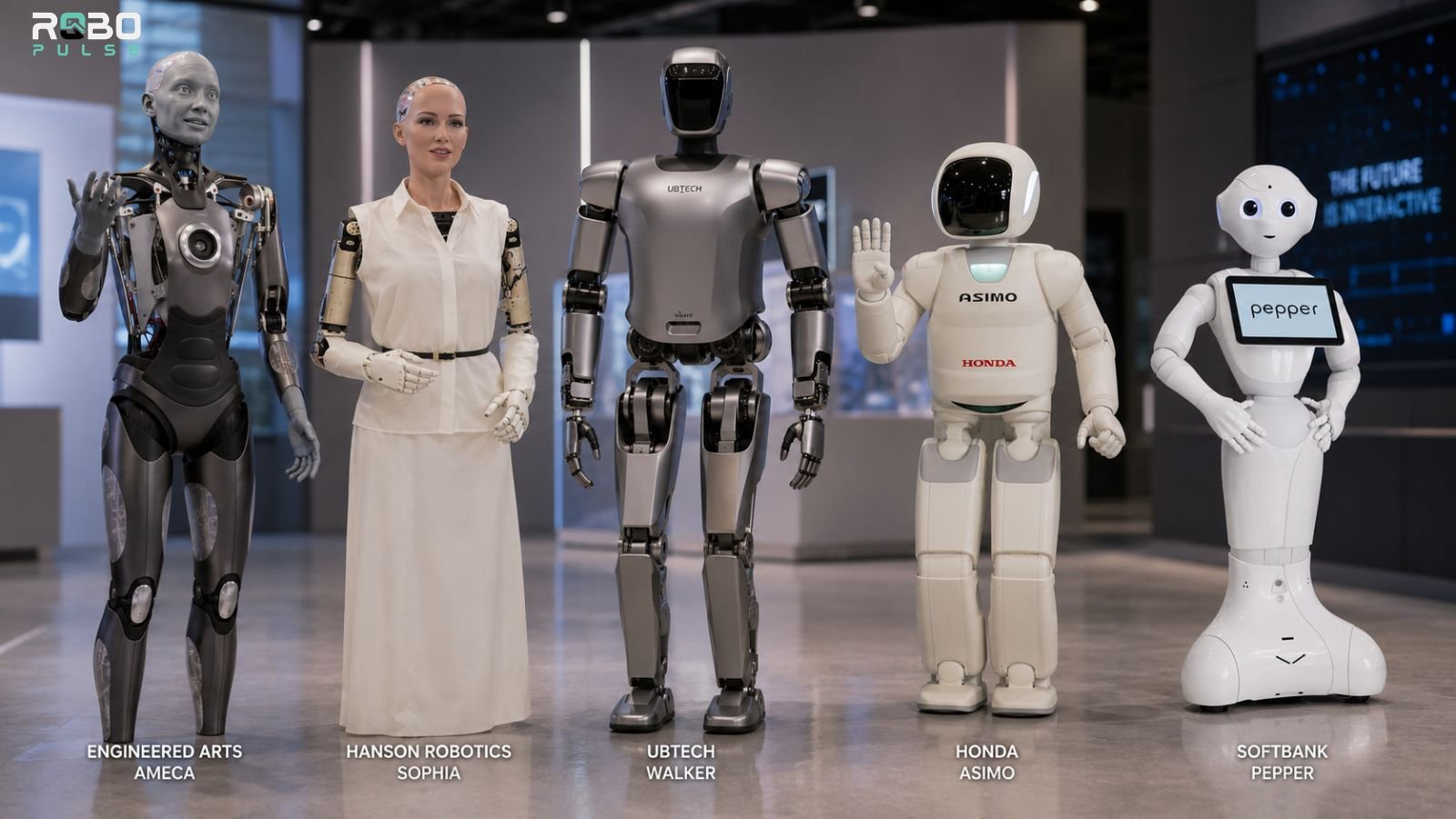
Sometimes the goal isn’t lifting boxes — it’s holding a conversation. These robots exist to express and converse, not lift; the engineering problem is the face, not the legs. Engineered Arts Ameca puts that into hardware: 17 degrees of freedom in facial expression alone, far more effort than most industrial robots spend on communication. That dedication produces some of the most realistic public humanoid expressions, aimed at exhibitions and research rather than labor. Retail and convenience-store trials, like Hong Kong’s humanoid pilot, sit at the edge of this category and the service world.
Hanson Robotics Sophia remains the most recognizable humanoid by name — granted Saudi Arabian citizenship, built on Hanson’s patented “Frubber” skin. Sophia today functions mostly as a media and research personality.
UBTECH Walker is the company’s full-size humanoid line, positioned across service and education roles, alongside UBTECH’s newer companion robots aimed at retail and home settings.
Honda ASIMO is the category’s historical reference point. It was one of the first widely known bipedal humanoids, now retired, but it shaped how people picture a “humanoid robot” at all.
SoftBank Pepper is a reminder that humanoid doesn’t require legs. Pepper runs on a wheeled base rather than bipedal locomotion, but its conversational design sits in the same social-robot lineage as Ameca and Sophia. Human interaction defines the category more than how a robot gets across a room.
Which Type of Humanoid Robot Is Closest to Everyday Use?
Home robots like 1X NEO are closest to entering households, but that still means preorders and pilots, not store shelves. Industrial platforms like Agility Digit and Figure 03 already log real, sustained deployment hours. That puts them further along in practice, even though most people won’t personally interact with them first.
No fully autonomous humanoid works unsupervised in an actual customer’s home yet, as of mid-2026. Every home program still layers teleoperation or remote oversight under the AI.
Do Any of These Robot Types Overlap?
Yes. Fourier’s GR-2 is both a healthcare device and a research platform. Boston Dynamics’ Atlas is both an industrial product and the field’s reference research platform. Figure’s own robot shows the same blur in a single machine: the company engineered Figure 03 with home use as a stated goal, soft textiles and all, yet the only place it works today is the BMW logistics floor.
Treat these categories as a starting framework, not a strict taxonomy. A company’s marketing angle doesn’t always match how the hardware ends up being used.
The biggest difference between humanoid robots isn’t how human they look. It’s the environment they’re engineered to survive. A warehouse, a hospital ward, and a family living room each demand different trade-offs. Those trade-offs, not the shape of the chassis, determine what a humanoid robot can safely do.
FAQs
Q. How many types of humanoid robots are there?
Most experts group humanoid robots into five main types: industrial and logistics, home and domestic, healthcare and care, research and general-purpose, and social and entertainment robots. Some classifications use four to six categories, but these five best reflect how humanoid robots are designed, deployed, and used in the real world.
Q. What is the most advanced humanoid robot in 2026?
There isn’t a single “most advanced” humanoid robot because each excels in different areas. Figure 03 and Boston Dynamics Atlas lead in mobility and industrial deployment, while Fourier GR-2 and Sanctuary AI Phoenix stand out for dexterity, manipulation, and high degrees of freedom.
Q. Can you buy a humanoid robot in 2026?
Yes, but consumer options are still limited. The Unitree G1 is available for purchase, while 1X NEO is accepting preorder deposits with deliveries expected by the end of 2026. However, no fully autonomous humanoid robot has yet been widely shipped to ordinary households.
Q. What are the different types of humanoid robots?
The main types of humanoid robots are industrial, home, healthcare, research, and social robots. Industrial humanoids prioritize strength and long operating hours, home robots focus on safety, healthcare robots emphasize precision, research platforms support AI development, and social robots are designed for interaction and communication.
Q. What’s the difference between a humanoid robot and a service robot?
A humanoid robot is designed with a human-like body, while a service robot is defined by its job rather than its appearance. Some service robots, such as SoftBank Pepper, have a humanoid upper body but use wheels instead of legs because they’re optimized for customer interaction instead of physical labor.
Q. Why are industrial humanoid robots different from home humanoid robots?
Industrial humanoid robots are built for heavy payloads, high torque, and continuous operation in factories. Home humanoid robots prioritize low-force movement, quieter actuators, and safer interaction around people, making them better suited for domestic environments but less capable of lifting heavy objects.
Q. Is Sophia still an active humanoid robot?
Yes. Sophia is still active, but its role has evolved. Instead of commercial work, Hanson Robotics’ Sophia is now mainly used for media appearances, education, AI demonstrations, and human-robot interaction research, making it one of the world’s most recognizable social humanoid robots.
Disclaimer: We regularly review and update this guide to keep it accurate and current. As the humanoid robotics industry evolves, specifications, pricing, availability, and timelines may change.