
Quick Reference
| Question | Answer |
|---|---|
| Announced | April 25, 2024 |
| Public price | None ever published |
| Available for purchase | No |
| Current commercial focus | Physical AI software (Carbon) deployed on third-party industrial robots |
| Current CEO | Daniel Friedmann (since June 2026) |
| Latest hardware generation | Gen 8 (announced December 2024), wheeled base |
What Is the Sanctuary AI Phoenix Gen 7?
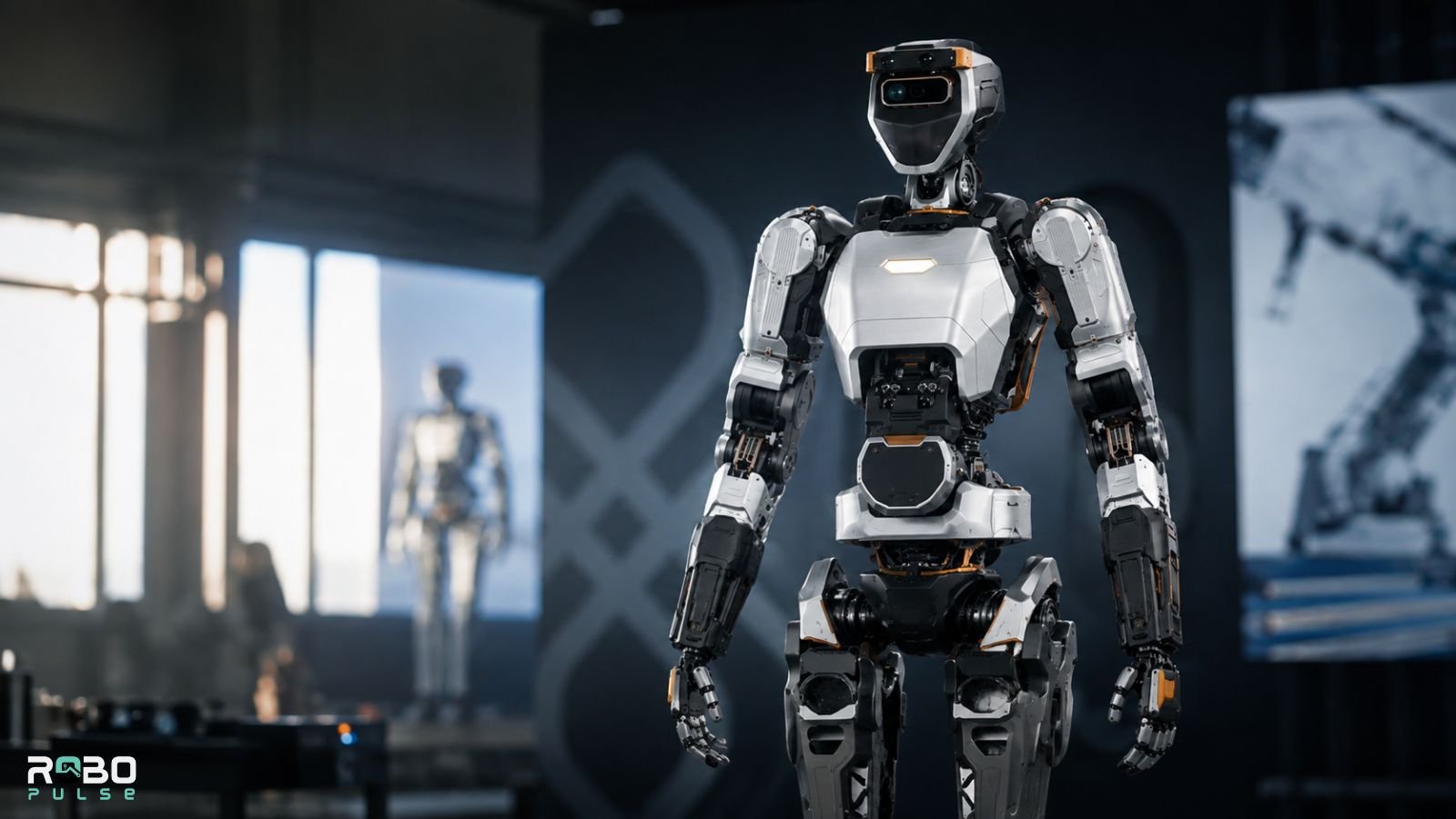
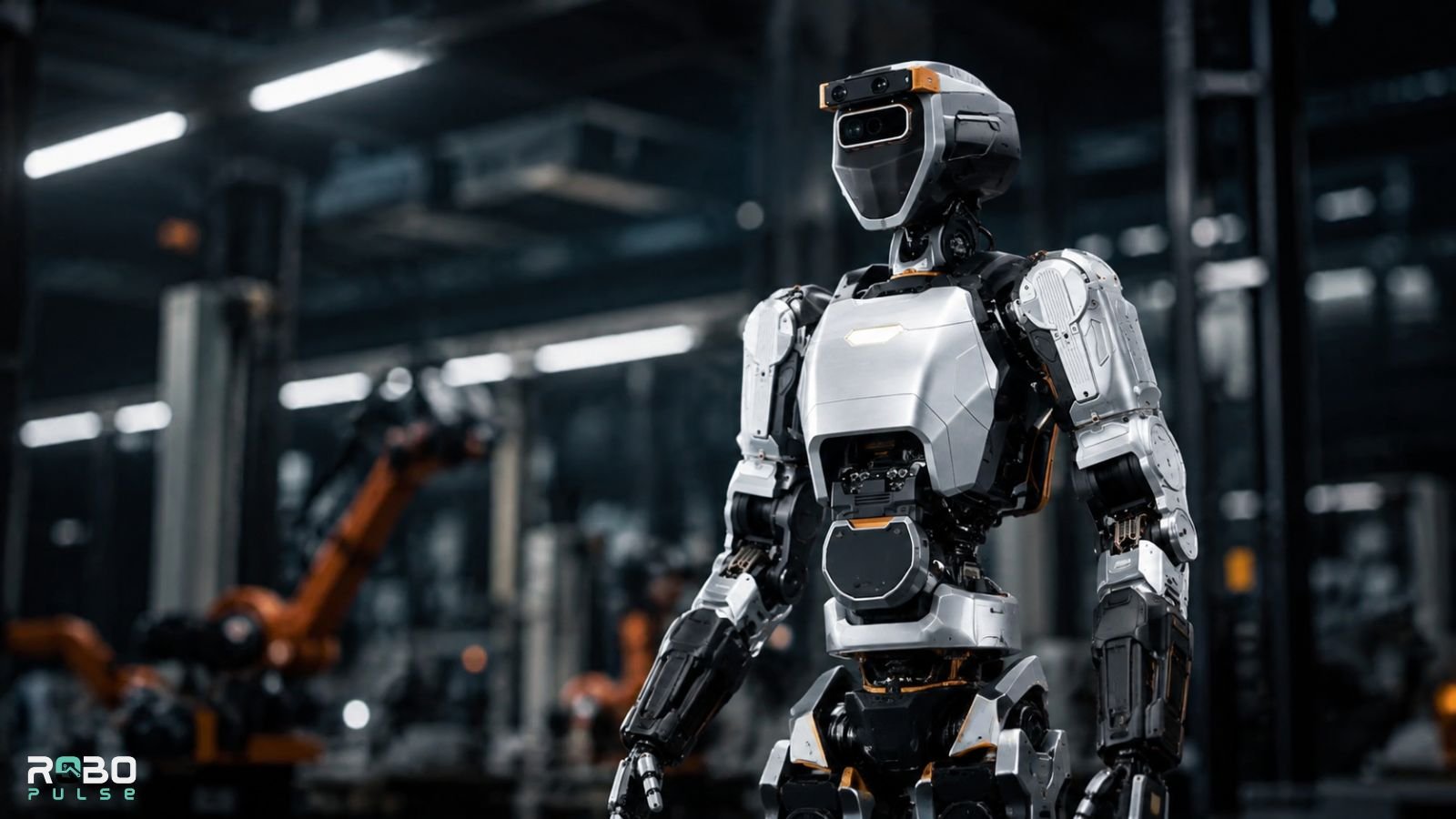
Phoenix Gen 7 is the seventh version of Sanctuary AI’s general-purpose humanoid robot. The Vancouver-based company announced it on April 25, 2024. It pairs updated hardware with Carbon, Sanctuary’s AI control system. Sanctuary built it primarily as a data-capture platform, not a commercial product buyers could order. That puts it in a different category than household names like Tesla Optimus or 1X NEO, which people often search for alongside it.
Sanctuary unveiled Gen 7 less than a year after Gen 6. Time magazine had named Gen 6 one of its best inventions of 2023. The company framed its fast iteration pace as central to strategy: more capable robots collect richer human behavioral data, and that data trains Carbon faster.
Founding CEO Geordie Rose called Gen 7 the closest Sanctuary had come to human-level capability at the time. That’s the company’s own assessment, not an independently verified benchmark — read it accordingly.
What Changed in Phoenix Gen 7?
Gen 7’s upgrades focused on speed, durability, and data quality rather than one headline spec. Sanctuary’s own announcement lists these changes:
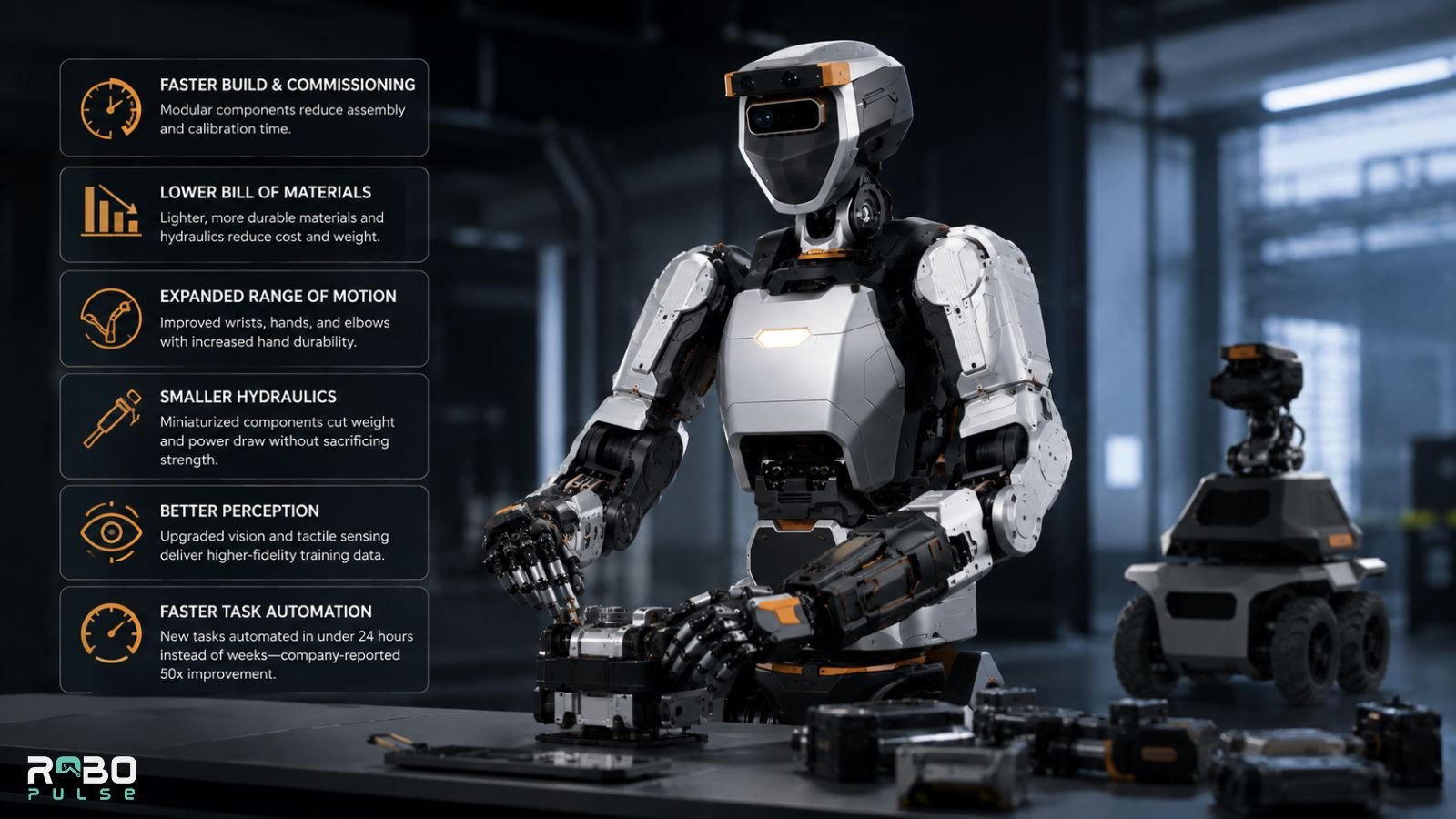
- Faster build and commissioning. Modular components cut assembly and calibration time, letting Sanctuary bring more units online for data collection.
- Lower bill of materials. Lighter, more durable metals, plastics, and hydraulics reduced manufacturing cost and overall robot weight.
- Expanded range of motion. Improvements targeted the wrists, hands, and elbows, plus increased hand durability.
- Smaller hydraulics. Miniaturized components cut weight and power draw without giving up strength, the company says.
- Better perception. Upgraded visual acuity and tactile sensing fed higher-fidelity training data into Carbon.
- Faster task automation. Sanctuary says automating a new task now takes under 24 hours instead of weeks — a company-reported 50x improvement, not an independently audited one.
One detail worth flagging for spec-sheet comparisons: Sanctuary’s Gen 7 materials describe these changes qualitatively. The company never published a full numeric spec sheet for Gen 7. Exact height, weight, or payload figures you’ll find online for “Gen 7” usually trace back to Gen 6 or later Gen 8 sources instead. Treat any precise Gen 7 dimension as unverified unless it links back to Sanctuary directly.
Gen 7 was also Sanctuary’s last bipedal walker. Its successor, Gen 8, switched to a wheeled base. Sanctuary made the change after customer feedback: bipedal legs were too frail to support the strong torso needed for precise, safe work.
Can You Buy a Phoenix Gen 7?
No — Phoenix has never had a public price, MSRP, or purchase path at any generation. Sanctuary built it as a research and data-capture platform. The handful of real-world placements, like a short pilot at a Mark’s retail location in British Columbia, used teleoperation to gather training data. They weren’t commercial deployments a business could replicate by paying for a unit.
That gap between “impressive demo” and “buyable product” causes the most confusion in search results for this robot. Prices floated elsewhere — anywhere from tens of thousands of dollars up — are third-party estimates, not figures Sanctuary has confirmed.
What Happened to Sanctuary AI After Phoenix Gen 7 Launched?
This is the part most existing coverage skips, and it changes how you should read everything above. The 20 months after the Gen 7 announcement were turbulent for the company.
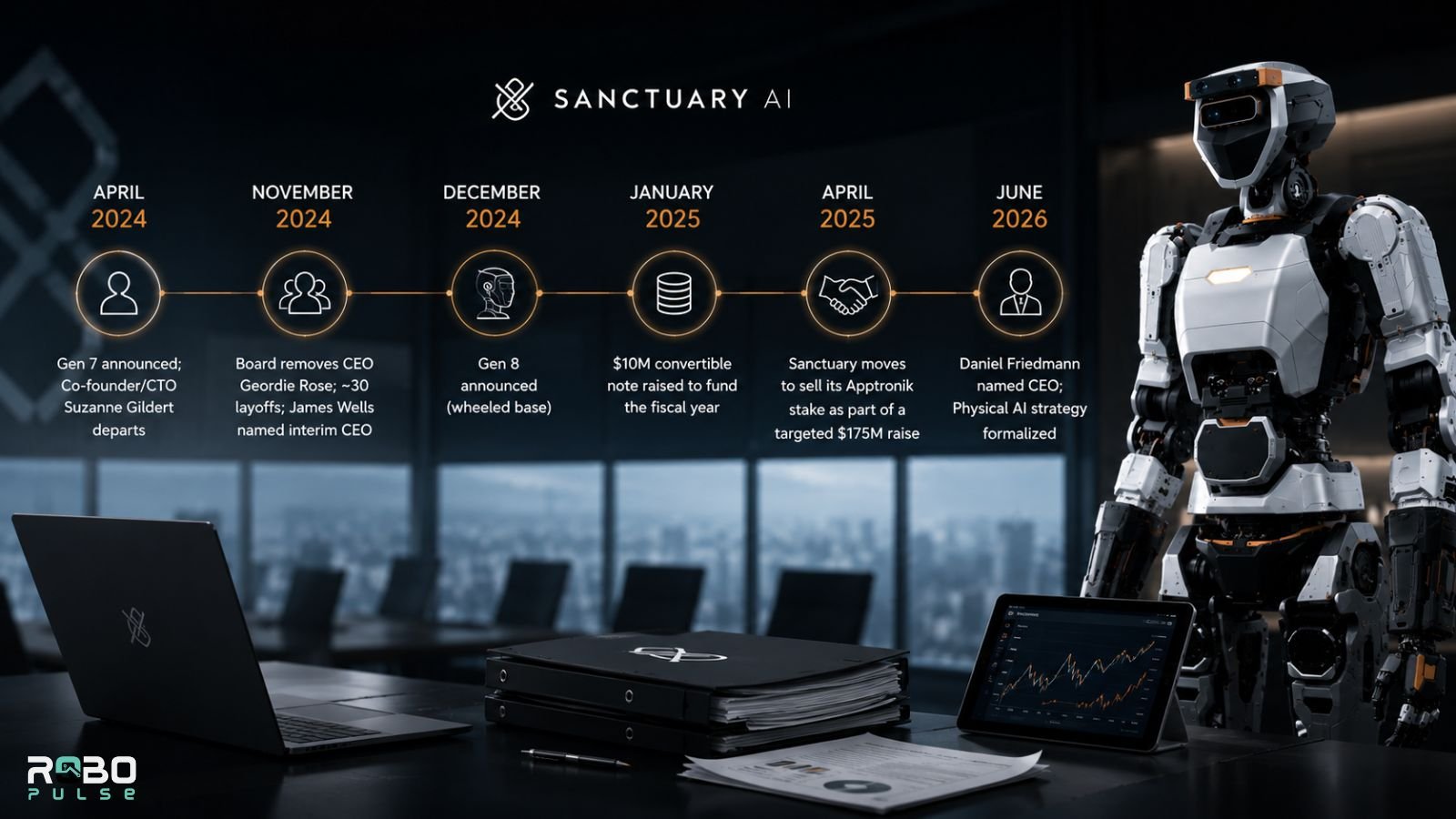
The 2024–2025 Leadership Shakeup
- April 2024: Co-founder and CTO Suzanne Gildert left to pursue AI-consciousness research. She later founded a separate company.
- November 2024: Sanctuary’s board removed co-founder and CEO Geordie Rose in what former staff described as a sudden move. The company cut roughly 30 jobs and its chief marketing officer departed too. Chief commercial officer James Wells became interim CEO.
- January 2025: The company raised a US$10 million convertible note to fund operations for the fiscal year, according to reporting from The Logic.
The Apptronik Stake Sale and 2026 CEO Change
Sanctuary had taken a US$10 million stake in Apptronik, a rival humanoid maker, back in 2022. In April 2025, Sanctuary moved to sell that majority stake. Apptronik’s valuation had climbed roughly twelvefold after a Google-backed funding round, making the stake worth an estimated US$125 million. Sanctuary planned to use that money toward a targeted US$175 million raise.
In June 2026, the company named Daniel Friedmann as its new chief executive, replacing Wells. Friedmann previously chaired Sanctuary’s board and spent decades as CEO of aerospace firm MDA. Wells described the leadership change as part of a “new strategy” to scale existing technology rather than keep proving it out.
No outlet has independently confirmed whether the full Apptronik sale and 2025 raise closed exactly as reported. Treat that detail as moderate-confidence, not certain.
Timeline at a Glance
- April 2024 — Gen 7 announced; co-founder/CTO Suzanne Gildert departs
- November 2024 — Board removes CEO Geordie Rose; ~30 layoffs; James Wells named interim CEO
- December 2024 — Gen 8 announced (wheeled base)
- January 2025 — $10M convertible note raised to fund the fiscal year
- April 2025 — Sanctuary moves to sell its Apptronik stake as part of a targeted $175M raise
- June 2026 — Daniel Friedmann named CEO; Physical AI strategy formalized with a Tier 1 automotive supplier demo
What Is Sanctuary AI’s Physical AI Strategy Now?
Alongside Friedmann’s appointment, Sanctuary formalized a shift it had been signaling for months. Instead of waiting for its own humanoid to reach mass production, Sanctuary rebranded Carbon under a “Physical AI” strategy. It now deploys that software onto industrial robot arms other companies already operate.
In June 2026, Sanctuary announced it had validated this approach with a Tier 1 automotive supplier. On a wire-plugging production task, it reported a 99.5%+ success rate at a 2.54-second cycle time against the customer’s own benchmarks. That figure comes from Sanctuary’s own release, checked against the client’s benchmark by Sanctuary’s account. No third party has independently audited it, so treat it as a strong internal result rather than an outside-verified industry record.
The practical effect: Sanctuary’s dexterous hydraulic hands remain a separate product line still in development. The whole Phoenix humanoid is no longer something the company is trying to sell. The strategy bets that software and hands reach paying customers faster than a complete humanoid could.
Is Sanctuary AI’s Phoenix Gen 7 Still Worth Watching?
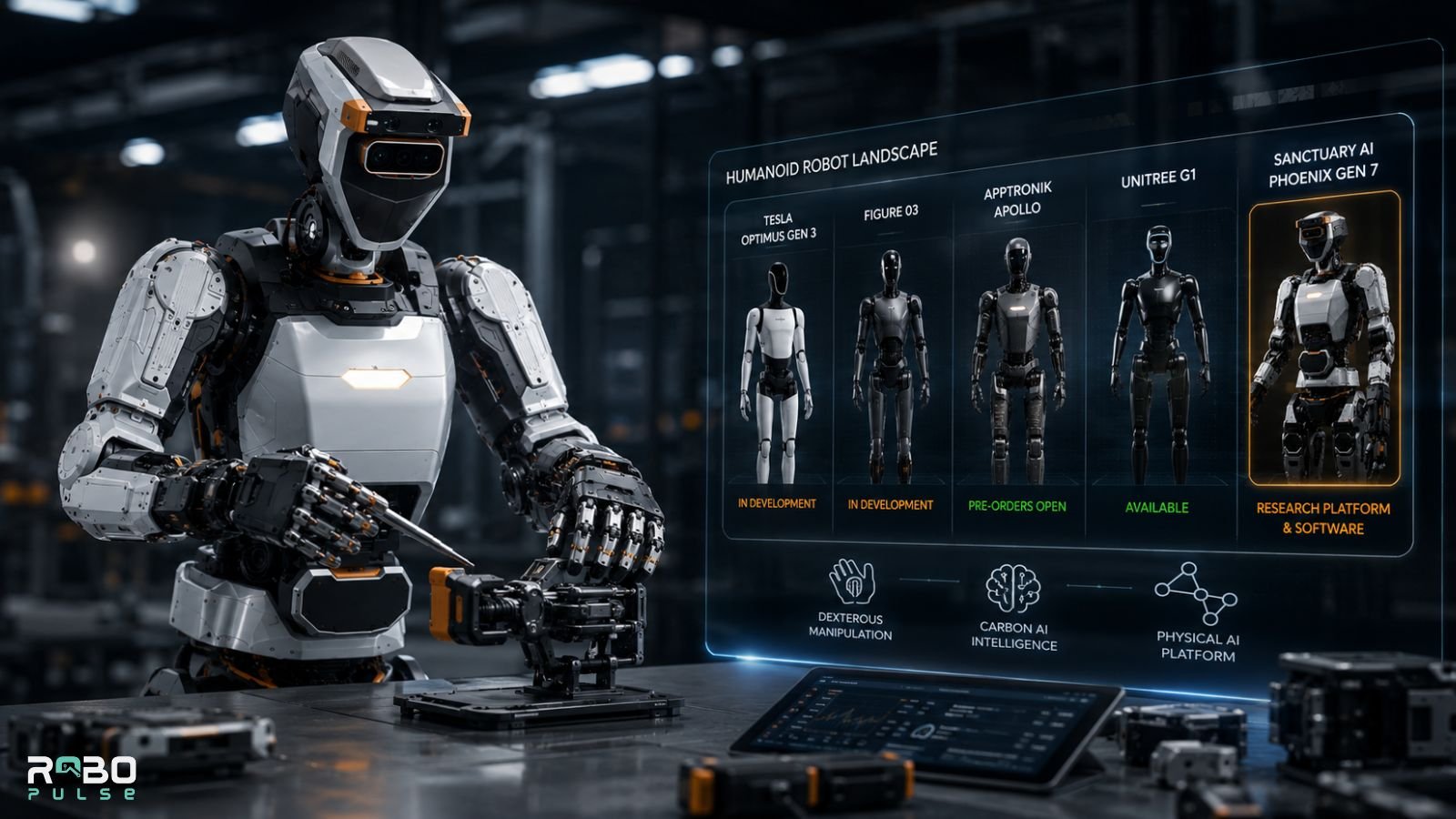
Yes, but for a narrower reason than the Gen 7 headlines suggested in 2024. The hydraulic hand technology and Carbon’s dexterous manipulation results remain among the more technically credible efforts in the field — that part of the story hasn’t changed. What changed is the target: Sanctuary now competes to get its AI running on other manufacturers’ hardware, not to ship its own humanoid at scale.
That puts Phoenix in a different category for anyone comparing humanoid platforms. Robots like Tesla Optimus, Figure 03, Apptronik Apollo, and Unitree G1 carry roadmaps toward sale or lease. Phoenix, as of mid-2026, doesn’t — it’s a research platform and a software brand, worth tracking for its manipulation work rather than a purchase timeline. The robot compare tool and full database break down how each platform stacks up on hardware, pricing status, and commercial availability.
|
FAQs
Q. Is Sanctuary AI Phoenix Gen 7 for sale?
No. Sanctuary AI Phoenix Gen 7 is not for sale. Sanctuary AI has never published a retail price, MSRP, or public purchase path for Phoenix at any generation. Phoenix Gen 7 was developed primarily as a research and data-capture platform rather than a commercially available humanoid robot. As of 2026, Sanctuary AI’s commercial strategy focuses on its Carbon Physical AI software and dexterous robotic technologies rather than selling complete Phoenix humanoids.
Q. How much does the Sanctuary AI Phoenix robot cost?
The Sanctuary AI Phoenix robot has no officially confirmed price. Sanctuary AI has never published an MSRP for Phoenix Gen 7 or any other Phoenix generation. Prices quoted on third-party websites are estimates and should not be treated as official Sanctuary AI pricing. Phoenix Gen 7 was not offered for public purchase.
Q. What are the Sanctuary AI Phoenix Gen 7 specs?
Sanctuary AI did not publish a complete numerical specification sheet for Phoenix Gen 7. The company reported improvements including smaller hydraulics, expanded wrist, hand and elbow range of motion, improved tactile and visual sensing, greater hand durability, lower manufacturing costs, and faster robot commissioning. Precise height, weight, payload, or degrees-of-freedom figures attributed specifically to Gen 7 should be treated as unverified unless they come directly from Sanctuary AI.
Q. What is the difference between Phoenix Gen 7 and Gen 6?
Phoenix Gen 7 improved on Gen 6 with faster commissioning, lighter hardware, smaller hydraulics, greater range of motion, improved sensing, and more durable hands. Sanctuary AI also said Gen 7 could automate a new task in under 24 hours rather than taking weeks, representing a company-reported 50× improvement. Gen 7 arrived less than a year after Phoenix Gen 6, which was named one of Time magazine’s Best Inventions of 2023.
Q. What can the Sanctuary AI Phoenix Gen 7 do?
Phoenix Gen 7 was designed for general-purpose manipulation and human-like physical tasks. Its capabilities centered on dexterous hands, visual perception, tactile sensing, full-body movement, and Sanctuary AI’s Carbon control system. The robot was primarily used to collect real-world behavioral and manipulation data that could improve Carbon’s ability to perform physical tasks.
Q. Does Sanctuary AI still make the Phoenix humanoid robot?
Sanctuary AI still develops Phoenix as a research and data-capture platform, but it is not currently marketing the complete humanoid as a product for sale. In 2026, Sanctuary AI’s commercial focus has shifted toward Carbon Physical AI, which the company is deploying on third-party industrial robot hardware. Sanctuary also continues developing dexterous robotic hands as a separate technology.
Q. What happened to Phoenix Gen 7?
Phoenix Gen 7 was succeeded by Phoenix Gen 8, which replaced the bipedal design with a wheeled base. Sanctuary AI said customer feedback showed that bipedal legs were too fragile to support the strong torso required for precise and safe industrial work. The shift reflects Sanctuary AI’s broader move toward practical physical AI and data collection rather than building a commercially sold humanoid around bipedal locomotion.
Q. Who is the CEO of Sanctuary AI in 2026?
Daniel Friedmann is the CEO of Sanctuary AI as of 2026. He was appointed CEO in June 2026, replacing James Wells. Friedmann previously chaired Sanctuary AI’s board and spent many years as CEO of aerospace company MDA, followed by leadership experience at Carbon Engineering. Sanctuary AI positioned the leadership change as part of a strategy focused on scaling its existing technology.
Q. What happened to Geordie Rose at Sanctuary AI?
Sanctuary AI’s board removed co-founder and CEO Geordie Rose in November 2024. Rose co-founded Sanctuary AI in 2018 and previously held leadership roles at D-Wave and Kindred. Following his departure, Chief Commercial Officer James Wells became interim CEO. The leadership change occurred several months after Phoenix Gen 7 was announced.
Q. What is Carbon AI at Sanctuary AI?
Carbon is Sanctuary AI’s proprietary AI control system for physical robots. Carbon combines visual, tactile, and behavioral information to help robots perceive their surroundings, learn physical tasks, and perform dexterous manipulation. Sanctuary AI originally developed Carbon to control Phoenix, but its 2026 strategy increasingly focuses on deploying Carbon on third-party industrial robots.
Q. What is Sanctuary AI’s Physical AI strategy?
Sanctuary AI’s Physical AI strategy aims to bring its Carbon software to industrial robots made by other companies. Rather than relying exclusively on Sanctuary AI’s own humanoid hardware, the company is using its AI control technology to operate existing industrial robot platforms. The strategy is intended to commercialize Sanctuary AI’s software and manipulation capabilities without waiting for a complete humanoid robot to reach mass production.
Q. Why did Sanctuary AI sell its Apptronik stake?
Sanctuary AI moved to sell its stake in Apptronik as part of a broader effort to raise capital. Sanctuary AI had invested US$10 million in Apptronik in 2022. After Apptronik’s valuation increased substantially following a Google-backed funding round, Sanctuary AI moved in 2025 to sell its majority stake and pursue a targeted US$175 million fundraising effort, according to reporting from The Logic. The completion of the full transaction and fundraising should be treated cautiously where independent confirmation is unavailable.
Q. Is Sanctuary AI Phoenix Gen 7 better than Tesla Optimus or Figure 03?
Phoenix Gen 7 is difficult to compare directly with Tesla Optimus or Figure 03 because the robots have different commercial goals and publicly disclosed specifications. Phoenix Gen 7 was primarily a research and data-capture platform, while Tesla Optimus and Figure 03 are being developed with longer-term commercial deployment and production goals. Phoenix’s strongest differentiator is Sanctuary AI’s focus on dexterous manipulation, hydraulic hands, Carbon AI, and physical-task learning, rather than a public retail roadmap.
Q. Is Phoenix Gen 7 still relevant in 2026?
Yes, but Phoenix Gen 7 is more relevant as a robotics technology milestone than as a product. Its importance lies in Sanctuary AI’s work on dexterous manipulation, tactile sensing, hydraulic actuation, and Carbon’s physical AI capabilities. In 2026, the company’s strategy has shifted toward putting that technology on third-party robot hardware, making Phoenix Gen 7’s manipulation technology more significant than its commercial availability.
Bottom line
Sanctuary AI Phoenix Gen 7 was never a commercially available humanoid robot, and it has no official public price. Its significance comes from the hardware and Carbon AI system Sanctuary AI developed to improve dexterous manipulation and physical-task learning. By 2026, Sanctuary AI had shifted its commercial emphasis from selling a complete Phoenix humanoid toward Physical AI software, third-party robot deployment, and dexterous robotic hands.
Related: What Is DOF in Humanoid Robots? Why 43 DOF Doesn’t Always Beat 23