

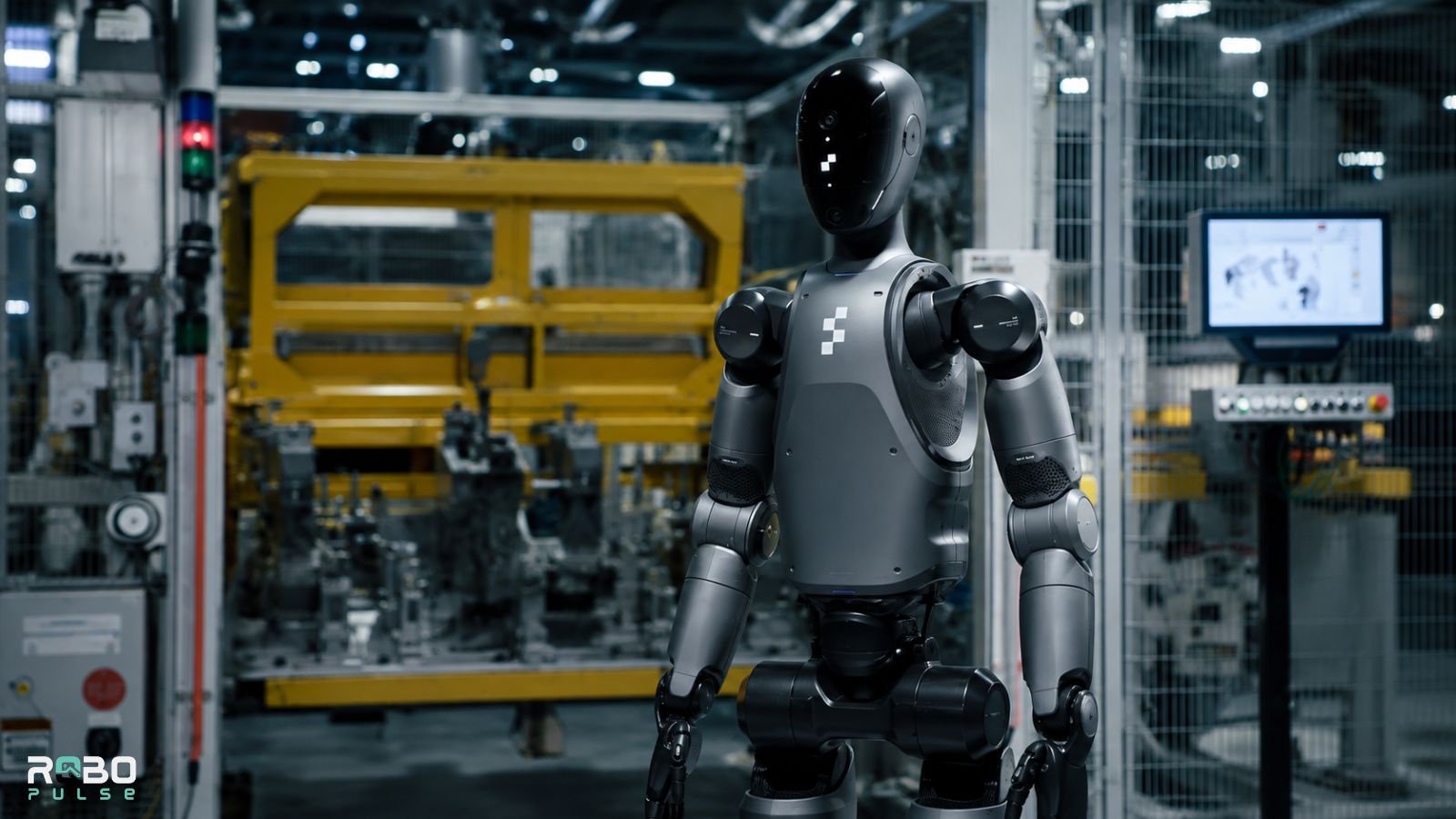
Figure 02 isn’t Figure AI’s current humanoid anymore.
Figure AI built it as its second-generation humanoid. It worked real shifts in a real factory instead of staying in a lab. Then, in late 2025, Figure AI retired it.
Figure AI pulled the Figure 02 fleet after an 11-month deployment at BMW’s Spartanburg, South Carolina plant. Figure 03 took over the job.
Search “Figure 02” today, and you’ll still find pages selling it as Figure AI’s current flagship. Some quote prices Figure AI never published. This article fixes that. It separates what Figure AI actually confirmed — specs, deployment results, retirement date — from the myths that built up since the August 2024 unveiling.
The short version: Figure 02 proved the concept on a real production line. It’s just not the robot Figure AI actively deploys anymore. Figure 03 is.
Is Figure 02 Still Figure AI’s Current Robot?
No. Figure 02 is Figure AI’s previous humanoid, not its current one.
Figure AI unveiled it in August 2024. It operated in a real production deployment through 2025. Figure AI retired the fleet in November 2025, right after Figure 03 arrived.
Figure AI, a Sunnyvale, California robotics company founded in 2022, built Figure 02 as a ground-up redesign of its first robot, Figure 01. The company designed it for commercial work — manufacturing, logistics, warehousing — not research demos.
Figure 02’s defining job: sheet-metal loading on BMW’s assembly line. That partnership is what most of the coverage around this robot actually covers.
Once Figure 03 launched in October 2025, Figure AI began retiring the Figure 02 fleet and pulled the units back to headquarters. If you’re researching Figure 02 in 2026, you’re looking at a discontinued platform — useful mainly as a benchmark for how far the newer generation moved.
Figure 02’s Verified Specs
Figure AI’s own product announcement confirms a specific set of hardware upgrades over Figure 01.
Officially confirmed by Figure AI:
- Fourth-generation hands with 16 degrees of freedom and human-equivalent strength
- 2.25 kWh torso-integrated battery — 50%+ more runtime energy than Figure 01
- Six onboard RGB cameras
- Integrated internal wiring
- 3x the onboard compute of Figure 01
- Speech-to-speech conversation through onboard mics and speakers, plus an onboard vision-language model
| Spec | Figure 02 | Source |
|---|---|---|
| Hands | 4th-gen, 16 DoF, human-equivalent strength | Figure AI (official) |
| Battery | 2.25 kWh, torso-integrated | Figure AI (official) |
| Cameras | 6 onboard RGB | Figure AI (official) |
| Compute | 3x Figure 01 | Figure AI (official) |
| Height | ~168 cm (5’6″) | Third-party, unconfirmed |
| Weight | ~70 kg (155 lb) | Third-party, unconfirmed |
| Payload | ~20 kg | Third-party, unconfirmed |
| Runtime/speed | ~5 hrs / ~1.2 m/s | Third-party, unconfirmed |
Figure AI’s own release focused on engineering advances: hands, battery, cameras, compute. It never published height, weight, payload, or top speed as official numbers.
Humanoid-robot databases repeat those four specs constantly. But they trace back to third-party estimates, not a Figure AI spec sheet. Treat them as commonly cited, not confirmed. Our robot database shows how these figures stack up against other industrial humanoids.
One more number worth flagging: some sites list Figure 02’s total body degrees of freedom at 35, 41, or higher. Figure AI has never published a total-body DOF count for Figure 02 — only the 16-DoF figure for the hands. Treat any full-body number you see as unconfirmed too.
One more thing changed mid-deployment: Figure 02 launched running speech-to-speech AI built with OpenAI. That didn’t last. More on that below.
What Figure 02 Actually Did at BMW
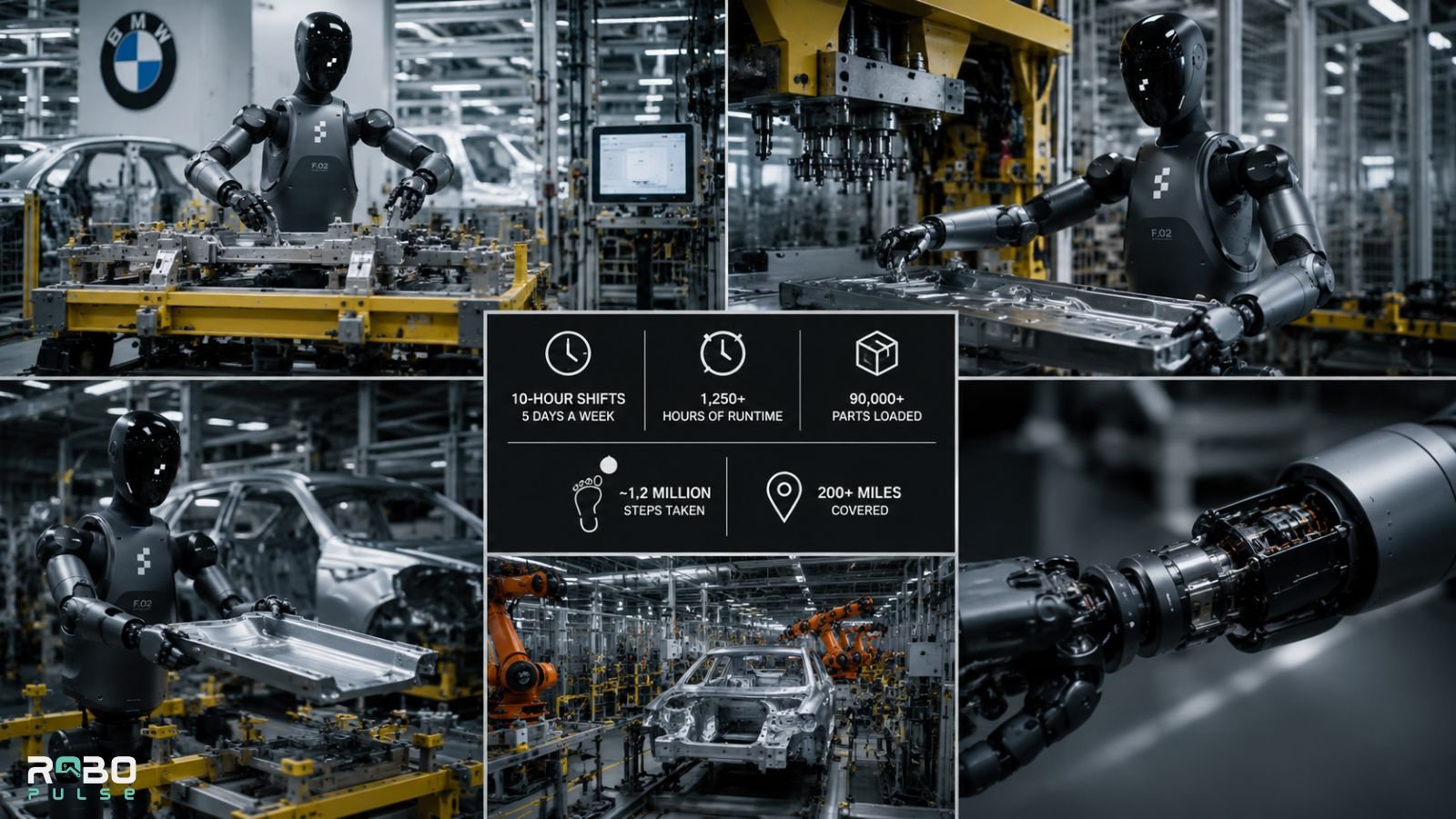
BMW didn’t just demo Figure 02 for the cameras. The company put it to work on a defined production task: loading sheet-metal parts for the welding process, on a real assembly line.
Figure AI describes the rollout in three stages:
- Within 6 months — delivered robots to the plant, started on-site testing
- By month 10 — reached full deployment on an active assembly line
- 11 months total — the full pilot, testing through production
That’s an important distinction. This wasn’t 11 straight months of finished operation — it was testing, then full production.
The numbers:
- 10-hour shifts, five days a week, inside BMW’s body shop
- 1,250+ hours of runtime
- 90,000+ sheet-metal parts loaded
- ~1.2 million steps, 200+ miles covered
Figure AI tracked three KPIs for the pilot:
- Cycle time — target of 84 seconds total, 37 seconds for loading, placing parts within a 5-millimeter tolerance in about 2 seconds
- Placement accuracy — the share of cycles where all three parts loaded correctly, targeted at better than 99% per shift; Figure AI’s own report defines this as a target, not a published final result
- Interventions — how often a human had to pause or reset the robot, targeted at zero per shift; Figure AI hasn’t published the actual count, so treat this one as a goal too
What broke: the forearm. Figure AI identified it as the deployment’s top hardware failure point. The subsystem packs a microcontroller-based circuit board into a tight, three-degree-of-freedom joint, creating difficult packaging and thermal constraints. Those lessons shaped Figure 03’s wrist redesign directly — Figure AI removed the distribution board and dynamic cabling that caused the strain.
What the deployment proved:
- Sustained multi-shift operation
- Integration into an active production line
- Repetitive precision manipulation
- Documented output tied to real vehicles built
What it didn’t prove:
- General-purpose factory autonomy
- A robot handling more than one defined task
- Any public ROI — Figure AI hasn’t published unit pricing, lease costs, labor-displacement figures, or an audited payback period
By November 2025, Figure AI began retiring the Figure 02 fleet. The robots came back to headquarters visibly scratched and worn. BMW has since brought Figure 03 back to Spartanburg for a harder job: sorting and sequencing parts, not straight pick-and-place loading.
How Much Does Figure 02 Cost?
Figure AI never published a price for Figure 02. The company never sold it to consumers or businesses outright — it only reached the field through direct enterprise partnerships, like the one with BMW.
Any dollar figure attached to “Figure 02 price” online is a third-party estimate. Not a Figure AI number.
The confusion runs two directions:
- Some sites quote $30,000–$150,000 as if it’s a price tag.
- Others repeat $20,000 as if it describes Figure 02 specifically.
That $20,000 figure is actually Figure AI’s long-term target cost for a future mass-produced humanoid. It’s a manufacturing goal, not a price anyone paid for a Figure 02 unit. Figure AI has never confirmed either number as what BMW or any customer actually paid.
Budgeting for a humanoid-robot pilot today? Figure 03 is the more useful reference point — it’s the platform Figure AI actively deploys and scales through commercial partnerships. Even there, per-unit pricing stays unconfirmed.
Why Did Figure AI Drop OpenAI for Its Own AI?
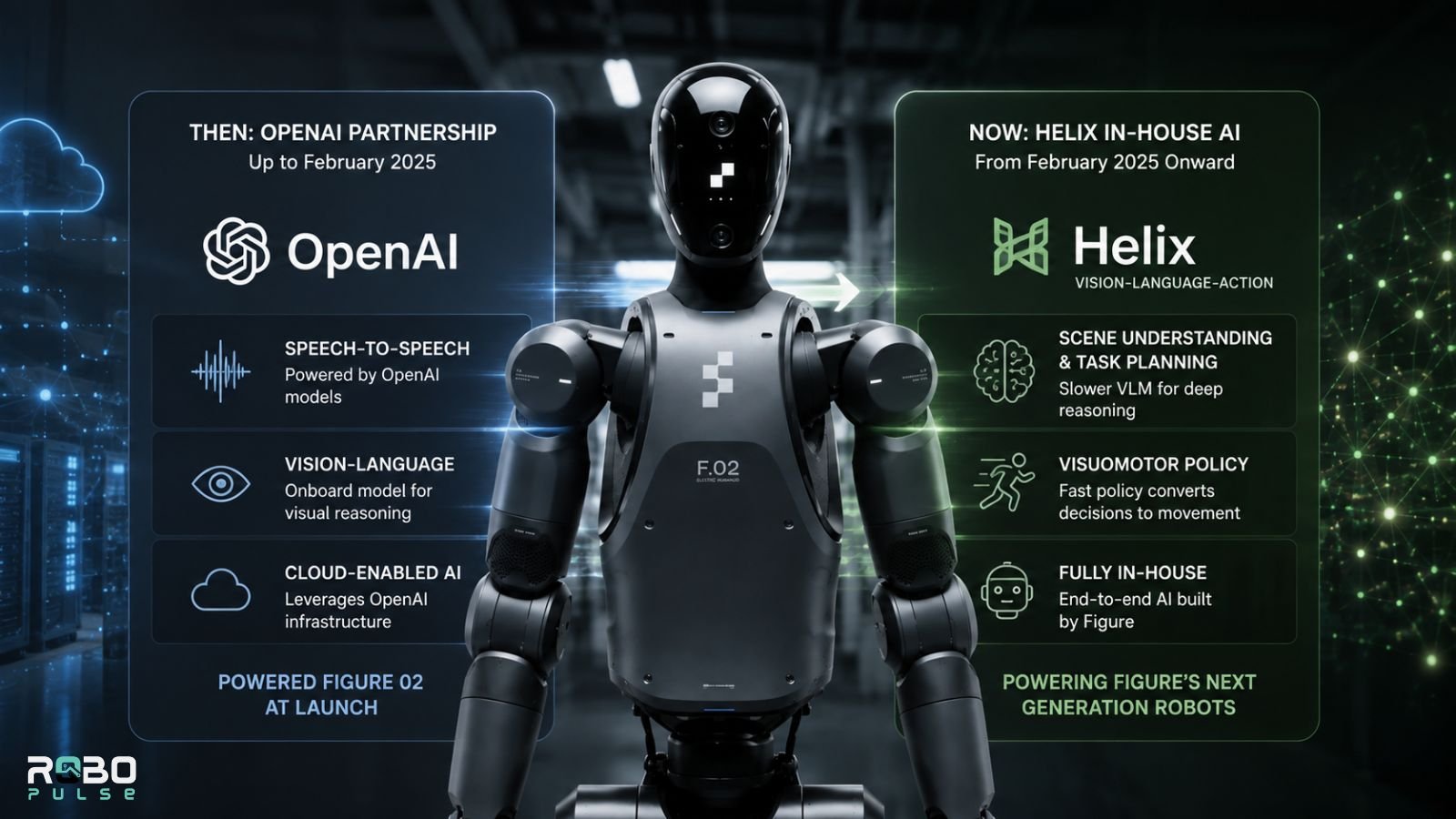
Figure AI ended its OpenAI collaboration in February 2025, about six months after Figure 02’s unveiling. The company shifted robot AI development in-house — a move that led to Helix, the vision-language-action system Figure later deployed across its humanoid platform.
CEO Brett Adcock says the company hit an internal breakthrough in end-to-end robot AI. That breakthrough made the external partnership unnecessary for solving embodied intelligence at scale.
The original OpenAI deal — signed alongside Figure’s $675 million Series B round in February 2024 — gave Figure 02 its speech-to-speech skills, built on custom AI models developed with OpenAI. Figure also described an onboard vision-language model for visual reasoning. Helix replaced that stack with a system Figure built entirely in-house: a slower vision-language model handles scene understanding and task planning, and a fast visuomotor policy converts those decisions into joint-level movement.
For Figure 02 specifically: Figure had moved its robot AI development in-house by the time the fleet retired, with Helix becoming the foundation of the company’s next-generation platform. Figure 02 launched running OpenAI-trained models — the exact software stack running on the BMW units at the very end of the deployment isn’t something Figure AI has confirmed in detail.
Figure 02 Timeline
- August 2024 — Figure 02 unveiled
- Early–late 2025 — Commercial deployment at BMW Spartanburg
- February 2025 — Figure AI ends its OpenAI collaboration, moves to in-house Helix
- October 2025 — Figure 03 launches
- November 2025 — Figure AI begins retiring the Figure 02 fleet
- June 2026 — Figure 03 starts a new logistics role at BMW Spartanburg
What the Internet Still Gets Wrong About Figure 02
- It isn’t Figure AI’s current robot. Figure 03 replaced it in October 2025. Retirement followed the next month.
- It doesn’t have an official price. Not $20,000. Not $130,000. Figure AI never published an MSRP for it.
- It was never sold to ordinary buyers. It only reached the field through direct enterprise partnerships.
- Not every “spec” you’ll find is officially confirmed. Figure AI’s own materials cover hands, battery, cameras, and compute — not height, weight, payload, or top speed.
- Its BMW deployment proved a real production task, not general-purpose autonomy. It was one task, on one line, at one plant.
Figure 02 vs. Figure 03
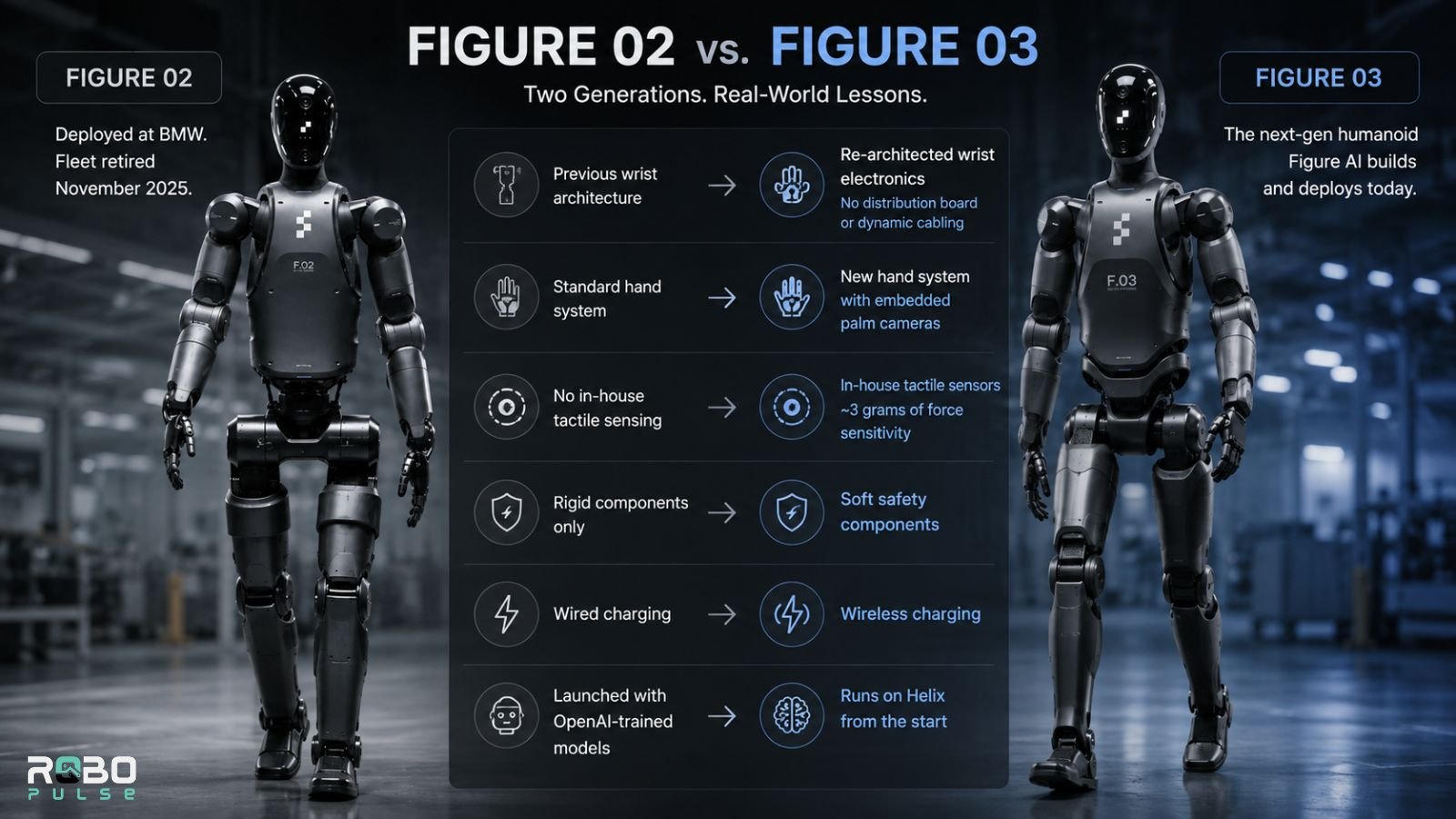
Figure 02 never went up for sale, and it’s no longer deployed anywhere — Figure AI retired the fleet in November 2025. If you want the humanoid robot Figure AI actively builds and deploys today, that’s Figure 03.
Figure AI redesigned Figure 03 from the ground up, incorporating lessons from Figure 02’s BMW deployment — including the forearm reliability problems that led to a new wrist-electronics architecture.
What actually changed, confirmed by Figure AI:
- Re-architected wrist electronics — no more distribution board or dynamic cabling
- New hand system with embedded palm cameras
- Figure’s first in-house tactile sensors, sensitive to roughly 3 grams of force
- Soft safety components
- Wireless charging
- Runs on Helix from the start, instead of the OpenAI-trained models Figure 02 launched with
Our full Figure 03 review covers the redesign in more depth.
For side-by-side generational specs, stick with Figure AI’s own robot pages and manufacturing updates. Third-party “Figure 02 vs Figure 03” comparison charts often mix confirmed specs with estimated ones — without labeling which is which. Weighing Figure’s robots against other industrial humanoids? Our compare tool lays out verified specs across manufacturers side by side.
FAQs
Q. Is Figure 02 still Figure AI’s current humanoid robot?
No. Figure 02 is no longer Figure AI’s current humanoid robot. Figure AI unveiled Figure 02 in August 2024 and retired the platform in November 2025 after introducing Figure 03. Today, Figure 03 is the company’s active commercial humanoid used for enterprise deployments, including BMW’s Spartanburg manufacturing facility.
Q. How much does a Figure 02 robot cost?
Figure AI has never publicly disclosed the price of Figure 02. The company never sold Figure 02 as a retail product or published an MSRP. All online price estimates are unofficial third-party guesses and should not be treated as confirmed pricing. Figure 02 was deployed exclusively through enterprise partnerships.
Q. Can you buy a Figure 02 or Figure 03 robot?
No. Neither Figure 02 nor Figure 03 is available for public purchase. Figure AI has never offered its humanoid robots through consumer sales or public retail channels. Both generations have only been deployed through commercial partnerships with enterprise customers, such as BMW.
Q. What is BMW using Figure AI robots for?
BMW currently uses Figure 03 for factory logistics and parts sequencing. During most of 2025, Figure 02 handled repetitive sheet-metal loading tasks at BMW’s Spartanburg, South Carolina plant. In June 2026, Figure 03 replaced it with a more advanced logistics role involving sorting and sequencing automotive parts.
Q. Why did Figure AI retire Figure 02?
Figure AI retired Figure 02 after completing its 11-month BMW production deployment. The pilot demonstrated that a humanoid robot could work full production shifts on a real automotive assembly line while generating engineering data that improved Figure 03. Lessons from Figure 02’s deployment directly influenced the redesign of Figure 03’s wrist, forearm, and reliability systems.
Q. What AI model did Figure 02 use?
Figure 02 initially used AI developed through Figure AI’s partnership with OpenAI. At launch, the robot featured speech-to-speech conversation and vision-language capabilities powered by OpenAI collaboration. After ending that partnership in February 2025, Figure AI transitioned to its in-house Helix vision-language-action (VLA) system, which powers newer humanoid robots.
Q. How many degrees of freedom does Figure 02 have?
Figure AI officially confirms that Figure 02’s fourth-generation hands have 16 degrees of freedom (DoF). The company has not published the robot’s total body DoF, despite many third-party websites listing estimates. Only the 16-DoF hand specification is officially confirmed.
Q. Was Figure 02 successful at BMW?
Yes. Figure 02 successfully completed a real-world manufacturing deployment at BMW. During its 11-month pilot, the humanoid worked 10-hour shifts, five days per week, accumulated more than 1,250 operating hours, loaded over 90,000 sheet-metal parts, and walked approximately 1.2 million steps. While Figure AI published operational targets such as over 99% placement accuracy, it has not released audited financial ROI or productivity data.
Q. What problems did Figure 02 have?
Figure 02’s primary hardware challenge was forearm and wrist reliability. Figure AI identified the wrist electronics and dynamic cabling as the most failure-prone components because of packaging and thermal constraints. Those issues were redesigned for Figure 03 with a new wrist architecture intended to improve durability and simplify maintenance.
Q. How many Figure 02 robots were deployed at BMW?
Figure AI has never disclosed how many Figure 02 robots operated at BMW. The company confirmed the deployment, runtime, and production metrics but has not published the number of humanoid robots used at the Spartanburg manufacturing plant.
Related: UBTECH Walker S2 Review: The Truth Behind Its Elusive Price Tag