

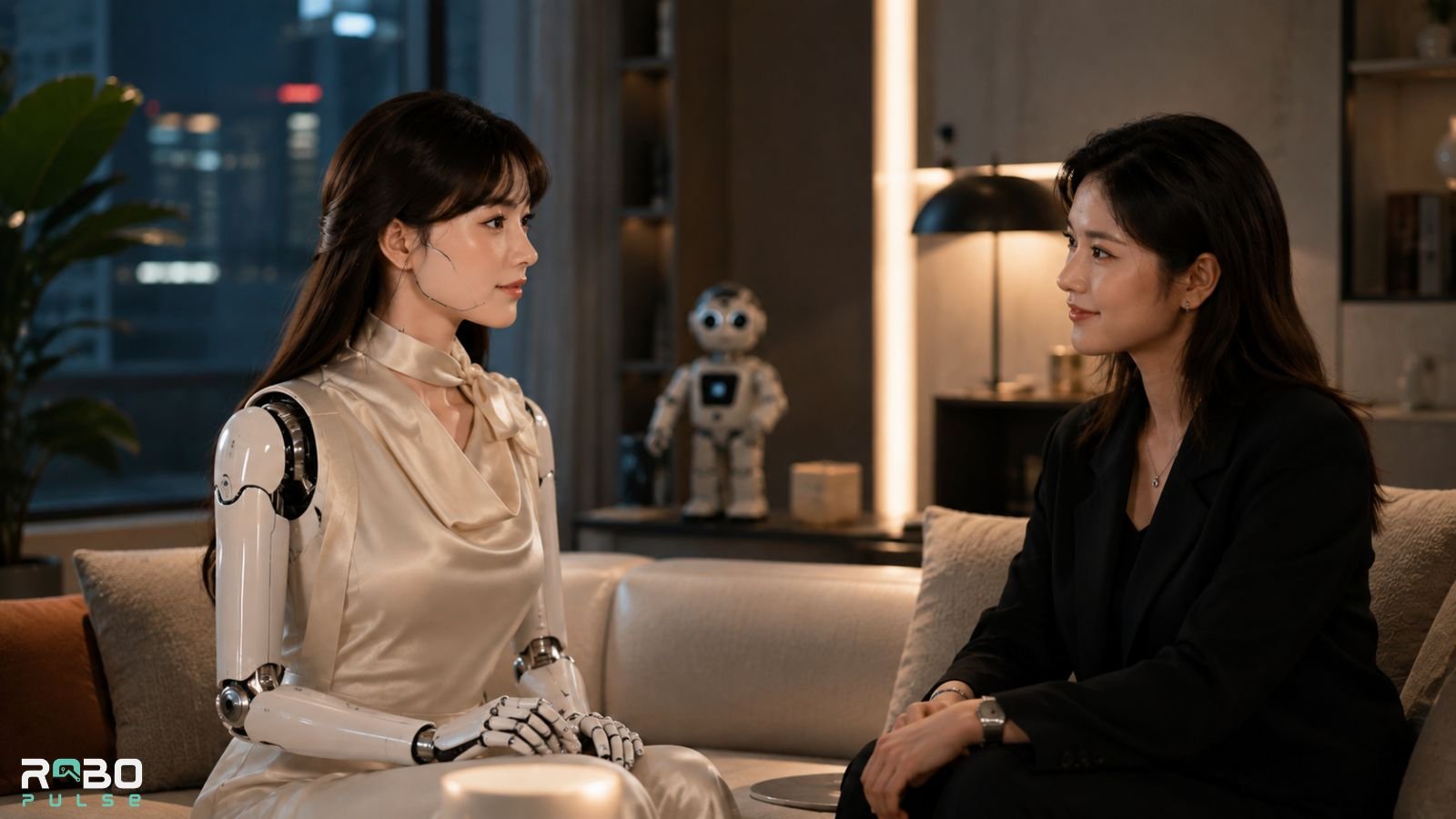
QUBTech’s companion humanoid doesn’t ship until September 16. That hasn’t stopped 13,361 people from putting money down on it.
One of them is a 39-year-old Beijing investor who goes by Song. He paid 159,800 yuan (about $23,680) for the female version of the U1 Pro, fully aware it won’t cook, clean, or do anything resembling housework at launch. Asked why he bought it anyway, his answer wasn’t about utility. It was about the anticipation itself — he described the waiting period as the best part of owning it, according to the South China Morning Post.
That’s an unusual thing to hear about a product that hasn’t arrived. It’s also the most honest data point in the entire U1 story so far.
Quick facts: UBTech U1 companion robot
| Maker | UBTech Robotics (Shenzhen) |
| First deliveries | September 16, 2026 |
| Pre-orders | 13,361 units as of June 30, 2026 |
| Reservation deposit | 3,000 yuan (refundable) |
| Price range | 119,800 yuan (Lite) – 990,000 yuan (Ultra) |
| Height | 183cm (male) / 168cm (female) |
| Degrees of freedom | 88 servo joints |
| AI processing | On-device, Rockchip RK3588 (no cloud) |
| Intended use | Emotional companionship — not housework or elder care at launch |
A Deposit, Not a Decision
Most of UBTech’s order book was built before buyers knew the final price. The Shenzhen-based company opened pre-sales for the companion line in early June with a refundable 3,000 yuan deposit, and by the time CEO Zhou Jian took the stage to reveal pricing, more than 11,000 people had already committed. The total reached 13,361 orders by June 30 — a number that looks like conviction but currently measures something closer to curiosity. Nobody buying blind at that stage was choosing between a Lite unit at 119,800 yuan and an Ultra at 990,000 yuan. They were choosing to be first.
That distinction matters more for a companion robot than it would for a phone or a laptop. Emotional products are judged on relationship, not spec sheet, and relationships don’t start at unboxing — they start the moment someone decides they want one badly enough to pay before they know what “one” actually costs.
What’s Actually in the Box
Strip away the anticipation and the U1 line is a straightforward hardware tier. Three models — Lite, Pro, and Ultra — span from partial-body units to full-size humanoids, priced from 119,800 yuan up to 990,000 yuan, available in male and female builds standing 183cm and 168cm respectively. Each unit carries 88 servo joints under a silicone exterior built to mimic human movement, with an emotional AI system UBTech says runs locally on a Rockchip RK3588 processor rather than in the cloud.
The pitch is conversation, facial expression, and presence — not labour. UBTech has been explicit that this generation isn’t attempting elder care or domestic chores yet, despite an early marketing push that gestured at both. That’s a smarter position than it sounds. Overpromising capability is how companion-robot categories die before their second product cycle; underpromising and delivering a stable, well-behaved presence is how they survive to a second one.
It also puts real distance between the U1 and UBTech’s industrial Walker line, which shipped 1,079 full-size units in all of 2025. Those robots are built to justify their cost through labour output. The U1 has to justify its cost through how it makes someone feel walking into their own living room, and that’s a different scorecard entirely.
The Market Is Betting on Loneliness, Not Convenience
TrendForce’s read on this category frames it as a demographic response rather than a technology one: ageing populations, falling birth rates, and a rise in single-person households are the demand drivers, with the global companion-humanoid market projected to reach $1.1 billion by 2030. Under that framing, UBTech isn’t really competing with other robot makers. It’s competing with the absence of a company in someone’s apartment.
That’s a heavier thing to build a product around than it sounds, and it’s why the September delivery window matters more than the June order count. Pre-orders test hype. First contact tests whether a robot can sit in someone’s living room for six months without becoming furniture — or worse, without becoming a disappointment nobody wants to admit they paid six figures for.
The Real Test Hasn’t Started
Right now, UBTech has a waiting list, not a verdict. Song’s comment about the wait being the happiest part is charming, but it’s also a warning label: expectation-driven ownership tends to peak before delivery and decline afterward, unless the product does something to reset that curve once it’s actually in the room.
September 16 is when that curve gets tested for real. Until then, the U1 story is less about robotics and more about what 13,000-plus people were willing to want before anyone showed them the receipt.
Frequently Asked Questions
Q. When does the UBTech U1 ship?
First deliveries begin September 16, 2026, for orders placed during the June pre-sale window.
Q. How much does the UBTech U1 cost?
Pricing spans three tiers: the Lite at 119,800 yuan, the Pro at 169,800 yuan, and the Ultra up to 990,000 yuan, depending on body configuration and gender variant.
Q. Can the UBTech U1 do housework or elder care?
Not at launch. UBTech has positioned the current generation around conversation, facial expression, and companionship rather than physical labour or caregiving tasks.
Q. How many U1 units has UBTech sold?
UBTech reported 13,361 orders as of June 30, 2026. Most buyers placed a refundable 3,000 yuan deposit before the company announced final pricing.
Q. How is the U1 different from UBTech’s industrial robots?
UBTech designed the Walker line for industrial work and shipped 1,079 units in 2025. The company created the U1 as a consumer companion robot for home use rather than factory or warehouse tasks.
Related: The Future of Work Isn’t Humans vs Robots — It’s Humans, AI Agents, and Robots Together