

UBTech spent a decade teaching robots to work a factory line without hurting anyone.
On June 30, the company pointed that same engineering toward a much stranger problem: teaching a robot to sit with you when nobody else will.
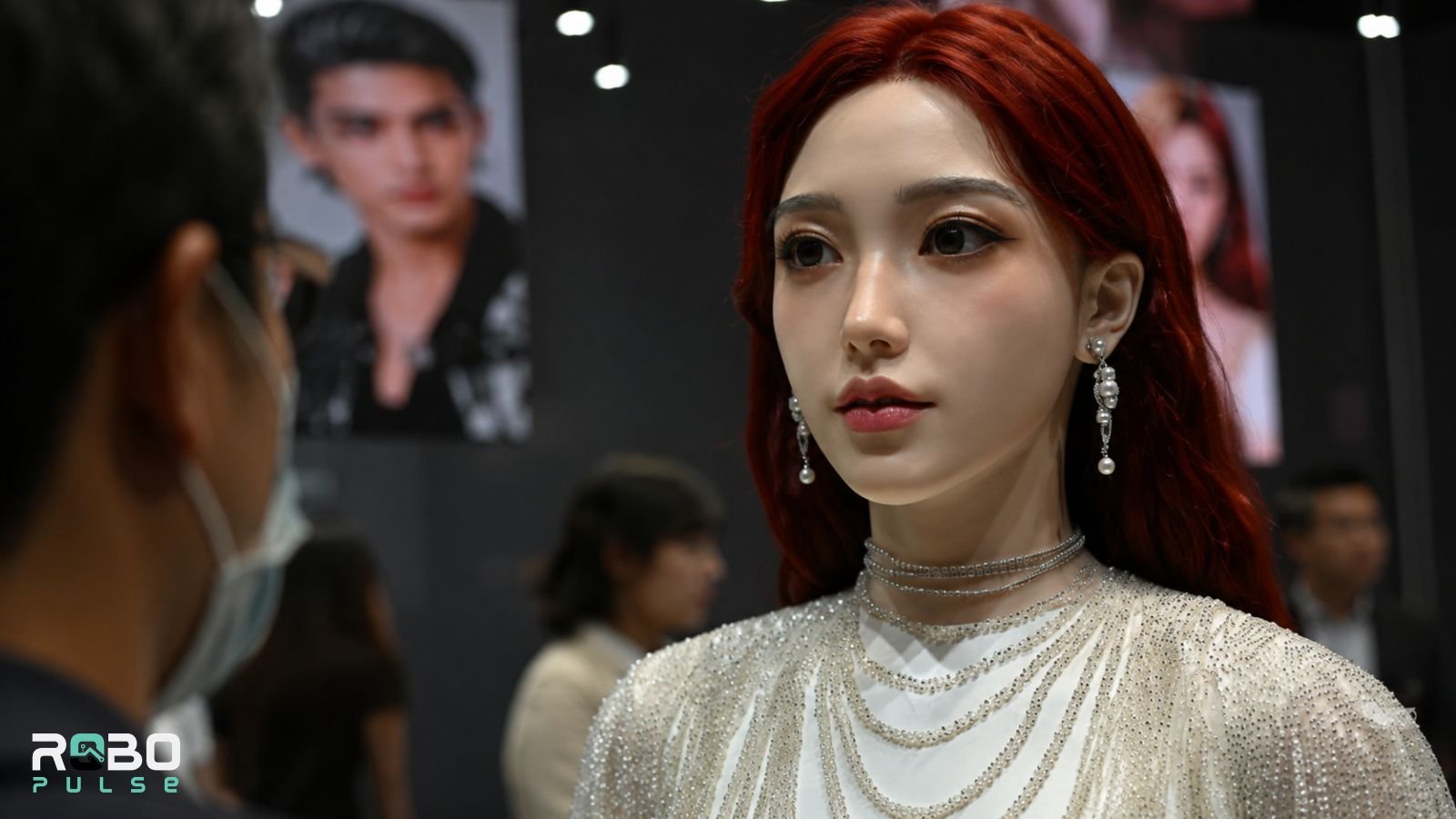
The Shenzhen launch introduced UWORLD, UBTech’s new consumer brand. Its first product is the U1 series.
Three variants — Lite, Pro, and Ultra — ship in male and female body types, standing 183cm and 168cm respectively. Silicone skin. Real hair. Custom makeup and eyelashes.
UBTech calls it “ultra-bionic.” Most coverage is calling it something closer to eerie.
The Numbers Behind the Pitch
Pre-orders opened on JD.com on June 2 with a 3,000 yuan (~$450) deposit.
UBTech reports the reservation count crossed 13,361 units by launch day. That’s a fast climb for a robot whose own CEO, Zhou Jian, had priced it around $30,000 on a livestream just weeks earlier.
The actual pricing landed lower, and it splits into three tiers:
- U1 Lite (semi-torso): 119,800 yuan, ~$17,650
- U1 Pro (full-body): 169,800 yuan, ~$25,000
- U1 Ultra (high-dynamic): up to 990,000 yuan for the male version, 880,000 yuan for the female version
The entry price alone is close to a 45% drop from the number floated on stream.
Companies don’t usually shave that much off a price between a livestream and a launch event by accident. Either UBTech was testing the market’s reaction in public, or the livestream figure described a different configuration than the one that shipped as the entry model.
Whatever the reason: treat any number a robotics company says out loud before the press release as provisional.
One more detail worth flagging upfront. UBTech is selling the Pro and Ultra tiers to adults only. Multiple outlets present at the Shenzhen launch, including Caixin Global, confirmed the restriction directly from staff on site.
What’s Actually Under the Skin
Strip away the marketing language and the specs tell a tighter story than the promo footage does.
The Movement and the Mind
The U1 runs on 88 degrees of freedom through a proprietary dual-pivot cervical spine. UBTech says this replicates up to 90% of basic human movement.
A “fast-and-slow brain” architecture splits the workload. Quick reflexive responses land around 500 milliseconds. Deeper reasoning routes through a background model UBTech describes as running into the hundreds of billions of parameters.
Lip-to-speech sync lands within 20 milliseconds. That’s fast enough that conversation doesn’t feel like it’s catching up to itself.
The emotional layer is the real pitch. UBTech claims its onboard system reads more than 20 distinct emotional states at over 90% accuracy, drawing on tone, facial expression, and speech pattern.
A persistent memory layer called Agent Memory OS is supposed to let the robot track preferences and routines across months, not sessions.
UBTech says all of that data stays encrypted and local by default. No mandatory cloud upload.
That claim matters more than the silicone does. A device engineered to remember your moods and habits over time creates a very different privacy surface than a phone or a smart speaker.
Worth saying plainly: this is UBTech’s own claim. Nobody outside the company has audited it yet.
Where the Promise Runs Out
Then there’s the number that quietly defines the whole product. Battery life sits at 2 to 4 hours.
UBTech’s industrial Walker line hot-swaps batteries for continuous factory shifts. The U1 can’t do that, at least not in this generation.
A robot billed as a long-term companion that needs to recharge every few hours isn’t built to live in the room with you all day. It’s built for scheduled windows of interaction. That’s a meaningfully smaller promise than the launch video sells.
Physically, the U1 stays modest on purpose. It can stand, sit, and walk on flat indoor floors using taught gait patterns. Stairs, uneven terrain, and household chores sit outside its design scope.
UBTech isn’t hiding this. The company has said directly that the U1 won’t accept custom programming, which keeps owners from repurposing it for tasks beyond conversation and presence.
The Part That Should Slow Everyone Down
UBTech isn’t only selling companionship to people who can afford five-figure robots.
As part of a new Human-Robot Companionship Initiative, the company plans to donate 100 customized U1 units this year. The targeted groups: children separated from parents, seniors living alone, and families in difficult circumstances.
The donation program uses 3D facial reconstruction and voiceprint replication to recreate a specific person’s appearance and voice inside the robot.
Layer that onto the persistent memory system and the emotion-driven language model, and the pitch shifts. This isn’t just a “companion robot” anymore. It’s closer to a stand-in for someone who isn’t there.
UBTech frames this as psychological support at scale, and it backs the framing with real numbers. China counts more than 90 million adults living alone and 118 million “empty-nest” seniors, per the company’s own figures.
The social need behind that framing is real.
Whether recreating a missing parent’s face and voice inside a machine is the right answer to it is a much harder question. Engineering specs can’t settle that one, and UBTech’s launch materials don’t spend much time on it either.
Where This Fits
UBTech isn’t alone in chasing hyperrealism for the home. The company showed an earlier prototype called Una back in 2025.
It’s one of several Chinese humanoid makers racing to define what a companion robot should look like before the hardware fully catches up to the pitch. Unitree’s G1 is chasing the same consumer wallet from a different angle — cheaper, more agile, and built around athleticism rather than a synthetic face.
The contrast gets sharper outside China, too. Figure’s Figure 03 and Apollo are still chasing labor contracts, not living rooms, and Boston Dynamics has taken the opposite bet entirely — Hyundai’s electric Atlas is built to take on the riskiest, least glamorous jobs on a factory floor, nowhere near a conversation with a lonely retiree. Three very different answers to the same question: what is a humanoid robot actually for.
What separates UBTech here is scale and capital. It’s still the only publicly traded humanoid maker in the group, and it’s backing the U1 with two decades of industrial deployment experience across clients like NIO, Airbus, and FAW-Volkswagen.
That industrial pedigree is doing a lot of quiet work in this launch. Balance control, safe movement around humans, environmental awareness — all of it traces back to factory-floor engineering, repurposed for a living room.
The hardware story is credible. The emotional-AI story is the part still running almost entirely on the company’s own word.
The U1 ships to early depositors in mid-September. That’s when the reviews that actually matter start.
Not the ones judging silicone texture in a promo video. The ones checking whether a robot that costs as much as a car — and runs for a few hours at a time — delivers anything close to what a 90-second launch reel implied.
Related: Synthetic Humanoids Explained: Can Artificial Muscles Beat Traditional Robots?