
Most coverage of the Boston Dynamics buyout treats it as a tidy financial cleanup. SoftBank cashes out, Hyundai writes a check, and everyone moves on. That framing misses the actual stakes.
Hyundai isn’t just buying a stake anymore. It’s buying every point of failure between a robot and a working factory floor — and there’s no one left to share the blame if Atlas doesn’t deliver.
Hyundai Pays $325 Million to Take Full Ownership of Boston Dynamics
Hyundai Motor Group is set to approve the purchase of SoftBank’s remaining 9.65% stake in Boston Dynamics on June 22, paying $325 million to close out a put option SoftBank held since 2021. The deal makes Boston Dynamics a fully owned Hyundai subsidiary for the first time since Google spun it out in 2017.
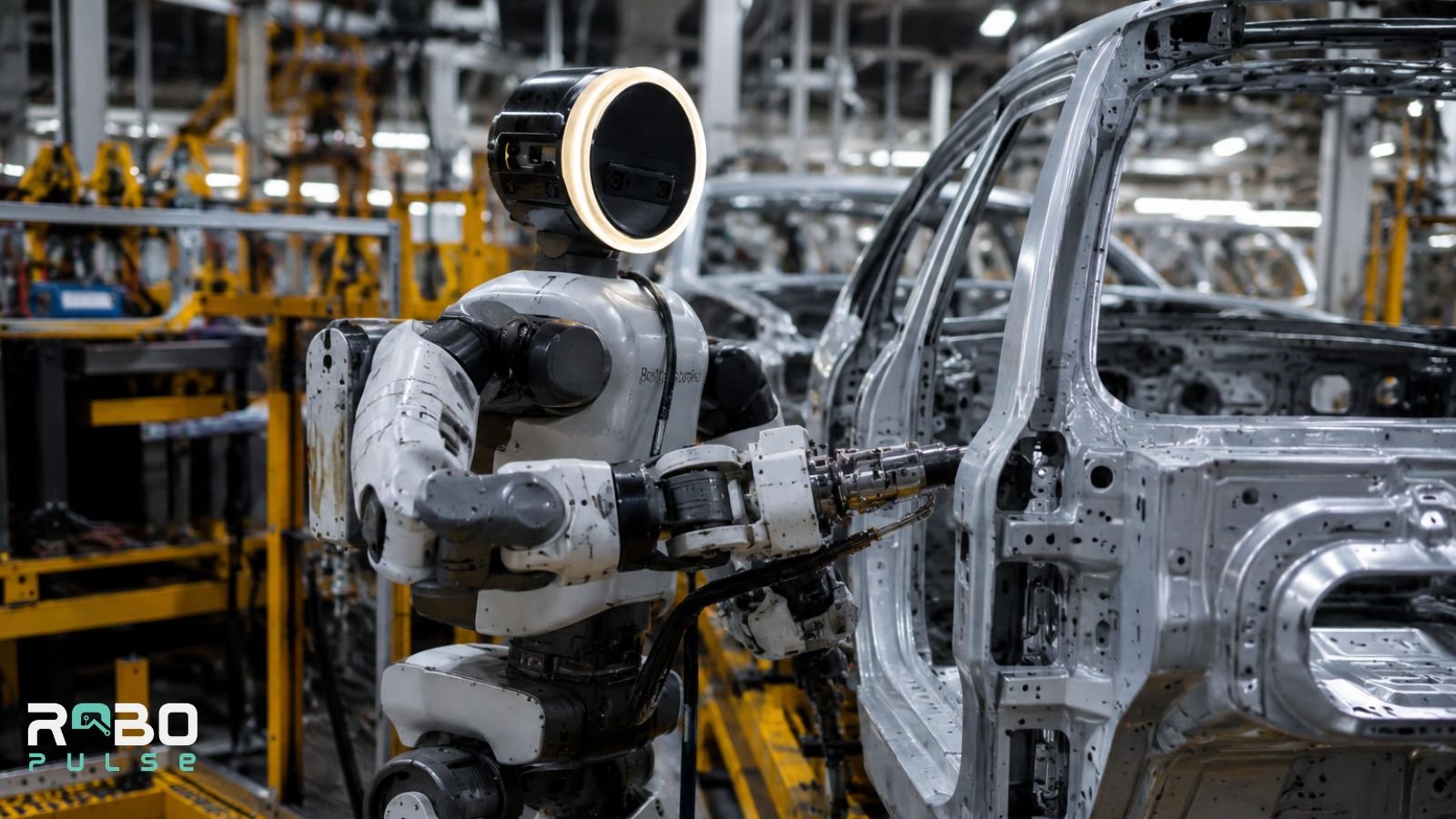
The timing isn’t random. Boston Dynamics just unveiled the production version of its electric Atlas humanoid at CES 2026 in Las Vegas, alongside a new partnership with Google DeepMind for embodied AI. Hyundai paid roughly $880 million for 80% of the company back in 2021, valuing it near $1.1 billion. This final piece closes a chain of ownership that ran from Google to SoftBank to, now, Hyundai alone.
Why SoftBank Walked Away From Robotics — And Into Roze AI
SoftBank isn’t retreating from robotics — it’s redirecting. Masayoshi Son is pushing Roze AI, a robotics-and-data-center infrastructure venture reportedly chasing a $100 billion valuation and a possible IPO this year. That puts the $325 million Boston Dynamics payout in perspective: pocket change next to the bet Son is actually making.
Full Ownership Means Hyundai Now Owns the Failure, Too
Here’s what the deal-size headline buries. Full ownership means Hyundai can no longer treat a slow Atlas rollout as Boston Dynamics’ problem. It’s Hyundai’s problem now, on Hyundai’s balance sheet, inside Hyundai’s own factory.
That’s structurally different from what Tesla or Figure AI are doing. Tesla is also building Optimus inside its own walls, but Figure still needs outside partners like BMW to prove its robot works in someone else’s environment. Boston Dynamics CEO Robert Playter has said Atlas needs 99.9% reliability and the ability to learn new tasks within a day or two before it’s genuinely useful on a line. Nobody in the humanoid race has hit that bar yet.
Hyundai Mobis and the Actuator Bet Nobody Else Can Match
What sets Hyundai apart is vertical integration that nobody else in this race has matched. Hyundai Mobis — the group’s parts arm — is now Boston Dynamics’ first official robotics customer, supplying the actuators that drive Atlas’s joints. That’s not a minor subsystem: actuators account for roughly 60% of a humanoid robot’s total material cost, according to Mobis itself.
Hyundai isn’t just assembling Atlas. It’s manufacturing the most expensive part of the robot in-house, using the same automotive-grade reliability standards it applies to car parts. When something breaks — and something will — there’s no vendor relationship to renegotiate. There’s only an internal fix.
Why Georgia, Not Just CES, Is the Real Test for Atlas
There’s a quieter reason Georgia is the testing ground, too. Hyundai’s Metaplant America near Savannah has faced real scrutiny over regional labor supply as EV production ramps up. Atlas isn’t just a tech showcase there. It’s a hedge against a labor market Hyundai isn’t confident will scale fast enough on its own — automating ahead of a shortage, not just ahead of competitors.
Watch the Savannah plant, not the next CES demo. Parts sequencing is the easy version of this job — repetitive, forgiving of error. The real test comes as Hyundai pushes Atlas toward heavier, more complex tasks through 2030, the point where reliability failures cost production uptime instead of just bad headlines.
What Happens If Atlas Actually Works
If Atlas meets Robert Playter’s reliability bar inside Hyundai’s own plants, the upside is bigger than just a working robot. Hyundai gets a humanoid platform backed by a real supply chain — leverage that Tesla and Figure are still building externally.
The stakes go beyond engineering. Hyundai is reportedly considering a future Boston Dynamics listing on the NYSE. That makes proving Atlas works in real factories, not staged demos, a financial requirement as much as a technical one.
Hyundai didn’t just buy out a co-owner. It bought out its own excuse.
Related: Figure 03 Review: The Home Robot We’ve Been Waiting For?