

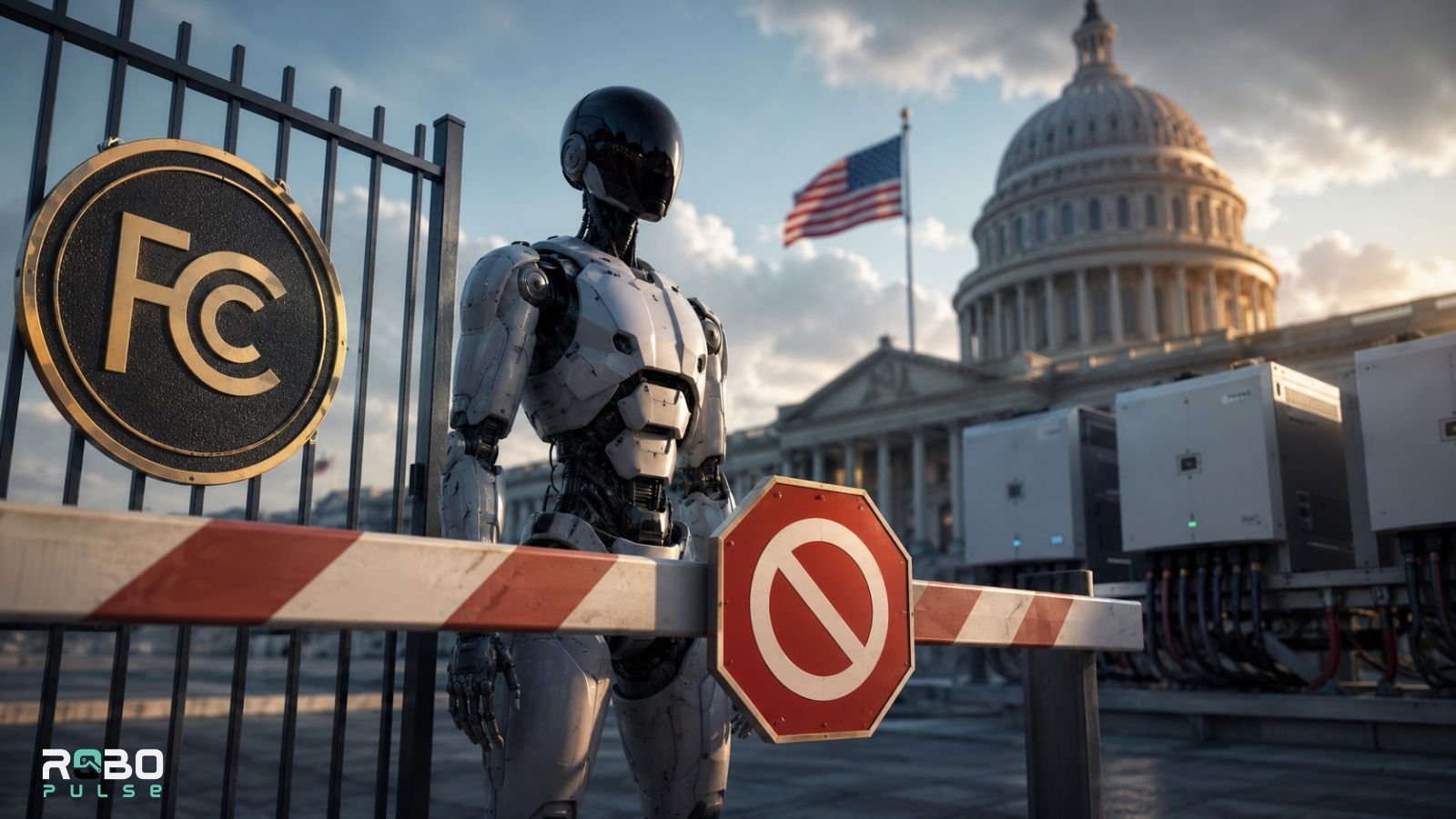
The FCC put humanoid robots on the same regulatory list as Huawei routers on July 28, 2026. The agency added “advanced robotic devices” and connected power inverters to its Covered List, the registry that blocks equipment from getting the authorization it needs to enter the US market. Chairman Brendan Carr called it a step to secure “America’s critical supply chains.”
Key facts:
|
What the rule actually blocks
Nothing changes for robots already on US floors. A Unitree G1 or UBTech unit bought and authorized before July 28 keeps working, keeps getting patched, keeps shipping replacement parts. The block hits new models seeking authorization for the first time.
The FCC’s own FAQ spells out the threshold. A device qualifies as an “advanced robotic device” if it’s a mobile mechanical system over 4.4 lbs, moves without a human driving it directly, carries at least one environmental sensor, and supports a network connection of 200 kbps or higher in either direction. That definition sweeps in humanoids, quadrupeds, wheeled units, and tracked robots. It leaves out fixed industrial arms, drones, road vehicles, and FDA-regulated mobility devices.
Existing hardware isn’t frozen in place either. The FCC issued a waiver letting already-authorized robots and inverters keep receiving software and firmware updates through January 1, 2029, while the agency works out permanent rules for equipment already deployed.
The exemption path most coverage skipped
A foreign-produced robot isn’t automatically locked out forever. Manufacturers can apply for conditional approval by emailing conditional-approvals@fcc.gov, and the FCC forwards that request to the Department of War and the Department of Homeland Security for a national security review. Neither department has published criteria for what clears that review, so the exemption exists on paper before it exists in practice.
The FCC first used this legal tool against Huawei, ZTE, and Hikvision in 2021, then expanded it to cover DJI drones and Chinese-made consumer routers. Instead of creating a new regulatory framework for robots, the agency simply extended an existing one to include them.
Why inverters rode along
Power inverters landed on the same list for a different reason. They convert DC power from batteries and solar panels into the AC power that runs the grid. The FCC argues that a networked, foreign-made inverter could allow someone to shut down connected systems remotely or extract data from a site. That concern centers on grid security, not robotics. The FCC grouped both categories under the Covered List because they are networked devices with remote-access capabilities, not because they perform the same function.
The scale that triggered this
China didn’t get singled out by name in the FCC’s language, but the numbers explain the timing. Roughly 16,000 humanoid robots went into service worldwide in 2025, and China accounted for more than 80% of them. AgiBot reported over 5,100 units installed and a 39% share of that market. Unitree delivered more than 5,000. Leading US manufacturers shipped a few hundred units or fewer over the same stretch.
That gap is why firms like UBTech and Unitree built commercial traction in factories and hotels faster than most Western developers moved out of pilot testing. The rule targets that speed directly, even without naming a country in its text.
Beijing’s response
China’s embassy in Washington called the move “politicising” trade policy over “groundless pretexts” and said Beijing would “take all necessary measures” to protect its companies. It also called on the US to drop what it called a “hegemonic mindset.” That’s the same two-part response Beijing used after chip export controls and rare earth restrictions: reject the reasoning, threaten to respond in kind, still gesture at wanting cooperation.
Elon Musk has already warned publicly that Chinese humanoid manufacturers pose a real competitive threat to Tesla’s robotics push, and this rule hands Tesla, Figure, Apptronik, and Boston Dynamics a regulatory buffer their Chinese competitors don’t get. That buffer comes with a cost. US manufacturers still depend on globally sourced components, and a slower Chinese supply pipeline could tighten pricing across the whole industry, not just for Chinese brands.
What this means if you’re buying or building
If you’re running Chinese-made humanoids in a US warehouse or factory today, nothing about your current deployment changes. Authorization already granted stays granted. The exposure sits in the next purchase: any new model from Unitree, UBTech, AgiBot, or any other foreign manufacturer — including non-Chinese firms like Norway’s 1X — now needs a national security sign-off before it can legally enter the US market, and that review has no published timeline.
Manufacturers weighing US entry face the same fork chipmakers hit years ago: localize production, apply for a case-by-case exemption, or skip the US market for this generation of hardware. Buyers evaluating options across authorized models can check current specs and pricing in the robot database.